Fewer Employees Now Paying Company Car BIK Tax But HMRC Receipts Up

Friday, 27. November 2020

The number of people paying company car tax has again fallen substantially, with HMRC reporting 30,000 fewer people receiving the benefit.

The latest benefit-in-kind (BIK) statistics, published by HMRC, show there were 870,000 company car drivers in 2018-19 – a massive 30,000 year-on-year decline.

The provisional figures suggest that the number of employees receiving the benefit has fallen by some 90,000 in the past five years, from 960,000 in 2015/16.

HMRC has now confirmed that there were 900,000 people paying company car tax in 2017/18 – provisional figures published last year suggested 890,000.

That was a fall of 40,000 on some 940,000 company car tax-payers reported the previous tax year (2016/17).

HMRC figures have also shown that the amount of company car tax collected increased. Despite the decline in employees paying BIK on a car between 2016/17 and 2017/18, the taxman collected £1.62 billion – £70m more than the £1.55bn it collected the previous tax year.

The reduction in company cars seen over the past few years coincides with the introduction of voluntary payrolling, according to HMRC.

Like last year, it is claiming that at least part of the reduction is due to employers moving from submitting P11D returns to collecting tax on company cars through payroll.

In 2016 to 2017 employers were not able or required to submit more detailed information about company cars when collecting tax on this benefit through voluntary payrolling.

From 2017 to 2018 employers payrolling car benefit were able to provide more detailed data about the cars being provided through their FPS (Full Payment Submission), which HMRC told Fleet News would rectify the situation.

However, providing this data was not mandatory until 2018 to 2019 and even after mandation of providing more detailed data through FPS, HMRC says that there are non-trivial levels of non-reporting.

As such, it maintains that a significant number of company cars were not reported to HMRC between 2016 to 2017 and 2018 to 2019.

It is not possible to produce accurate estimates of the number of unreported company cars, but HMRC analysis suggests they account for a “high proportion” of the reduction observed.

The fleet industry will be hoping that new company car tax rates, which include a zero percentage rate for pure electric vehicles, introduced from April 2020 will go some way to bucking this downward trend.

Leasing companies began reporting a surge in interest in plug-in vehicles almost immediately after the new rates were announced in July 2019.

One year on, and demand shows no sign of diminishing. David Bushnell, principal consultant at Alphabet GB, said: “Year-on-year, the electric and hybrid sector is continuing to grow at a rapid pace. In 2020, we’re starting to see more of a shift towards pure electric vehicles over hybrids, with a 124% increase of pure electric vehicle orders compared with 2019. Hybrid vehicles remain popular however, and sales have continued to rise compared with last year’s figures, up by 41%.”

Almost half (48%) of Alphabet company car orders this year, have been for electric (12%) and plug-in hybrids (36%). By Graham Hill thanks to Fleet News

Share My Blogs With Others: These icons link to social bookmarking sites where readers can share and discover new web pages.
  • MisterWong
  • Y!GG
  • Webnews
  • Digg
  • del.icio.us
  • StumbleUpon
  • Reddit
  • Alltagz
  • Ask
  • Bloglines
  • Facebook
  • YahooMyWeb
  • Google Bookmarks
  • LinkedIn
  • MySpace
  • TwitThis
  • Squidoo
  • MyShare
  • YahooBuzz
  • De.lirio.us
  • Wikio UK
  • Print
  • Socializer
  • blogmarks

UK To Start Trials On Wireless EV Charging In 2021 On Vans.

Monday, 16. November 2020

City of Edinburgh Council, Heriot-Watt University and Flexible Power Systems (FPS) have secured funding worth £1.6 million to investigate the benefits of wireless electric vehicle (EV) charging.

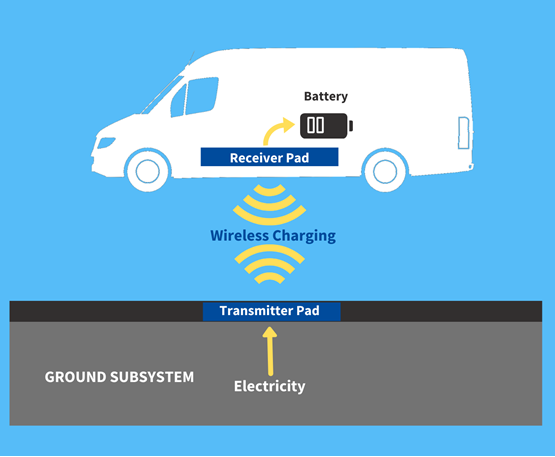
Wireless charging allows EVs to recharge while parked on charging pads instead of using cables that need to be manually plugged in by a driver.

In what is being claimed as the UK’s first wireless charging hub for light commercial vehicles (LCVs), devices will be installed at Heriot Watt University’s Edinburgh campus in early 2021 to service specially adapted vans from both City of Edinburgh Council and Heriot-Watt’s fleet.

The technology has already been proven for mass transit applications and will be supplied by specialist firm, Momentum Dynamics.

The project is being funded by the Office for Low-Emission Vehicles (OLEV) and delivered through Innovate UK.

A similar six-month trial of wireless charging technology for electric taxis in Nottingham was announced by the Government at the start of the year.

The Department for Transport (DfT) said that the £3.4m scheme could pave the way for a revolution in EV charging.

This latest project aims to accelerate the transition to EV in commercial vehicle fleets by reducing the cost of charging the vans.

The project team says that high-powered wireless electric vehicle charging is expected to have considerable benefits for commercial vehicle users, including: faster starts to charging sessions with no downtime for plugging in to improve vehicle use and create bigger benefits from opportunity charging sessions; no cables to cause trip hazards or require maintenance; and future proofing for the advent of autonomous vehicles (which will not have a driver to plug them in).

The project ultimately aims to apply wireless charging to shared logistics hubs where fulfilment functions can be combined with charging.

Wireless charging technology will be applied to improve vehicle turnaround times and staff productivity at the hubs enhancing cost savings, it says

FPS’ managing director, Michael Ayres explained: “Productivity drivers and longer journeys mean commercial vehicles may need to charge away from the depot or at high speeds during the day.

“Rapid and ultra-rapid chargers required for a fast turnaround make up less than 25% of publicly available chargers and can be difficult to access if they are in use or out of service.”

High-power rapid chargers can be expensive both in terms of the chargers themselves and the electricity network infrastructure required to support them, says Ayres.

Sharing the cost of the charger and the connection through a shared charging hub can mitigate a portion of these costs.

He continued: “The project is testing sharing of the charging hubs between logistics, retailer, local government, and university owned commercial vehicles.

“These charging hubs require high use to be economically viable. The project uses powerful wireless charging to shorten the length of time vehicles need to be in the charging hubs.

“At the same time, we are investigating adding basic fulfilment capabilities to improve the productivity of logistics vehicles visiting the hubs.”

Professor Phil Greening, a co-director of the Centre for Sustainable Road Freight, based at Heriot-Watt University added: “While highly utilised shared infrastructure and collaboration have great potential to reduce the costs of decarbonising road freight, there are complex scheduling and commercial trade-offs to be considered.

“The modelling tools and approaches developed in our Engineering and Physical Sciences Research Council (EPSRC) funded research at the Centre, combined with the collaboration we’ve undertaken with FPS over the last two years will both be key to untangling these challenges and making sure this potential is realised.”

https://cdn.fleetnews.co.uk/web/2/root/infographic-wireless-charging1_w555_h555.png

The charging hub concept has the potential to contribute to decarbonising commercial vehicles in the City of Edinburgh.

City of Edinburgh Council’s transport and environment convener councillor, Lesley Macinnes, said: “We’re delighted to be working with Heriot-Watt University on this innovative project, helping to facilitate the use of electric vehicles across our fleet.

“We are committed to supporting the use of sustainable, low emission travel and continue to replace vehicles with cleaner models wherever possible.

“Our own Electric Vehicle Action Plan will result in a significant increase in charging points across the city which, alongside projects such as this, will help encourage the take-up of electric vehicles as a low carbon, environmentally-friendly transport choice.”

Scott Millar, fleet and workshops Manager for The City of Edinburgh Council, added: “We are already deploying electric vehicles across our fleet and we’re looking at ways we can drive adoption in the wider community.

“Providing charging infrastructure like shared hubs has the potential to play a key part of removing barriers to uptake for both the council and the community.

“We’re excited to take a leadership role here as a successful project in Edinburgh could present a model for other councils to use to reduce transport emissions in cities.”  By Graham Hill thanks to Fleet News

Share My Blogs With Others: These icons link to social bookmarking sites where readers can share and discover new web pages.
  • MisterWong
  • Y!GG
  • Webnews
  • Digg
  • del.icio.us
  • StumbleUpon
  • Reddit
  • Alltagz
  • Ask
  • Bloglines
  • Facebook
  • YahooMyWeb
  • Google Bookmarks
  • LinkedIn
  • MySpace
  • TwitThis
  • Squidoo
  • MyShare
  • YahooBuzz
  • De.lirio.us
  • Wikio UK
  • Print
  • Socializer
  • blogmarks

Motorists Not Prosecuted As Police Don’t Know The Law!

Monday, 16. November 2020

IAM RoadSmart is calling for clearer guidelines on the use of police technology to encourage use of mobile safety cameras and dash cams in prosecuting motorists using handheld mobile phones and not wearing seatbelts.

It found that nearly two thirds of police forces contacted were not using mobile safety cameras to prosecute motorists spotted committing these offences, as they incorrectly thought it was illegal. Unbelievable!

The road safety charity believes the inconstancy is encouraging motorists to flout the law and has highlighted the issue as part of its response to the Department for Transport’s Roads Policing review.

Neil Greig, policy and research director at IAM RoadSmart, said: “Clearer guidelines must be created so that police forces can be confident that they can enforce laws with the equipment available to them today – laws which were specifically designed to reduce the number of road casualties.

“Our research showed that the use of mobile safety cameras to pursue phone users and seatbelt offenders varies from one force to another. What we need are clear and consistent guidelines on what the cameras can be used for, what training staff need and how the images can be used as evidence.

Stiffer penalties are only part of the enforcement jigsaw and fear of being caught must be increased so that resources are not wasted, or drivers think they can get away with flouting the law.”

The findings, which came from a Freedom of Information request, revealed that out of the 44 police forces, only 16 of them used images from the cameras to pursue these offences as a matter of routine, with a further four doing so occasionally.

In addition, not all forces have adopted ‘Operation Snap’, which seeks to integrate dash cam footage into the prosecution system.

With 70% of drivers thinking mobile phone use behind the wheel has got worse in the last three years and 90% seeing it as a threat to their personal safety, IAM RoadSmart believes more must be done to utilise available technologies to improve road safety and reduce the number of road casualties.  By Graham Hill thanks to Fleet News.

Share My Blogs With Others: These icons link to social bookmarking sites where readers can share and discover new web pages.
  • MisterWong
  • Y!GG
  • Webnews
  • Digg
  • del.icio.us
  • StumbleUpon
  • Reddit
  • Alltagz
  • Ask
  • Bloglines
  • Facebook
  • YahooMyWeb
  • Google Bookmarks
  • LinkedIn
  • MySpace
  • TwitThis
  • Squidoo
  • MyShare
  • YahooBuzz
  • De.lirio.us
  • Wikio UK
  • Print
  • Socializer
  • blogmarks

Car Manufacturers Issue Warnings Over Post Brexit New Car Prices And Effect On Benefit-In-Kind Tax.

Monday, 16. November 2020

Manufacturers are warning leasing companies that they cannot guarantee company car prices beyond the end of the year, even for some models being ordered now.

In letters sent to vehicle lease provides by major carmakers, including BMW, Jaguar Land Rover and Mercedes-Benz, they say that the threat of a ‘no deal’ Brexit is to blame for the potential price hike.

If no deal is reached and ratified before December 31, World Trade Organisation (WTO) non-preferential rules, including a 10% tariff on cars and up to 22% on vans and trucks would apply.

That would equate to a price increase of almost £3,000 on the average UK exported car to the EU, a £2,000 price increase on UK vans exported to the EU and a price increase of £1,800 on cars and vans imported from the EU, if fully passed on to UK consumers, according to UK Automotive Trade Report from the Society of Motor Manufacturers and Traders.

It adds that additional customs duties, costs and complexity would significantly disrupt sourcing of parts and components from the EU.

A price hike could see rentals increased and result in company car drivers paying more in benefit-in-kind (BIK) tax thanks to higher P11d prices.

Mercedes-Benz says in a letter sent to leasing companies, that it will guarantee the prices of all Mercedes-Benz and Smart cars ordered before Saturday (October 31), that have a quoted UK delivery date on its ordering system prior to December 31, regardless of its arrival date into the UK.

Mercedes-Benz said: “Should a customs duty tariff become applicable on cars imported into the UK after leaving the EU Customs Union and Single Market, we would look to increase the price of our cars accordingly, to offset the amount of the tariff (unless covered by the stated price protection).

“The increase would be applicable to all vehicles and factory fitted options, whether marked sold or unsold and regardless of the order, allocation date or sales channel. This would potentially vary model by model.”

BMW issued its warning a few weeks before MB, saying that “unless there is a free trade agreement with the EU, additional customs duties are likely to be applied to BMW and MINI vehicles imported into the UK”.

“This means that any vehicles which are delivered into the UK on or after January 1, 2021, regardless of date ordered, may have additional customs duties imposed on them,” it said.

“Should there be a no-deal Brexit, BMW UK will provide details of the implications of that including any price changes for vehicles as soon as possible.”

It added that “orders must be confirmed within the BMW Retailer ordering system on, or before December 31 to receive price protection against the economic price increase”.

“Any unfilled orders will be highlighted to you by the supplying retailer or leasing company and will not be price protected. Economic price protection does not include the potential additional customs duties.”

It was similar warning from Jaguar Land Rover (JLR), which said it is “not in a position to guarantee pricing for vehicles that are registered after December 31”.

All vehicles, regardless of build location, it says may be subject to a price increase when registered from January 1, 2021.

Meanwhile, Volkswagen Group in a letter sent to leasing companies, on behalf of its VW, Audi, Seat, VW Commercial Vehicles and Skoda brands, says it is closely monitoring developments surrounding the UK’s transitional period.

As part of its preparations, it says that it has established an understanding of all Brexit eventualities and is “confident” of its readiness.

Actions it has taken include: obtaining an EORI number (used for customs declarations); optimising stock availability to mitigate the risk of supply constraints; appointing customs agents allowing it to import cars and parts into the UK in line with HMRC regulations; and implementing and tested required systems changes.

It adds that in the event of a ‘no deal’ Brexit, the “application of import tariffs and/or increases to prices are required, then we will communicate our plans to deal with this as quickly as possible”.

“In the meantime, we reserve the right to amend the price/discount of vehicles at any time if a change to regulation, legislation, application of tariffs, duties, taxes or other charge/event causes an increase to the costs of supply of vehicles,” it said.

Trade talks between the EU and the UK Government are ongoing.

Northern Ireland Secretary Brandon Lewis said the extended talks were “a very good sign” a deal can be done.

But he told the BBC: “We have got to make sure it is a deal that works, not just for our partners in Europe… but one that works for the United Kingdom.”

The two sides are thought to be working on legal texts, but Whitehall sources have indicated major sticking points – like fishing rights and competition rules – remain unresolved.

The UK left the EU on January 31 but has been in a transition period – continuing to follow EU rules and pay into the bloc – while the two sides try to agree a post-Brexit trade agreement.  By Graham Hill thanks to Fleet News

Share My Blogs With Others: These icons link to social bookmarking sites where readers can share and discover new web pages.
  • MisterWong
  • Y!GG
  • Webnews
  • Digg
  • del.icio.us
  • StumbleUpon
  • Reddit
  • Alltagz
  • Ask
  • Bloglines
  • Facebook
  • YahooMyWeb
  • Google Bookmarks
  • LinkedIn
  • MySpace
  • TwitThis
  • Squidoo
  • MyShare
  • YahooBuzz
  • De.lirio.us
  • Wikio UK
  • Print
  • Socializer
  • blogmarks

Tougher Speed Controls Coming To Your Area!

Monday, 16. November 2020

Police forces and safer roads partnerships are being urged to adopt a new speed camera enforcement strategy to reduce the number of deaths and injuries on UK roads.

Road Safety Support has released, ‘Enforcement Strategy – Raising the Game’, a report which calls for forces to leave traditional camera enforcement behind and introduce a new wide-area, ‘flexible’ approach to speed camera operations.

Provisional data shows that road deaths in the UK were higher in 2019, than in 2010.

There were 1,721 reported road deaths in 2019, similar to levels seen in 2012, data from the Department for Transport (DfT) shows.

Road Safety Support says the report highlights the complacency among drivers in relation to speed camera use and urges forces to adopt a new approach to reduce the number of people killed or seriously injured.

It recommends a step change to increase the perception of speed camera detection to encourage motorists to drive more carefully on all roads, not just where they expect to see a camera.

Mobile speed camera vans should be used to support traditional road policing efforts, because they can detect offences over a larger range and can be moved around frequently, the report states.

Detective chief superintendent, Andy Cox, of Lincolnshire Police and national lead for fatal collision investigation reporting to the National Police Chief’s Council (NPCC), said he backs the report.

He said: “Speeding remains the biggest risk to road safety and should be the number one focus and priority for traffic enforcement.

“I would urge all forces to download this report, if they haven’t already done so, and follow the recommendations in it in relation to enforcement and communications.

“I urge people to drive within the speed limit, stay safe and keep a clean licence. I thank most lawful road users who are doing so.”

Trevor Hall, managing director of Road Safety Support, said: “Police forces and safer roads partnerships have very effective technology at their fingertips that we know reduces casualties; we have the evidence.

“We just need to adopt a new strategy to use it more efficiently and, through regular, proactive communications, help the public to understand that if they speed or commit other offences on the roads, there is every chance that they will be caught.”

Police forces in Northumbria, Essex, Wales and North Yorkshire have made changes to their enforcement strategies based on the recommendations in the ‘Raising the Game’ report.  By Graham Hill thanks to Fleet News

Share My Blogs With Others: These icons link to social bookmarking sites where readers can share and discover new web pages.
  • MisterWong
  • Y!GG
  • Webnews
  • Digg
  • del.icio.us
  • StumbleUpon
  • Reddit
  • Alltagz
  • Ask
  • Bloglines
  • Facebook
  • YahooMyWeb
  • Google Bookmarks
  • LinkedIn
  • MySpace
  • TwitThis
  • Squidoo
  • MyShare
  • YahooBuzz
  • De.lirio.us
  • Wikio UK
  • Print
  • Socializer
  • blogmarks

Ex-Employee Sentenced For Illegally Using Fuel Card

Monday, 16. November 2020

A man who fraudulently bought £27,000 of fuel in eight months using a company fuel card has been given an 18-month suspended jail sentence.

Steven Green, 45, began working as a driver for a shed company in Wisbech in July 2018 and was given a company fuel card.

A month later, in August 2018, his employment was terminated, but Green kept the fuel card and then purchased £27,268 worth of fuel between September 2018 and April 2019.

Company bosses noticed the large amount after reviewing the card balances in April last year.

Police investigating the incident established that Green was the person behind the purchases.

Officers from Norfolk Constabulary also confirmed they had done a stop check on Green in their area in January 2019 and reported he had a number of empty 25 litre containers in his vehicle.

During the investigation it emerged that Green had attempted to purchased a final £255 worth of fuel, but when the card was declined he left without paying.

Green pleaded guilty to fraud by false representation and making off without payment.

He was sentenced to 18 months in prison, suspended for 18 months at Cambridge Crown Court on Monday October 19.

He was also ordered to complete 120 hours of unpaid work and 50 days rehabilitation activity requirement.

Detective Constable, Ahmed Ishaq, who investigated, told the Peterborough Telegraph: “It’s clear Green thought he could get away with using the fuel card and nothing was going to stop him until the company cancelled the card.

“He has defrauded the company out of a substantial amount of money and I am glad justice has been done.”  By Graham Hill thanks to Fleet News

Share My Blogs With Others: These icons link to social bookmarking sites where readers can share and discover new web pages.
  • MisterWong
  • Y!GG
  • Webnews
  • Digg
  • del.icio.us
  • StumbleUpon
  • Reddit
  • Alltagz
  • Ask
  • Bloglines
  • Facebook
  • YahooMyWeb
  • Google Bookmarks
  • LinkedIn
  • MySpace
  • TwitThis
  • Squidoo
  • MyShare
  • YahooBuzz
  • De.lirio.us
  • Wikio UK
  • Print
  • Socializer
  • blogmarks

Police Warn About Increase In Uninsured Drivers

Sunday, 8. November 2020

Following the last lockdown and the lack of police on the streets and the roads it has been suggested that there has been a sharp increase in the number of uninsured drivers on the roads.

The reasons for this are firstly circumstances as a result of furlough or unemployment causing drivers to believe that they can go without paying for a few months without anyone noticing.

A policemen reported that he’d stopped a driver with no insurance since February and when questioned about having no insurance he said that he didn’t think he needed to have it during lockdown.

These are desperate times. In the past uninsured drivers tended to be irresponsible youngsters, car thieves and other criminal types. But the police have now found that uninsured drivers are normal people in desperate situations.

They need to have use of their cars but simply can’t afford the insurance and are prepared to risk being caught, fined and having their licences taken away. So to combat this situation make sure that your insurance is fully paid.

And if you are travelling less miles than you anticipated when you took out your policy call your insurer and ask for a reduction in the cost.  By Graham Hill

Share My Blogs With Others: These icons link to social bookmarking sites where readers can share and discover new web pages.
  • MisterWong
  • Y!GG
  • Webnews
  • Digg
  • del.icio.us
  • StumbleUpon
  • Reddit
  • Alltagz
  • Ask
  • Bloglines
  • Facebook
  • YahooMyWeb
  • Google Bookmarks
  • LinkedIn
  • MySpace
  • TwitThis
  • Squidoo
  • MyShare
  • YahooBuzz
  • De.lirio.us
  • Wikio UK
  • Print
  • Socializer
  • blogmarks

Compulsory Automated Lane Keeping Systems Condemned By Industry

Sunday, 8. November 2020

The Government is being urged to revise its plans to introduce automated lane keeping systems (ALKS) onto UK roads in early 2021, because it will put road users’ lives at risk.

Thatcham Research and the Association of British Insurers (ABI) are calling on the Government to carry out further safety tests before the technology is introduced.

Thatcham Research and the ABI say that as it stands it is not safe enough to be classified as ‘automated driving’, because the functionality of ALKS technology and the regulations under which they will operate will mean that they cannot replicate what a competent and engaged human driver.

The Government could give the go-ahead for the automated lane keeping technology to be the first automated driving system on UK motorways up to speeds of 70 mph from the spring – pending the results of a safety consultation that ends on October 27.

It will mark the first time a driver can legally take their hands off the wheel and their eyes off the road and allow their vehicle to drive for them.

Thatcham Research says it has serious safety concerns about this plan, because automated lane keeping systems are largely based on today’s assisted driving technology.

“The Government’s plan threatens road safety,” warned Matthew Avery, Thatcham Research director of research. “Motorists could feasibly watch television in their car from early next year because they believe their automated lane keeping system can be completely trusted to do the job of a human driver.

“But that’s not the reality. The limitations of the technology mean it should be classified as ‘assisted driving’, because the driver must be engaged, ready to take over.”

James Dalton, ABI director of general insurance policy, added: “The insurance industry is 100% committed to supporting the development of automated vehicles, which have the potential to dramatically improve road safety and revolutionise our transport systems.

“Vehicles equipped with an automated lane-keeping system are a great step towards developing automated vehicles.

“However, drivers must not be given unrealistic expectations about a system’s capability. Thatcham Research has identified some concerning scenarios where ALKS may not operate safely without the driver intervening. We strongly believe the timings for the introduction of ALKS should be revised to prevent lives being put at risk.”

The scenarios that Thatcham Research as identified, in which automated lane keeping system technology will not respond in the same way as a competent driver on a UK motorway, are:

Debris in the carriageway

Debris caused 11 serious accidents on UK motorways in 2019. Automated lane keeping system technology may not see this type of hazard and will continue in lane at its set speed, potentially causing a serious collision. An attentive driver, however, should recognise debris and attempt to move around it by safely changing lanes.

Pedestrian carriageway encroachment

Pedestrian casualties are increasing on UK motorways and accounted for 23% of Killed and Seriously Injured (KSI) on those roads in 2019. If a pedestrian encroaches on the carriageway while emerging from a broken-down vehicle, a human driver would either slow to a safe speed or move out of lane to avoid conflict. An automated lane keeping system won’t be allowed to do this because it’s forced to stay in lane and so will continue at motorway speed towards the pedestrian, significantly reducing the ability to brake and avoid a collision.

Motorway lane closure

There were 70 accidents caused by cars driving along a closed lane – marked with a red ‘X’ – on smart motorways in 2019. Automated lane keeping systems may not recognise a closed lane and break the law. If the vehicle does recognise the closed lane, it can only stop in lane under the red ‘X’, creating an additional hazard.

Avery said: “Current technology requires an attentive driver to be engaged so they can re-take control of the vehicle when required.

“Automated lane keeping system technology would need a quantum leap in development to be able to cope with these very real scenarios safely.

“With today’s radar sensors only able to monitor a relatively short distance up the carriageway and automated lane keeping system-equipped cars bound by legislation that will not allow them to change lane autonomously, it’s crucial that sensor performance moves on dramatically before a system can be classified as automated.”

The sensors contained within today’s Assisted Driving technology can only interpret up to around 120 metres. At motorway speeds, that distance allows only four seconds to take back control and avoid an incident.

But current studies suggest a driver needs more than 15 seconds to properly engage and react appropriately to a hazard. That’s 500 metres more required distance than today’s technology provides.

Thatcham Research and the ABI passionately believe in the safe adoption of Automated Driving technology because it will ultimately reduce accidents.

To support the development of suitable technology, both bodies published a ‘Defining Safe Automated Driving’ document in 2019 that clearly outlines the 12 key principles that must be met to ensure a safe transition towards an automated driving future for all road users.

But, crucially, the automated lane keeping systems the Government are proposing in 2021 only meet 2 of these 12 principles, thus failing to satisfy key safety criteria, it says.

Avery said: “Our conclusion is automated lane keeping system technology is not safe enough to be classified as automated. We believe it should be regarded as assisted technology because the driver needs to remain alert.

“The Government’s proposed timeline for the introduction of automated technology must be revised. It simply isn’t safe enough and its introduction will put UK motorists’ lives at risk.”

Thatcham Research and the Association of British Insurers (ABI) will make a joint submission to the Government’s Automated Lane Keeping System consultation before it closes to formally present their concerns around safety and liability.  By Graham Hill thanks to Fleet News

Share My Blogs With Others: These icons link to social bookmarking sites where readers can share and discover new web pages.
  • MisterWong
  • Y!GG
  • Webnews
  • Digg
  • del.icio.us
  • StumbleUpon
  • Reddit
  • Alltagz
  • Ask
  • Bloglines
  • Facebook
  • YahooMyWeb
  • Google Bookmarks
  • LinkedIn
  • MySpace
  • TwitThis
  • Squidoo
  • MyShare
  • YahooBuzz
  • De.lirio.us
  • Wikio UK
  • Print
  • Socializer
  • blogmarks

London’s Congestion Charge Set To Expand To North And South Circular

Sunday, 8. November 2020

A deal to provide emergency funding to Transport for London (TfL) could rely on the expansion of London’s congestion charge zone.

Currently, the congestion charge operates in central London, covering the same area as the capital’s ultra-low-emission zone (ULEZ).

However, an initial bailout from the Government in the wake of the coronavirus crisis has already seen prices increased and its hours of operation extended.

It now applies from 7am to 10pm, seven days a week, while drivers must pay £15, rather than £11.50, to enter the zone.

At the time, TfL described that as a ‘temporary’ price increase as a result of a funding agreement between the Government and the transport authority.

It secured a £1.6 billion bailout from the Government after warning it could have to cut services.

TfL has asked for a £5.7bn package to prop up services for the next 18 months, after passenger numbers and revenues have fallen after the March lockdown.

An interim funding measure was agreed for the next fortnight with ministers last Friday, but the Mayor of London, Sadiq Khan, has hit out at Government proposals for further TfL funding.

He labelled the plans “ill-advised and draconian”, and warned it would “punish Londoners for doing the right thing to tackle Covid-19”.

The extension to the £15 congestion charge zone would go live in October next year, when the expanded ULEZ is also introduced due to be introduced covering the same area.

It would see the zone expanded to cover approximately four million more Londoners.

The Mayor also says that the Government wants to increase TfL fares by more than RPI+1%.

A further Government proposal is to introduce a new council tax precept charge in the capital ­­– effectively increasing council tax by an as yet unspecified amount for all Londoners, regardless of whether they use public transport, claims Khan.

He said: “I simply cannot accept this Government plan, which would hit Londoners with a triple whammy of higher costs at a time when so many people are already facing hardship.

“The Government should be supporting Londoners through this difficult time – not making ill-advised and draconian proposals which will choke off our economic recovery.

“Ministers already forced TfL to bring forward proposals to increase the cost and hours of the congestion charge in May – now they want to expand it to cover four million more Londoners.

“They also want to significantly increase fares in London and hit all Londoners with a regressive new tax.

“It is clear that difficult choices lie ahead to plug the huge gap the pandemic left in TfL’s finances. I have been ready to talk with Government about how the necessary funds can be raised – but a proposal which singles out Londoners for punishment is completely unacceptable, as well as making no economic sense.

“I urge Ministers to come back to the table with a revised proposal which does not punish Londoners for doing the right thing to tackle Covid-19 – and to publish their review into TfL’s finances in full. I remain ready to talk.”

The Department for Transport (DfT) says talks over a settlement were ongoing. By Graham Hill thanks to Fleet News

Share My Blogs With Others: These icons link to social bookmarking sites where readers can share and discover new web pages.
  • MisterWong
  • Y!GG
  • Webnews
  • Digg
  • del.icio.us
  • StumbleUpon
  • Reddit
  • Alltagz
  • Ask
  • Bloglines
  • Facebook
  • YahooMyWeb
  • Google Bookmarks
  • LinkedIn
  • MySpace
  • TwitThis
  • Squidoo
  • MyShare
  • YahooBuzz
  • De.lirio.us
  • Wikio UK
  • Print
  • Socializer
  • blogmarks

BMW Plug-In-Hybrids Subject To Recalls

Sunday, 8. November 2020

BMW has identified almost 3,000 plug-in hybrid models in the UK that could be at risk of a battery fire.

It has issued a recall and has also suspended delivery of affected new models as a preventative measure.

A total of 26,700 vehicles are said to be affected worldwide, of which around 2,930 are either with UK customers or awaiting delivery.

The recall affects plug-in hybrid versions of the 3, 5 and 7 Series, the X1, X2, X3 and X5 SUVs, the 2 Series Active Tourer and the Mini Countryman PHEV, built between 20 January and 18 September 2020.

It also affects i8s built this year.

In a statement, the German carmaker confirmed the details of the recall. It said: “BMW Group has launched a worldwide safety recall and stopped delivery of a small number of plug-in hybrid vehicles as a preventative measure to check the high-voltage battery.”

According to the statement, particles may have entered the battery during the production process, which could lead to a short circuit within the battery cells when it is fully charged. This may lead to a fire.

BMW says it is currently working on a solution to the fault. Until a remedy is available, drivers will be instructed to not charge their vehicle, not to drive in manual or sport mode, and to not use the shift paddles.

BMW is not the only brand to face battery fire fears. Ford was forced to recall almost 21,000 Kuga PHEV models in August due to a battery overheating issue. By Graham Hill thanks to Fleet News

Share My Blogs With Others: These icons link to social bookmarking sites where readers can share and discover new web pages.
  • MisterWong
  • Y!GG
  • Webnews
  • Digg
  • del.icio.us
  • StumbleUpon
  • Reddit
  • Alltagz
  • Ask
  • Bloglines
  • Facebook
  • YahooMyWeb
  • Google Bookmarks
  • LinkedIn
  • MySpace
  • TwitThis
  • Squidoo
  • MyShare
  • YahooBuzz
  • De.lirio.us
  • Wikio UK
  • Print
  • Socializer
  • blogmarks