VAT Discrepancy Between Charging At Home Compared To Charging In Public

Friday, 25. March 2022

A major new national campaign, which is being backed by the RAC, will initially focus its efforts on reducing the VAT paid on public charging by electric vehicle (EV) drivers.

FairCharge says EV owners who are not able to charge at home pay four times more tax for their electricity from public on-street networks.

Currently, VAT on domestic electricity is charged at 5% whereas those using public charge points have to pay 20% VAT.

FairCharge and the RAC believe this is an unnecessary barrier to switching to an electric car for the 38% of people who, according to RAC research, are not able to charge an EV at home as they would have no choice but to rely on the public charging network.

RAC director of EVs, Sarah Winward-Kotecha, said: “There are many issues with public chargers such as cost, availability, reliability, speed of charging and ease of payment, which have the potential to either accelerate or slow down EV adoption depending on how they are handled.

“Our decision to support FairCharge is all about making sure that charging provision in all shapes and forms is both fit for purpose and fair.”

Scrutiny of charging tariffs

FairCharge will also campaign to ensure electricity at public charge points is priced fairly, which it says will help those needing to recharge on longer journeys and will avoid further penalising those who do not have access to home charging.

There will also be scrutiny of charging providers’ domestic and public charging tariffs.

FairCharge, which is spearheaded by automotive journalist Quentin Willson, will also campaign to ensure the UK has: the right EV-related policies for drivers, the environment and the economy; and delivers a future-proofed high-speed public charging network to enable business use of EVs and as many drivers as possible have easy access to a high-speed charger.

It also wants to make buying an EV more affordable by promoting and encouraging low-cost funding options for both new and used EVs so they can be driven by the widest socio-demographic groups possible; and for the Government to assist private charging providers in building extensive and reliable charging networks through a range of support mechanisms.

Furthermore, FairCharge is campaigning for help to educate and inform consumers in all aspects of EV ownership, dispel myths and promote new incentives to hasten the adoption of EVs by both the public and business.

Winward-Kotecha added: “We also know from our research that drivers have concerns about going electric beyond charging, so we are pleased to see that FairCharge will be working to make driving an EV accessible to all as well ensuring the UK economy and society as whole benefit from the transition to electric driving.”

Findings from research for the RAC Report on Motoring 2021 support many of the aims of the FairCharge campaign.

More than half of drivers (53%) say they do not think they would be able to make long journeys as easily as in an electric car as they could in a conventionally fuelled one – an issue that is tied in with the perceived lack of fast and reliable charging infrastructure.

Almost two-thirds (63%) of drivers said that they do not think there are enough public charging points, while seven-in-10 drivers (72%) would want to charge their cars at a public forecourt just as they would a petrol and diesel car.

Willson said: “One of FairCharge’s first missions is to stop those who use public charge points having to pay VAT at 20% in stark contrast to the 5% rate on domestic electricity for those who are fortunate enough to be able to charge at home.

“This isn’t just unfair, it’s a policy mistake that will hinder EV take-up and impact on exactly those who we want to see enjoy the benefits of an EV.”

Yesterday (Tuesday, February 1), FairCharge held a reception at the House of Commons for MPs interested in finding out more about the campaign.

In addition, Willson has started a petition on Change.org calling on the Government to do more to help make EVs affordable for everyone and put in place a national charging network so that drivers can be confident of life with an electric car.

In January, the RAC added a pure EV to its breakdown fleet by putting a Renault Zoe Van E-Tech into service.  By Graham Hill thanks to Fleet News

Spring Statement And The Effect On Fleets And Ultimately On Consumers

Friday, 25. March 2022

The Chancellor’s decision to cut fuel duty by 5 pence per litre (ppl) has been broadly welcomed by the fleet and leasing industry, but many have questioned whether he went far enough.

Paul Hollick, chair, Association of Fleet Professionals (AFP), said: “The Spring Statement really does serve as a point of focus for the rising costs that all fleets are currently facing, especially given poorer growth and inflation forecasts.

“Literally every part of the cost equation that goes into operating cars and vans are facing substantial rises.

“While the Chancellor has taken some actions that will serve to offer some mitigation, such as the reduction in fuel duty, none of these will really alter the overall direction of travel.

“The AFP view, in general, is that businesses should look to proactively manage their way through this situation and, for many, that will ultimately mean speeding up EV adoption, accessing permanently lower fuel and overall running costs.

“Also, in the light of ongoing electrification, we were hoping to see more news on both the post-2024-25 benefit in kind tables and the road charging schemes that it appears will replace diesel and petrol fuel and vehicle excise duty – but it seems the Government is not yet ready to unveil its plans.”

Philip Nothard, insight and strategy irector at Cox Automotive, said: “We welcome any moves from the Government which reduces costs at the pump for the motorist and for businesses like ourselves who have significant transportation operations.

“We would have welcomed bigger cuts too, as the automotive industry has faced extremely challenging conditions during the last 12 months with the well-documented supply issues affecting new car production.”

Cox Automotive says that if the UK Government had made a more significant cut in fuel duty and followed the example of the Irish government, which confirmed last week that excise duty on fuel in Ireland would be reduced by 20 cents per litre on petrol and 15 cents per litre on diesel, the cost of a 60-litre tank of petrol would have been cut by £10 and diesel by £7.50.

Instead, savings on a tank of fuel in the UK will be around half that amount following the 5ppl fuel duty cut.

“It is disappointing that the UK Government didn’t go further,” he said. “Logistics businesses were already feeling the effects of recent headwinds, which has done little to allay their long-term concerns.

“The Government’s decision to not make deeper cuts in fuel price could lead to price inflation across the entire transportation and logistics industry which is already facing several challenges ahead.”

Matthew Walters, head of consultancy services and customer value at LeasePlan UK, says that the fleet industry is well placed to overcome global economic challenges.

“Not only did we account for half of all new car sales in 2021, but we are also leading the adoption of the cleaner technologies that will define motoring’s future,” he said.

LeasePlan UK also welcomed Sunak’s decision to cut the main rates of fuel duty by 5p to 52.95p a litre.

“With pump prices at record highs – and rising – motorists needed something more than the rate freeze that has persisted for over a decade now,” said Walters. “In this respect, the Chancellor has delivered.

“However, as welcome as this duty cut is, it is likely to offer only limited relief to squeezed budgets. The average cost of a litre of petrol has risen by more than 5p over the past week – if that trend continues, the Chancellor’s discount could effectively be wiped out within days.”

There was no update from the Chancellor on company car tax rates beyond 2024/25, Walters says that, previously, Sunak had a good record on warning businesses and motorists of upcoming benefit-in-kind (BIK) tax rates.

However, he said: “That record is starting to tarnish. The rates for 2025-26 and beyond still haven’t been confirmed – meaning that fleets entering into three- or four-year contracts today are unable to plan properly for the future.”

Jon Lawes, managing director at Novuna Vehicle Solutions, agrees. Welcoming the cut in fuel duty, he said: “What UK businesses require now however, is greater clarification on future benefit in kind rates beyond 2025, which will need to be confirmed in the autumn Budget, if not before.”

He added that addressing the cost of EV public charging and plans to ramp up the availability of public charge points will be welcome when the EV Infrastructure Strategy is released.

However, he said: “There is money already on the table that local government could be doing more to use.

“Our own research has found little evidence that a quarter of a billion gross annual capital investment fund granted to the UK’s nine metro mayors is being used to install much needed EV infrastructure.

“We are calling for local Governments to address the EV infrastructure shortage and use their budgets to increase the number of charging points across the UK to support to the UK’s rapidly growing EV market.”

David Bushnell, director of consultancy and strategy at Fleet Operations, says that oil price volatility shows few signs of abating, so fleets must find other ways to ease the financial pressure.

“With the business case for electrification growing ever stronger, fleet fuel strategies should continue to be reviewed, along with cost control measures that can help ease the financial burden – from effective vehicle maintenance and fuel discount structures to more effective mobility management,” he said.

“The Chancellor may have scrapped VAT on home energy-saving measures such as insulation, solar panels and heat pumps but has offered fleet operators nothing in the way of any new incentives to encourage EV take up which may have helped balance out the CO2 impact of the fuel duty rise.”

Louis Rix, chief operations officer and co-founder of car finance platform CarFinance 247, also suggested that the fuel duty cut doesn’t go far enough.

“This will be a drop in the ocean for the average consumer,” he said. “Fuel prices won’t fall to anywhere near affordable, even with the cut.

“The Chancellor has also left fuel station owners in a difficult position; they may be struggling financially too, which could result in consumers seeing no benefit whatsoever from the fuel duty cut.”

He continued: “In today’s statement, the Chancellor needed to implement much more severe cuts to fuel duty to make a difference to Brits’ escalating fuelling costs.

“Driving is just one aspect of a consumer’s personal finance; Sunak’s decision to stick with plans to increase tax contributions by 1.25 percentage points will still be a crippling hit for many workers.

“Reports that the average adult will spend £1,000 more per year in taxable income leave many facing critical choices at home between heating, driving, and even food.”

Mike Hawes, chief executive of the Society of Motor Manufacturers and Traders (SMMT), said: “Measures to help address the accelerating cost of living are welcome but business also needs support, especially on energy, investment and skills.

“Time is of the essence as the industry is not yet in recovery, but costs are increasing rapidly, undermining U.K. competitiveness.

“Government could have acted today to help automotive manufacturers alleviate soaring business energy costs and encourage investment.”

He added: “We look forward to working with Government on its proposals for business investment and, especially, super deductions which are highly valued.

“Manufacturers have committed £10.8 billion to UK EV and battery R&D and production in our first ‘electric decade’.

“Driving even more investment will be essential if we are to supercharge automotive manufacturing – and the jobs and economic growth it creates – during its biggest transformation in 100 years.”

David Brennan, CEO at Nexus Vehicle Rental, says that, while the fuel duty cut may offer some relief to individuals and businesses operating their fleets, it is estimated to only be around £3.30 per tank.

“This clearly shows that the Government recognises the need to support individuals and businesses dealing with the rising costs of living, however we acknowledge that this is just one challenge that the industry is currently facing, alongside a great shortage of vehicles and parts that are making manufacture increasingly difficult,” he said.

“It is clear that the government continues to sign-post us towards a green future with the announcement of relief on energy saving measures, with 0% VAT on all energy saving materials, however it was disappointing to not hear of any further support offered to the electric vehicle industry.”

As we move ever-closer to the 2030 ban on the sale of new petrol and diesel vehicles, Brennan says that there is still more that needs to be done to support EV manufacturers to ensure they are more affordable for businesses.

“Once again, I must reiterate that enhanced financial support is still needed from the Government to increase affordability of the vehicles and ensure there is suitable infrastructure in place for businesses that decide to make this important transition.”

Nick McClellan, managing director at RAM Tracking, says the fuel duty cut could amount to a saving of around £87 per vehicle per year, based on an annual mileage of around 13,500 miles.

“This reduction is badly needed for drivers and is unsustainable for many small and medium sized business,” he added.

The National Franchised Dealers Association (NFDA) says that the Chancellor has taken a number of positive steps, however, the measures announced “fall short” of supporting businesses as they recover from the pandemic and face current challenges such as “soaring costs”.

On 1 April, the business rates relief will drop from 66% to 50%; additionally, the maximum each business can claim will fall from £2 million to £110,000.

For franchised dealers with more than a handful of sites, this means most of them will pay full rates. The business rates multiplier, meanwhile, will be frozen for 2022/2023.

Sue Robinson, NFDA chief executive, said: “Whilst it is positive that the Government recognised the need to extend the business rates holiday, it is extremely disappointing that the claim rate has been reduced as this will exclude most dealer groups.”

As previously planned, National Insurance for employers and employees will increase by a combined 2.5% from April 2022.

However, the Chancellor has announced the Government will increase the level at which employees start paying national insurance by £3,000 to £12,570.

Robinson said: “Increasing the tax burden on businesses sends the wrong message at the wrong time.

“The rise in National Insurance is a massive blow to small and medium sized franchised dealer groups as they deal with a number of significant challenges including loss of earnings due to vehicle stock and supply issues, as well as staff shortages due to Brexit and Covid-19”.

The Chancellor has stopped short of cutting headline rates of tax for now, despite calls to protect low-and-medium income households from the rising cost of living.

However, he has promised a 1p cut in the rate of Income Tax in 2024 as part of a new long-term tax plan.

Richard Godmon, tax partner at accountancy firm, Menzies LLP, said: “Businesses will like the idea of a new tax plan, providing a long-term view of the fiscal landscape.

“This could help them to plan to make investments and reduce transactional pressures on their business activities.

“However, there isn’t much detail on what the plan will look like, just some promises to extend R&D tax relief and cut Income Tax, so we will have to wait and see.”

He added: “With inflation heading for double digits, doing nothing now was simply not an option for the Chancellor politically.

“The decision to raise the threshold for National Insurance Contributions by £3,000 to £12,570 is a positive step, which means that the planned 1.25% increase, (due to take effect from the start of next month) will have a reduced impact on low earners.

“Cutting fuel duty by five pence is a significant step that will help businesses and households that have been struggling to meet the cost of rising petrol and diesel prices.

“The recent dip in the wholesale prices means that further market-driven reductions in fuel costs are also in the pipeline.”

The British Vehicle Rental and Leasing Association (BVRLA) has welcomed the Chancellor’s announcement that he wants to cut and reform taxes on business investment.

Capital allowances, it says, can play a crucial role in supporting the transition to zero emission road transport and the BVRLA continues to campaign for a regime that treats rented and leased assets fairly.

BVRLA chief executive, Gerry Keaney, said: “It is great to see that the Government is now open to new ideas on capital allowances. This reform could play a massive role in driving fleet and charging infrastructure investment and we will be pushing for rental and leasing to be treated fairly as an efficient and effective means of financing new assets.”

Spencer Halil, chief commercial officer at Alphabet says that the Chancellor’s fuel duty cut highlights the importance for fleet managers to use this time to look at electrifying their fleets so they can benefit from lower fuel whole life costs.

However, he said: “More support is needed from the Government to help companies navigate the move to lower emission vehicles for longer-term sustainability both financially and for carbon emission targets.

“The fleet industry is still lacking clarity on what will happen to benefit in kind taxes following 2024/25, which we hope to see the Chancellor address in his autumn Budget.”

Peter Golding, managing director of FleetCheck, added: “With inflation now above 6% and fuel prices having risen exponentially in recent months, fleet running costs are unavoidably increasing and the actions of the Chancellor in reducing fuel duty, while welcome, amount to little more than tinkering.

“I think the underlying message for fleets here is a small political one. Following the pandemic, when the Government stepped in and took a high degree of responsibility for keeping the economy on a sure footing, we’re now returning to a more traditional situation when interventions will be much more limited.

“Businesses and their fleets are going to have to mitigate rising costs through more effective management rather than looking for more dramatic forms of external help.” By Graham Hill thanks to Fleet News
Supermarkets Action A 6p Drop In Pump Prices Immediately After The Spring Statement Announcement

Friday, 25. March 2022

UK supermarkets plan to pass chancellor Rishi Sunak’s fuel duty reduction on to consumers as fuel prices soar in Britain amid geopolitical tensions.

The chancellor announced a cut to fuel duty to combat soaring prices at petrol pumps after Russia’s invasion of Ukraine sent costs even higher.

He revealed a temporary 5p per litre reduction until March 2023, the biggest rate cut on record. The move comes into effect at 6pm on Wednesday.

Asda has said it will slash fuel prices by 6p per litre from 6pm on Wednesday following the 5p cut announced by Sunak in the Spring Statement.

It said in a statement that it will pass the 5p drop in fuel duty “straight on to its customers”. It added that it “will reduce the price at the pumps by 6p per litre which includes a 1p reduction in VAT”.

The supermarket added: “This means that motorists will see unleaded move back below 160ppl and diesel to 170ppl.”

Sainsbury’s (SBRY.L) also said it “will be passing on the price reduction to customers”, cutting the price of a litre by 6p which also includes a 1p reduction in VAT.

The grocery store added that the price reduction would come into effect at all Sainsbury’s forecourts on Wednesday evening.

CEO Simon Roberts said: “Sainsbury’s will continue to sell through stock it purchased while the higher fuel duty was in effect but is lowering the price for customers from tonight, so that they can benefit from the Chancellor’s announcement sooner.”

Meanwhile, Morrisons said it would lower prices by 5p per litre. “Following the chancellor’s announcement regarding the 5p duty reduction on fuel, prices at Morrisons petrol station pumps will reduce by 5 pence at 6pm this evening,” the company said.

The average cost of a litre of petrol at UK forecourts on Tuesday was 167.30p, while diesel was 179.72p, with the cost of filling an average 55-litre family car to hit £100, according to figures from RAC.

Despite Sunak’s cut, industry experts said the move represents just a “drop in the ocean” and doesn’t go far enough to protect drivers as prices soar to unprecedented highs at the pumps.

While the RAC welcomed Sunak’s 5p fuel duty cut it said that this was a “drop in the ocean” and that the reduction would take prices back to where they were just over a week ago.

RAC head of policy Nicholas Lyes said: “With the cut taking effect at 6pm tonight drivers will only notice the difference at the pumps once retailers have bought new fuel in at the lower rate.

“There’s also a very real risk retailers could just absorb some or all of the duty cut themselves by not lowering their prices.

“Temporarily reducing VAT would have been a more progressive way of helping drivers as the tax is applied at the point the fuel is sold.”

Energy giant BP (BP.L) told Yahoo Finance UK that “the 5p fuel duty cut (6p with VAT) will be passed on at its the sites it operates in line with the chancellor’s announcement”.

The move puts pressure on rival Shell (SHEL.L) and other grocers are also facing more calls to follow suit and reduce fuel prices at UK forecourts. Shares in BP and Shell were up 4.9% and 3.6% respectively.

Luke Bosdet fuel price spokesman for the roadside assistance firm AA, welcomed Sainsburys’ and Asda’s announcement but said other large petrol retailers must follow suit. “[We] definitely need the other supermarkets to step up also, and tonight”.

Tesco (TSCO.L), Shell did not respond to requests for comment from Yahoo Finance UK.  By Graham Hill thanks to Yahoo News

Grey Tops The Colour Charts For UK Cars For The 4th Year

Thursday, 17. March 2022

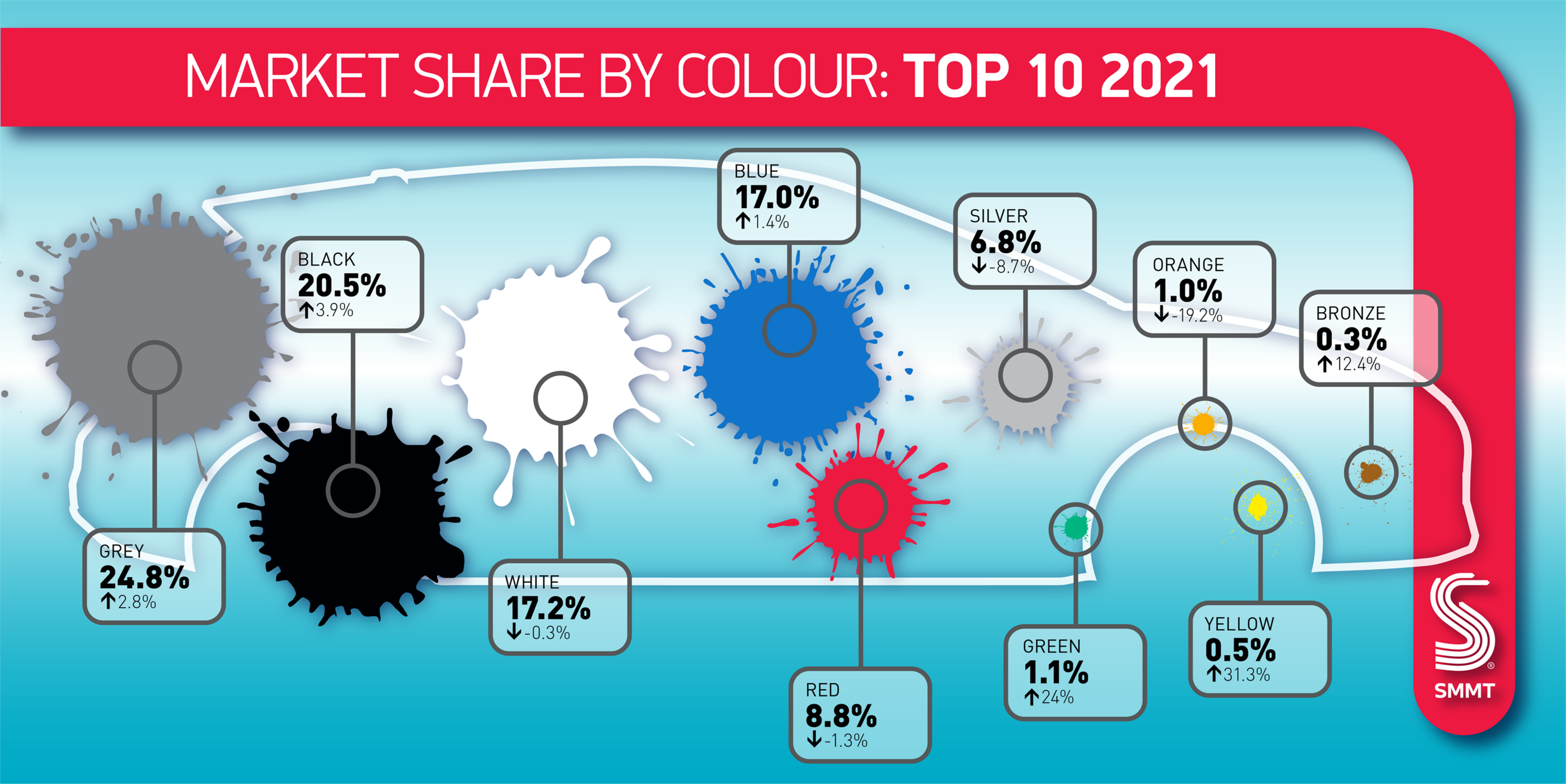
Grey is the UK’s most popular new car colour for fourth consecutive year, followed by black and white, according to figures published by the Society of Motor Manufacturers and Traders (SMMT).

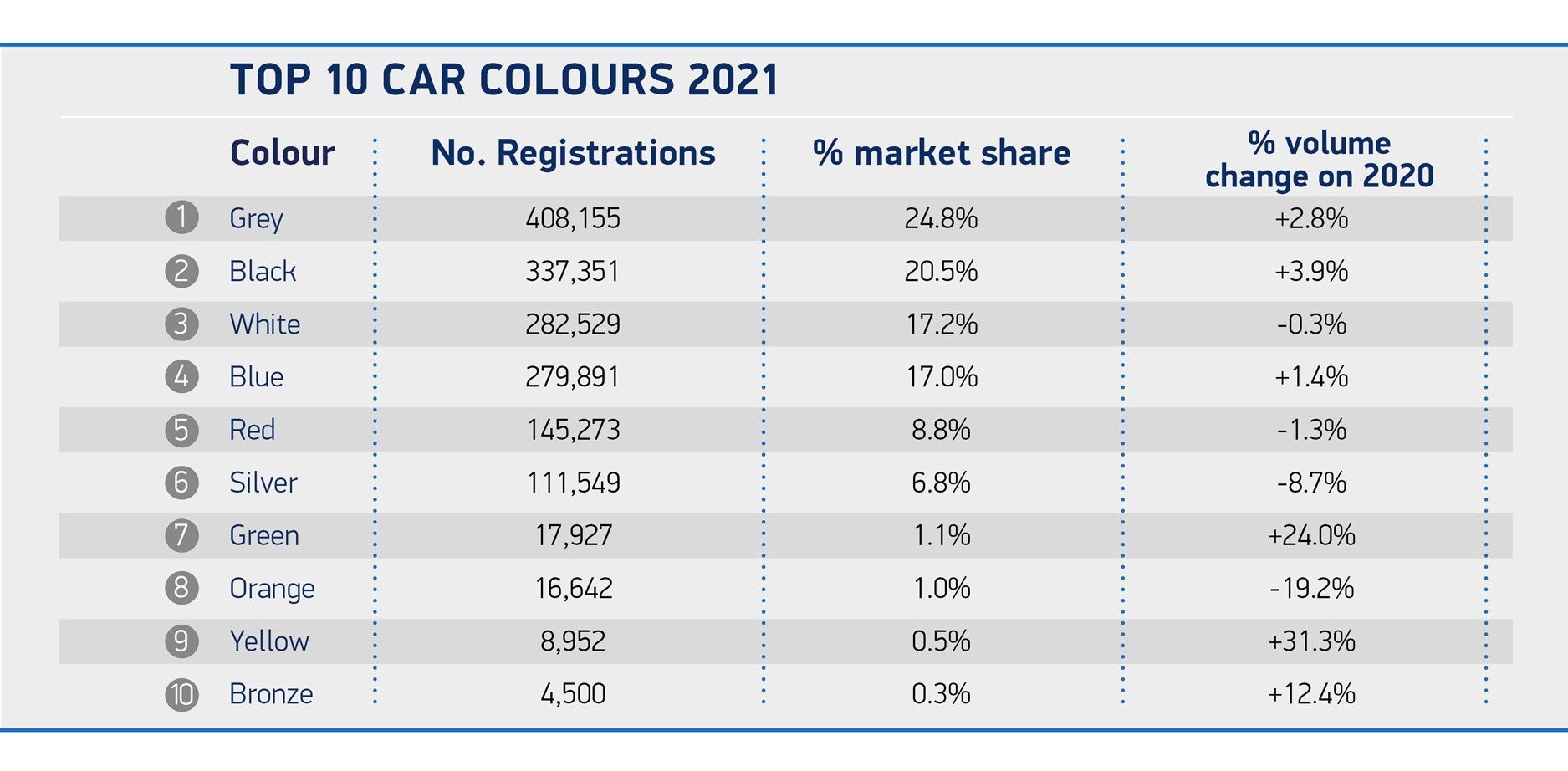
The SMMT data shows that 408,155 new grey cars were registered last year, up by 2.8%, equating to one in four new cars sold (24.8%).

Black, which had been the most popular car colour in the UK from 2009 to 2012, was the next most popular colour, equating to one in five new cars (20.5%) sold. White was the third most popular (17.2%).

It means that an incredible 62.4% of all new cars sold in 2021 were painted in one of these monochrome shades, although blue edged closer to the top three, increasing its sales (1.4%) for the first time in five years and trailing just 2,638 units behind white.

The rest of the top 10 remained largely unchanged from 2020, although green overtook orange to gain seventh place, equating to 17,927 cars. Sales of green cars rose for the first time since 2015, with 24% more buyers opting for the colour than in the previous year.

SMMT Chief Executive, Mike Hawes, says that, while last year’s new cars might share the same shades as previous years, under the bonnet there has been a real shift, with one in six buyers choosing to go ‘green’.

“With car registrations still low compared to pre- pandemic, helping even more drivers move to greener cars – whatever the actual colour – has never been more important,” he said.

“Incentives are helping move the market and should continue, but the speed of this shift to electric must be matched by an acceleration in the pace of charging infrastructure investment. Drivers should expect to be able to recharge irrespective of wherever they live, work or visit.”

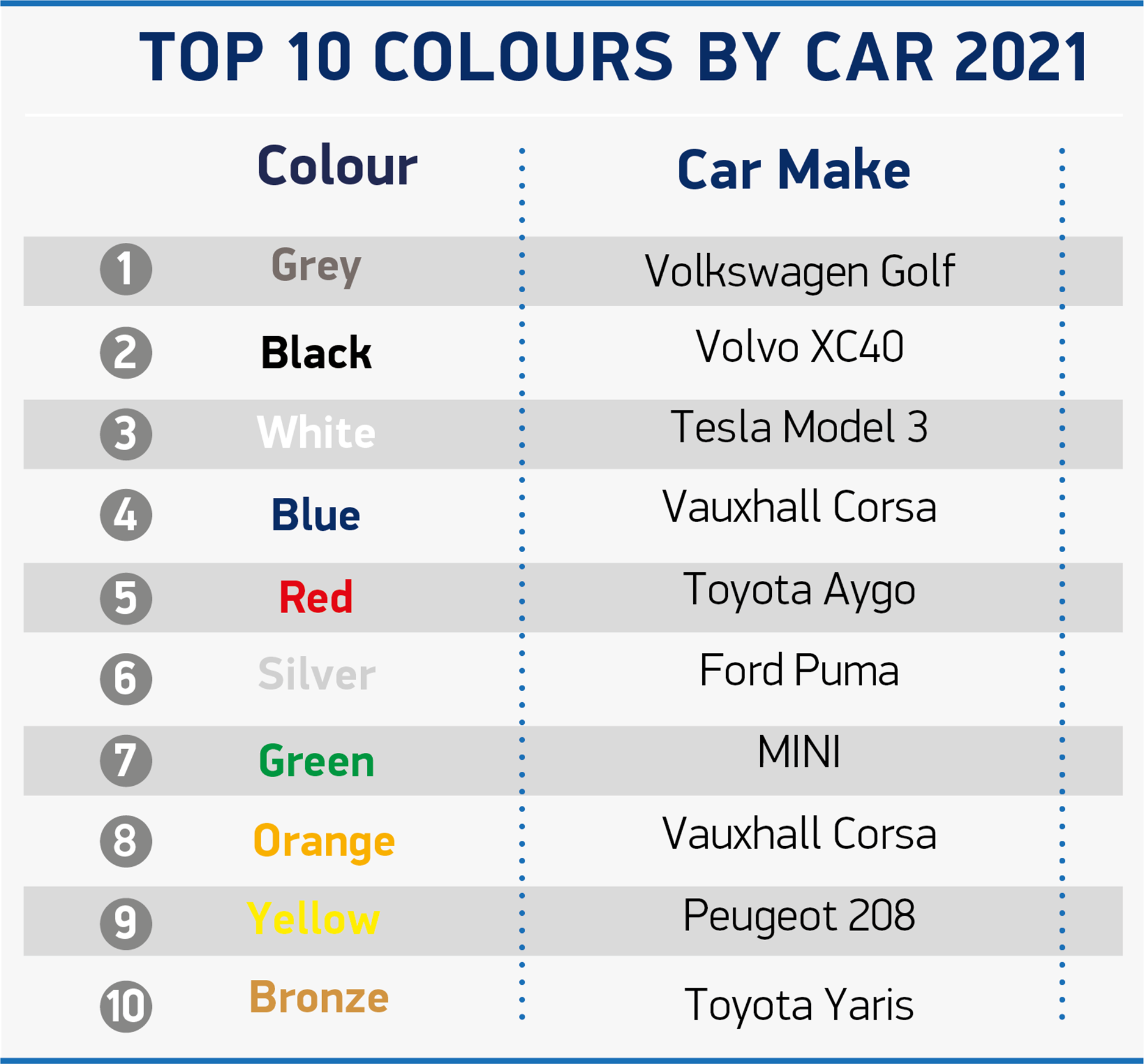
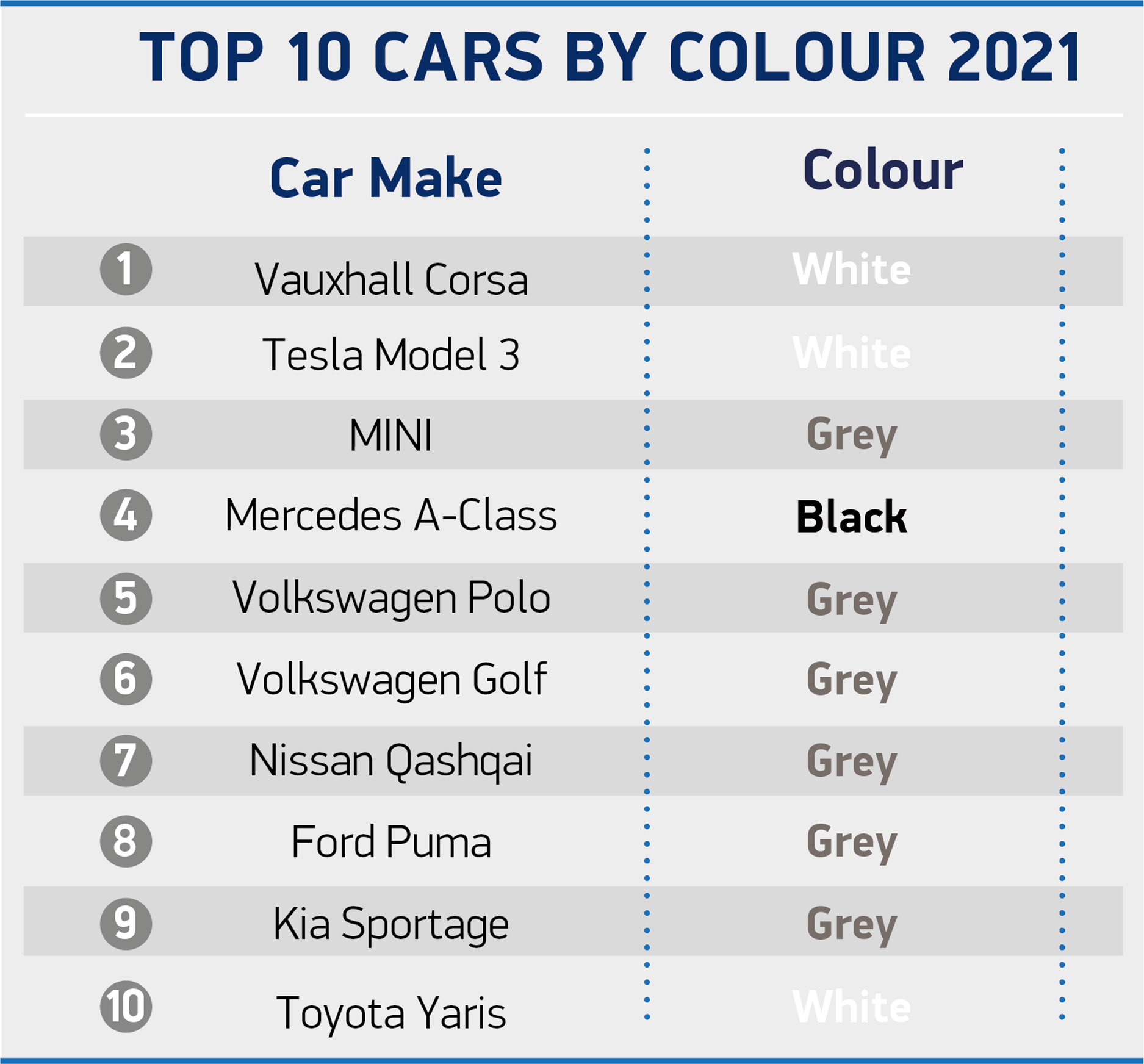
White was the most popular shade for mini-sized and sports cars, while larger dual purpose, luxury saloons and executive cars were, as usual, most likely to be black.

At the niche end of the colour palette, gold, yellow and turquoise were the fastest growing colours, with gold more than tripling its appeal (up 231.8%), yellow up by a third (31.3%) and turquoise up by a fifth (19.2%), although together they accounted for less than one percent of the market (0.9%).

A non-monochrome colour has not been among the UK’s overall top three since blue in 2010, although it was second most popular colour amongst Welsh and Northern Irish new car buyers.

Grey was the top colour in every home nation last year, but more so in England (25.3%), closely followed by Scotland (22.9%), Wales (22.8%), and Northern Ireland (21.7%).

Counties sporting bright-coloured cars included Bedfordshire, the most likely place to see a new pink car, with 66 registrations, while Greater London and Buckinghamshire had the highest numbers of green and turquoise motors, with 1,263 and 238 registrations respectively.

Orange was the new black in the West Midlands, where tangerine-tinted cars accounted for 1,156 registrations, the highest in any UK region.

Scotland was, however, the least likely place to spot a new maroon car, as none were sold in the country. In fact, just 12 buyers across the whole of the UK specified their new car in the colour – the lowest number since 1997.

Consumer preference for grey, which comes in many varying shades, can be attributed to a wide range of reasons; it can be a sleek and deeper tone than other shades, is well-suited to black trims and darker wheels and offers an attractive compromise between the also-popular black and white, with wider resale appeal than brightly coloured cars, so a potentially ‘safer’ choice, especially as it reduces the visibility of dirt more than the other shades.

By Graham Hill thanks to Fleet News

New Mobile Phone Laws Put Drivers At Risk Of £200 Fine

Thursday, 17. March 2022

New mobile phone laws while driving will come into force from March 25, with research suggesting many drivers are ignorant of the changes.

It had been thought that the new rules, which ban drivers from using their phones to take photos or videos, scroll through playlists or play games, would take effect alongside changes introduce to the Highway Code from Saturday (January 29).

However, the Department for Transport (DfT) has confirmed that the new rules will take effect from March 25, with the necessary legislation now making its way through Parliament.

Edmund King, AA president, said: “This is a much needed upgrade of the law to help make our roads safer.

“Mobile phones offer many distractions and this sends a clear message that picking them up to use them will not be tolerated.”

The law will also become tougher as the use of smartwatches, tablets and laptops behind the wheel will apply.

King added: “Drivers will be extremely limited on when they can pick up their phone, mainly to call the emergency services when there was no opportunity to safely pull over and to make contactless payments at drive-thrus.

“Being sat in a traffic jam or waiting at the lights is not an excuse, we want people to keep their hands on the wheel and their eyes on the road.”

The Government announced late last year that it would tighten the rules on the use of mobile phones, making it illegal to use a hand-held device under virtually any circumstance while driving.

It was already illegal to text or make a phone call (other than in an emergency) using a hand-held device while driving.

Anyone caught using their hand-held device while driving will face a £200 fixed penalty notice and six points on their licence.

The Government says that drivers will still be able to continue using a device ‘hands-free’ while driving, such as a sat-nav, if it’s secured in a cradle.

A study by Volkswagen Commercial Vehicles has found that almost half of van drivers are risking a £200 fine and six penalty points on their licence as a result of using a sat nav app on their smartphone.

The research of 1,000 UK van drivers found 46% use an app on their smartphone.

While it is still legal to use sat nav on your mobile phone, it must be safely secured to the dashboard or windscreen, where it must not block your view.

David Hanna, head of sales operations at Volkswagen Commercial Vehicles, said: “We know that van drivers rely on sat navs to get them from one job to the next, but it’s important they do so legally.”

Previous legislation had made it a criminal offence to use a hand-held mobile phone to call or text while driving, but not for other actions such as taking photos.

The law said that an offence is committed if a driver uses a handheld mobile phone for “interactive telecommunication” while behind the wheel.

The phrase reflected how, when the law was written in 2003, smartphones were not in existence and mobile devices were used for sending texts or making calls.

It has enabled lawyers to successfully argue that using a phone’s camera while driving does not constitute “interactive telecommunication”.

It was brought to a head in 2019, when the Director of Public Prosecutions lodged an appeal with the High Court after Ramsey Barreto had a conviction quashed for filming a crash on his mobile phone.

The 51-year-old was prosecuted and found guilty after police saw him driving past an accident using his phone to make a video. However, he had the conviction overturned at Isleworth Crown Court, after his lawyers successfully argued that the law only banned the use of mobile phones to speak or communicate while behind the wheel.

Publishing its decision in July 2019, the High Court dismissed the appeal, agreeing with Barreto’s lawyers.

Drivers concerned over Highway Code changes

Separate research from Venson Automotive Solutions reveals that not all motorists support Highway Code changes, believing they could create more dangerous situations on UK roads, opposed to reducing them.

According to the Venson survey, 79% of motorists disagree with the change that allows cyclists to pass slower-moving or stationary traffic on the right or left, including at the approach to junctions.

Cyclists will be advised they should proceed with caution, especially when deciding whether it is safe to pass lorries or other large vehicles. The question being asked by motorists is “what is deemed safe?”, says Venson.

However, almost half of respondents agree with the new rule which states drivers should remain behind cyclists and motorcyclists at junctions, even if the cyclist is waiting to turn and are positioned close to the kerb.

Changes include requesting drivers to give way to pedestrians crossing or waiting to cross a road into which the driver is turning.  This is supported by 44% of survey respondents.

In addition, drivers will have to give way to pedestrians on a zebra crossing, and to pedestrians and cyclists on a parallel crossing. 

Pedestrians and cyclists will also be allowed to cross the road in front of slow-moving traffic if the changes are approved.

Alison Bell, marketing director for Venson Automotive Solutions, said: “There is a lot of new information for drivers to take onboard.

“It’s essential that businesses operating a fleet of vehicles have a process in place to allow drivers to familiarise themselves with new changes, as well as brush up on existing rules. 

“Businesses and drivers have a duty of care to themselves, other road users and pedestrians. A failure to understand the new rules and correctly implement them could result in financial penalties, law breaking or worse, guilty of an avoidable accident.”  By Graham Hill thanks to Fleet News
UK’s Most Accident-Prone Cities Revealed

Thursday, 17. March 2022

The Compensation Experts have revealed the top 10 most accident-prone cities based on road accidents and accidents in the workplace.

Using data gathered by The Office of National Statistics (ONS) and Health and Safety Executive (HSE), The Compensation Experts have broken down the top 10 most accident-prone cities in the UK based on total road and workplace accidents per capita.

Kingston upon Hull claimed the top spot; there were 603 reported-road traffic accidents and 207 workplace accidents reported last year, that makes for a total accident count of 910.

Peterborough follows as the second top accident-prone city with 327 road accidents and 232 workplace accidents, totally 559 accidents. Peterborough’s lower population increases its accidents per capital to 0.0028.

Portsmouth comes in third position, seeing 427 road traffic accidents and 142 workplace accidents, giving Portsmouth an accident per capita rate of 0.0027.

Commenting on the findings, a spokesperson at The Compensation Experts, said: “With more accidents happening in cities up and down the country each year, it’s more important than ever to ensure you’re covered should the worst happen, but we urge Britons to stay safe and be vigilant when out and about.

“To see which areas are the most accident prone in the UK, please read our full study.”

Fleets and business drivers are being warned of major changes to the Highway Code, which take effect from Saturday (January 29).

The new rules are aimed at improving road safety for vulnerable road users – pedestrians, cyclists and horse riders.

For more information on the study visit The Compensation Expert website.

RankCityNo. of Road AccidentsNo. of Workplace AccidentsTotal AccidentsAccidents per capita (Index Score)
1Kingston upon Hull6033079101.000
2Peterborough3272325590.713
3Portsmouth4271425690.672
4Nottingham5533198720.648
5London4938623448728340.588
6Wakefield3874518380.570
7Derby4151906050.560
8Brighton5531316840.556
9Birmingham180285126530.549
10Wolverhampton3762386140.547

By Graham Hill thanks to Fleet News
Fleet Driver Accidents Drop As A Result Of Dash Cams Installed.

Thursday, 17. March 2022

The fitment of camera systems/digital recording has reduced collisions or near-misses for 59% of fleets, a survey by Brigade Electronics, has revealed.

55% of survey respondents also said it improved driver behaviour, while 44% safety technology had helped with insurance claims.

The road safety company comissioned a survey of the readers of Commercial Motor and Motor Transport magazines to get their views on the reasons they use cameras and video technology on their fleets, how useful they are, and what they consider when they decide to invest.

Brigade said that clients are playing an increasing role in the adoption of this technology, as 12% of respondents said cameras are a contractual requirement from a client, a 3% rise on 2020.

The survey revealed that one-fifth of operators have no plans to use road safety technology and the most common reason (44%) is that it is not seen as relevant to the operation.

Brigade said that, changes to the Highway Code that came into effect in November with further new guidance being added on January 29, will increase the responsibility of commercial vehicle drivers, making it more important to be able to mitigate risk.

The new hierarchy of road users means those who are most likely to be seriously harmed, such as pedestrians and cyclists, will have greater priority over other road users – with HGV drivers ranked lowest.

Chris Hanson-Abbot chairman BE of Brigade Electronics, said: “It’s good to see that the benefits of cameras and other safety technology are being recognised by fleet operators.

“As cameras on their own are a passive technology that does not alert the driver to act, Brigade always recommends that they are combined with active technology such as sensor systems with driver alerts to reduce collisions.

“However, there is still some way to go. Only 47% of fleets have 100% of vehicles fitted with the technology – despite overwhelming evidence they improve safety and save lives.

“That said, only 2% of operators said their fleets had no safety technology at all, which is encouraging.”

The survey also revealed how customers who start using the technology are quickly convinced of the benefits – on a scale of 1 to 5, 73% rate vehicle camera and recording technology as a 4 or 5.  By Graham Hill thanks to Fleet News

New Mega-Fast EV Charger Capable Of 1,000kW Charge Launched

Thursday, 17. March 2022

Voltempo has launched a 1,000kW HyperCharging charger which it says will be able to charge the next generation of EVs in as little as six minutes.

The company says the technology is 2.8 times faster than any comparable charging system and is able to charge up to 24 vehicles at the same time.

Designed and built in Britain, the company said the system has been designed around the needs of service stations and fleets, and is suitable for cars, vans, trucks and buses.

The power can come from multiple sources – for instance, combining the national grid with local green energy sources such as solar and battery energy storage.

Michael Boxwell, CEO of Voltempo, said: “Earlier this year, we announced a world first when we carried out a public demonstration in which we designed and installed a prototype battery in an EV and completely charged it in under six minutes.

“Our new HyperCharging system already gives up to 30% faster charging in current EVs through dynamic power management.

“However, the demonstration showed it will be able to charge the next generation of EVs in a similar time that it takes to refuel a conventional, petrol-driven vehicle.”

A demonstration version of HyperCharging can be seen at Voltempo’s Technology Design Centre in Birmingham.

The first installations of the technology will begin in Match with a charging hub that will be installed at the Tyseley Energy Park in Birmingham.

Voltempo said its technology will enable petrol stations to become cost-effective charging hubs.

It said HyperCharge can be installed anywhere, particularly in locations that need to charge a lot of vehicles at the same time, and the technology’s modular system enables it to be installed 70% faster than other charging systems.  By Graham Hill thanks to Fleet News

Soaring Energy Prices May Increase New Car Prices

Thursday, 17. March 2022

Soaring energy prices could lead to increases in the price of new cars, SMMT chief executive Mike Hawes has warned.

Vehicle manufacturers are already facing a rise in the cost of materials such as lithium and cobalt, key to electric vehicle production, with some experts expecting this alone to be enough to push vehicle prices up as the car parc increasingly electrifies.

However, Hawes said the cost of energy will become the industry’s most pressing challenge once the ongoing semiconductor supply issue is resolved.

“There is the expectation will improve as the year goes on, particularly in the second half of the year, but there will still be ripples into 2023,” said Hawes, speaking at a media event where it was announced that the number of cars produced in the UK in 2021 fell 6.7% to 859,575 units.

“If the semiconductor issue can be resolved, energy will be the most immediate and pressing challenge as we can see what’s coming down the line in terms of price increases.

“The margins on volume car manufacturers are wafer thin and energy will potentially be going up 50%, 60% or 70%.

“There were vehicle price increases last year and, like any other manufacturing sector, if you’re facing increasing input costs, it is going to pull pricing up.

“But manufacturers will always do everything they can to mitigate those costs, either through investment or reductions in other areas.”

This means EVs could face a pricing double whammy. Typically a battery accounts for around 40% of the cost of making a BEV, with the cost of producing them having fallen by almost 90% in the past 10 years.

Figures from Bloomberg New Energy Finance show the inflation-adjusted price of battery packs for cars was $1,200 per kWh in 2010. This had fallen to $132 last year.

The impact this has on the cost of producing an EV is significant. Assuming a kWh price of $132, it would have cost $6,000 to produce a 50kWh battery last year. In 2010, this would have been $60,000.

Prices of many of the elements used in EV battery production rose sharply in the second half of 2021: for example, battery-grade lithium carbonate rose to a record high of $41,060 per tonne, more than five times higher than last January, cobalt doubled to $70,208, while nickel jumped 15% to $20,045 a tonne.

“We’ve got an ever-increasing reliance upon elements such as nickel, cobalt, lithium, manganese and copper for EV batteries,” said James Nicholson, partner in advanced manufacturing and mobility at EY.

“For a while now, a lot of those commodities have had supressed prices and there’s a strong chance that as demand goes up and these metals become quite scarce, we will see some of those material prices continue to lift.

“That’s going to put a pinch point on the cost of the materials that go into battery cells and that could lift the price to the carmaker and eventually the consumer.”

James Frith, head of energy storage research at Bloomberg New Energy Finance, added: “This creates a tough environment for automakers, particularly those in Europe, which have to increase EV sales in order to meet average fleet emissions standards,” says

“These automakers may now have a choice between reducing their margins or passing costs on, at the risk of putting consumers off purchasing an EV.”  By Graham Hill thanks to Fleet News

Range Rovers Still The Most Stolen Cars In The UK

Thursday, 17. March 2022

Tracker has revealed that the Range Rover Sport has been named the most commonly stolen and recovered vehicle for the third consecutive year.

Analysis of data by the stolen vehicle recovery (SVR) company, Tracker Network UK, shows that Range Rover and Land Rover models dominated in 2021, with a total of seven models accounting for almost half (44%) of all stolen cars recovered by Tracker last year.

Mercedes-Benz accounted for almost one in five (18%) vehicles the company recovered.

With keyless car entry systems becoming increasingly commonplace, Tracker says it is no surprise that keyless theft has risen to an all-time high; 94% of all vehicles recovered by Tracker in 2021 were stolen without the thief having possession of the keys.

Clive Wain, head of police liaison for Tracker, says that due to the pandemic, global demand for car parts has created a boom in ‘chop-shops’ – buildings which house stolen vehicles for stripping down so their expensive parts can be sold on.

Furthermore, according to Wain, the lack of parts for new car manufacturing resulted in a surge of sales in the second-hand car market, creating a lucrative business for car thieves to fill the shortage.

“Prestige models have always been the go-to for criminals who exploit the demand for these desirable cars in territories like Europe, Middle East and Africa,” he added.

“We are continuously intercepting shipping containers packed with stolen vehicles at ports around the country and 2021 was no different. However, due to the pandemic lower value cars have also seen an increase in theft rates.”

The BMW X5, which has held the top spot in Tracker’s league table six times in the last ten years, slides down from fourth place in 2020 to fifth position in 2021.

The Audi A4 makes its first appearance since 2011, holding position nine alongside the Mercedes-Benz C-Class. The Audi Q7 sneaks in at number 10, the first time to feature in the Tracker league table since its inception in 2009.

Wain concluded: “Whatever the value of a car, an important barrier to stop thieves is using traditional physical security devices like steering wheel locks and wheel clamps.

“In addition, placing the key fob into a signal blocking pouch which is lined with layers of metallic material, will stop a key’s signal from being intercepted by would-be thieves.

“However, thieves are increasingly determined and employ sophisticated methods too.  In the event of a vehicle being stolen, an SVR solution will significantly increase the chances of it being quickly recovered and returned before it’s sold on, stripped for parts or shipped abroad.”

By Graham Hill thanks to Fleet News