Coronavirus And Sanitising Your Car Without Damage

Tuesday, 17. March 2020

In this article I’m warning about Coronavirus and how to best protect the inside of your car without damage. Whilst most of us are taking precautions at work and at home it’s easy to forget about our cars. And if we remember to protect our cars you should know that some cleaners that we use on work surfaces are not suitable for the inside of your car and can cause serious damage.


For example, bleach and hydrogen peroxide both kill the virus but can damage your upholstery. And I’m not talking neat I’m talking about those chemicals as a constituent part of the cleaner. So it’s important that you check the component parts of any cleaner that you intend to use. Another dodgy ingredient is ammonia. You should not use any ammonia-based product on car touchscreens as they can damage the anti-glare and anti-fingerprint coatings.


If you are the only person in your car then the risk is reduced but of course if you participate in a car share or you regularly rent cars you need to take more care. Make sure you have some sanitiser gel to use in the car and to share with passengers. Then also treat the steering wheel (considered to be one of the highest sources of germs that you will regularly come into contact with – higher than a toilet seat).


Clean the gear shift, door handles, inside and out, indicator and windscreen wiper stalks, buttons, touch screens, armrests, grab handles, seat adjusters, in fact anything that you or a passenger may have come into contact with.


So having checked the ingredients for the above you also don’t want to pay over the odds for product that is aimed at auto interiors but are being sold at a premium. So what can you use that is cheap? Experts recommend Isopropyl Alcohol as being the most effective against Coronavirus and safe for the interior of your car. The most effective contain over 70% alcohol.


Manufacturers of product in the US suggest that most, if not all car surfaces have been tested safe to be cleaned with Isopropyl alcohol, from plastic to metal and leather, even soft cloth upholstery. If in doubt consult the manufacturer/dealer and if you are really worried use their proprietary product. Don’t forget if you use say a bleach-based product and it damages the leather seats etc.and the car is being handed back at the end of the agreement you could be charged a substantial amount to repair/replace the damaged seating.


Vigorous washing with soap and water can also destroy a coronavirus. Coronaviruses are surrounded by a protective envelope that helps them to infect other cells, and destroying that envelope can effectively disarm them.


“Friction from cleaning also participates in the destruction,” says Stephen Thomas, M.D., chief of infectious diseases and director of global health at Upstate Medical University in Syracuse. “You want to do the best with what you have, so even soap and water can chip away at the risk.”


Soap and water are also safe for most car interiors—especially fabrics and older leather that may have begun to crack. Just be sure not to scrub too hard, says Larry Kosilla, president of car detailing company AMMO NYC and host of a popular YouTube channel about car detailing.


Most car leathers and imitation leathers have urethane coatings for protection, which is safe to clean with alcohol. But most leathers are dyed, and cleaning too vigorously can remove the dye.


Kosilla says he’s heard from car owners who think their light-colored leather is getting dirtier as they scrub it, which isn’t the case. “It’s not getting dirtier, you’re removing all the color on top,” he says.


Take care of your leather upholstery after you clean it, says John Ibbotson, chief automotive services manager at CR. “You should use a good leather cleaner, then a good leather conditioner afterwards,” he says.


If your car has fabric upholstery, Kosilla warns against cleaning it with too much water or too much soap. “The goal is not to create too many suds. If you get suds, you’ll have suds forever,” he says. In addition, if you soak through the fabric down to the cushion beneath, it could end up creating a musty smell or encouraging mould growth in the cushions. Instead, Kosilla recommends lightly agitating the fabric with a small amount of water and laundry detergent.


Both Stout and Kosilla recommend cleaning all surfaces with a microfiber cloth. That’s because they’re made of fabric that consists of tiny little loops that capture and sweep away dirt and dust particles before they can scratch delicate or shiny plastic surfaces. By comparison, the dirt and debris in your car can stick to even the cleanest paper towels or napkins and scratch surfaces—”like sandpaper,” Kosilla says.


Once you’re finished cleaning, don’t forget to wash your hands before and after driving. It’s a good habit to get into even outside of the spread of COVID-19, as it will keep your steering wheel and other frequently touched surfaces in your car from looking dingy.


“The number one thing is to clean your hands,” Kosilla says. “You can clean your steering wheel, but if you have dirty hands, you put that dirt back on.”


Washing your hands is still one of the best ways to defend yourself against COVID-19, says Thomas.


“It is known that coronaviruses can persist on surfaces, but as of right now we still think infections via respiratory transmission are still primarily the main route from person to person,” he says.


So there you have it, views that I’ve collated from the UK, US and other countries. The thing is don’t panic but take extra precautions and hopefully, you’ll be safe and virus free. By Graham Hill
Coronavirus And The Effect On Car Manufacturing.

Tuesday, 17. March 2020

Manufacturers insist that lead times and the availability of parts for the aftermarket are not being impacted by the spread of coronavirus (Covid-19).


However, with the number of people contracting the illness growing globally each day, some have suggested parts shortages cannot be ruled out longer term.


Hubei province in China – the centre of the outbreak – is a major hub for vehicle parts production and shipments.


In 2019, China exported car parts to a value of more than $60 billion, (£47bn) according to customs data.


Dr Ralph Speth, CEO of Jaguar Land Rover (JLR), which produces almost 400,000 vehicles per year at its three factories in the UK, told attendees at the opening of the National Automotive Innovation Centre in Coventry the supply of parts was a concern.


“This is an issue for the complete car automotive industry,” he said. “We don’t know how long it will take before the supply chain comes on stream again in China.”


A JLR spokesman told Fleet News: “While we cannot rule out the possibility of parts shortages impacting production the longer the disruption continues, we do not currently expect to stop production in our plants as a result of parts shortages.”


Nissan said it had restarted operations in three of its plants in China, but at this time, the restart timing of Xiangyang Plant (Hubei Province) and Zhengzhou Plant (Henan Province) had not been determined.


The spokesman added: “In Japan, we are planning or have carried out temporary production adjustments at certain plants. There has been no impact on our plants outside China.”


Toyota says it is investigating the impact, with parts also produced by Chinese suppliers, but stressed at this stage it did expect an impact on the availability of product in the UK.


Mercedes-Benz told Fleet News that it gradually started production in China last month and all of its other plants were running as planned.


“Currently the supply is secured,” a spokesman said. “Possible effects depend on the development of the general corona situation, as suppliers, transport logistics, etc. are also affected by the government regulations in China.”


Meanwhile, Fiat Chrysler Automobiles (FCA), BMW, Kia, Vauxhall, and the Volkswagen Group, including Audi, Škoda and Seat, all said they were closely monitoring the situation.


The World Health Organisation (WHO) has said that the world is in “uncharted territory” on the coronavirus outbreak, while the Organisation for Economic Cooperation and Development (OECD) has warned the global economy could grow at its slowest rate since 2009.


The think tank has forecast growth of just 2.4% in 2020, down from 2.9% in November. But it said a longer “more intensive” outbreak could halve growth to 1.5%.


The forecast came after the Bank of England vowed to help stabilise markets, which suffered steep losses at the end of February.


Coronavirus is already forcing businesses to suspend operations in China and elsewhere as officials try to contain its spread.


The OECD forecasts the global economy could recover to 3.3% growth in 2021, assuming the epidemic peaks in China in the first quarter of this year and other outbreaks prove mild and contained. But it said the picture would be much worse if the virus spread throughout Asia, Europe and North America.


David Leggett, automotive editor at analytics firm GlobalData, said: “With a typical car containing 20,000 parts, some Chinese-sourced content in every car is a given.


“Procurement managers at the car companies will be struggling to get visibility on where the critical supply-chain pinch points are – both in terms of what they directly source and also what comes in from tier one suppliers in the form of sub-assemblies and their sourcing difficulties further down the supply-chain.”


Leggett added that carmakers will look at options such as switching to alternative supply sources, but for some critical parts that may be very difficult to do in the short-term – thus halting production when supply dries up.


“All they can do is closely monitor the situation and look at risk mitigation measures where they can,” he said.


“Buffer stocks to ride out supply disruptions will be limited due to the predominance of ‘just-in-time’ lean manufacturing processes that keep inventory levels low.”

Drivers In The UK Spend More Time Stuck In Traffic

Wednesday, 11. March 2020

Latest Government statistics have revealed that UK drivers spent more time stuck in traffic in 2019 than the year before.

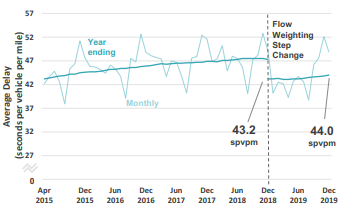
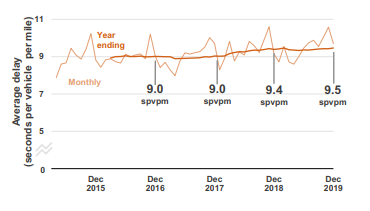
In 2019, the average delay on the Strategic Road Network increased by 0.1 seconds per vehicle per mile (up 0.9% on 2018). The average delay on local ‘A’ roads increased by 0.8 seconds per vehicle per mile (1.8% increase on 2018), according to statistics from the Government’s latest statistical release.

The findings from the Department for Transport’s Travel time measures for the Strategic Road Network and local ‘A’ roads, England: January to December 2019 show that on the Strategic Road Network (SRN) in 2019, the average delay is estimated to be 9.5 seconds per vehicle per mile compared to speed limits, a 0.9% increase on the previous year.


The statistical release also shows that the average speed of drivers was 58.8mph, down 0.5% from 2018.

The reliability of travel times is measured using the Planning Time Index which shows 67.3% of additional time is needed compared to speed limits on average, on individual roads sections to ensure on time arrival. This figure is up 1.1 percentage points in comparison to 2018.

On local ‘A’ roads in 2019, the average delay is estimated to be 44.0 seconds per vehicle per mile compared to free flow, up 1.8% compared to 2018.

The average speed on local ‘A’ roads was 25.3 mph, no change compared to the previous year.

If you want to read the full document, you can find it here: https://assets.publishing.service.gov.uk/government/uploads/system/uploads/attachment_data/file/870292/travel-time-measures-srn-local-a-roads-2019.pdf   By Graham Hill thanks to Fleet News.

European New Car CO2 Emissions Reach An Unexpected High

Wednesday, 11. March 2020

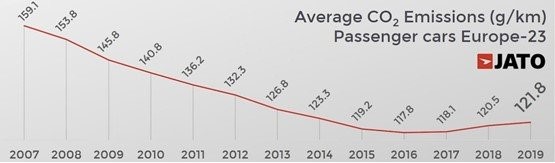
New car CO2 emissions have continued to rise and have hit the highest average since 2014. Only a rapid increase in electric vehicles will reverse this trend, says JATO Dynamics.


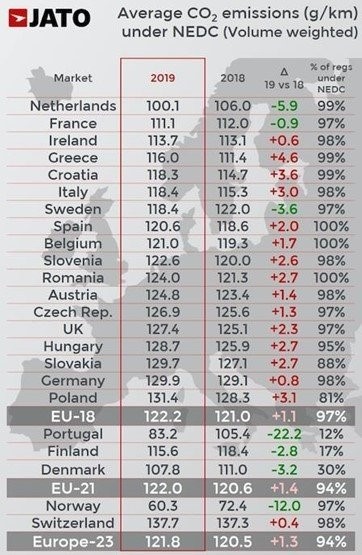
Data from the business has revealed that, last year, the volume weighted average CO2 emissions for European markets were at their highest levels since 2014. The average for the 23 European markets totalled 121.8g/km under the NEDC regime.


Felipe Munoz, JATO Dynamics’ global analyst, said: “As expected, the combination of fewer diesel registrations and more SUVs continued to have an impact on emissions. We don’t anticipate any change to this trend in the mid-term, indeed these results further highlight the industry’s need to adopt EVs at a rapid pace to reach emissions targets.”


Average CO2 emissions (NEDC) measured in 2019 increased for the third year running, despite new regulation designed to curtail this.


The data also shows that although last year’s average was 1.3g/km higher than in 2018, the increase was in fact lower than the difference between the 2017 and 2018 results – where the growth was 2.4g/km.


Despite an increase of electric vehicle (EV) models contributing positively on emission levels, the move away from diesel had a negative impact.


Munoz said: “The average emissions of electrified vehicles, was 63.2g/km, almost half that produced by diesel and petrol vehicles. The problem arose because EVs only accounted for 6% of total registrations, which is not yet a high enough figure to create a positive change.”


Four of the five major markets in Europe posted higher averages in 2019 than in 2018. Average emissions for Germany, Britain, Italy, and Spain increased, ranging from a rise of 0.8g/km for Germany to an increase of 3.0g/km for Italy.


JATO believes this was in part caused by marked changes in attitude and regulations around the use of diesel fuels, pushing people to drive higher CO2 emitting petrol vehicles.


France was the only market to see better results, as its average fell from 112.0g/km in 2018, to 111.1g/km last year. Despite this positive change, its emission levels were still higher than the averages they recorded in 2016 and 2017.


Pure electric cars have a 2% market share in France, the highest share among all five major markets.


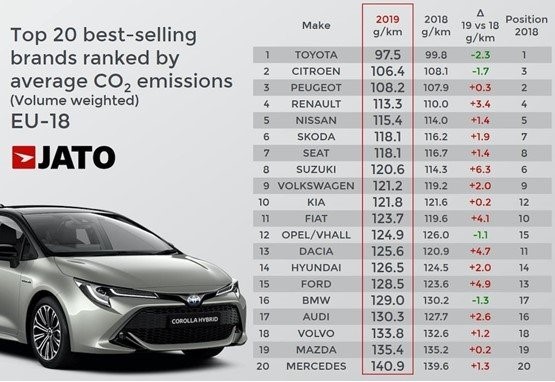
Toyota holds its position as the top 20 best-selling brand with the lowest average CO2 emissions in Europe, as well as seeing the largest decrease since 2018, with its average failing by 2.3g/km.


JATO says Toyota’s success is based on its popular hybrid range, with registrations making up 60% of the brand total volume in 2019.


In the group ranking, Toyota was behind Tesla. Along with Lexus brand, Toyota posted an average of 99.0g/km of CO2 in 2019, 14.3g/km less than the next best in the ranking, PSA. At group level, Nissan Group, Renault Group, Mitsubishi and Suzuki posted average emissions lower than the total market’s average of 121.8g/km. Volkswagen Group recorded an average of 123.6g/km.

Citroen was the brand with the second-lowest average emissions and was the second-best performer.


The average CO2 emissions for SUVs was 131.5g/km, higher than emissions posted from city-cars (107.7g/km), subcompacts (109.2g/km), compacts (115.3g/km), midsize (117.9g/km), and executive cars (131g/km).


“The SUV segment of the market urgently needs more electrified models. To date, the focus for EVs has been on traditional hatchbacks and sedans, leaving very few choices in the SUV market. If these vehicles want to keep gaining traction and avoid future sanctions, they need to be electrified” says Munoz. By Graham Hill thanks to Fleet News

Tyre Pollution 1,000 Times Worse Than Exhaust Emissions

Wednesday, 11. March 2020

Pollution from tyre wear can be 1,000 times worse than what comes out of a car’s exhaust, according to a new study by Emissions Analytics.


Harmful particle matter from tyres – and also brakes – is being exacerbated by the increasing popularity of large, heavy vehicles such as SUVs, and growing demand for electric vehicles, which are heavier than standard cars because of their batteries.


Exhaust emissions have been rapidly reduced by car makers as a result of the pressure placed on them by European emissions standards. New cars now emit very little in the way of particulate matter but there is growing concern around ‘non-exhaust emissions’.


Non-exhaust emissions (NEE) are particles released into the air from brake wear, tyre wear, road surface wear and resuspension of road dust during on-road vehicle usage. No legislation is in place to limit or reduce NEE, but they cause a great deal of concern for air quality.


Richard Lofthouse, senior researcher at Emissions Analytics, said: “It’s time to consider not just what comes out of a car’s exhaust pipe but particle pollution from tyre and brake wear. Our initial tests reveal that there can be a shocking amount of particle pollution from tyres – 1,000 times worse than emissions from a car’s exhaust.


“What is even more frightening is that while exhaust emissions have been tightly regulated for many years, tyre wear is totally unregulated – and with the increasing growth in sales of heavier SUVs and battery-powered electric cars, non-exhaust emissions are a very serious problem.”


NEEs are currently believed to constitute the majority of primary particulate matter from road transport, 60% percent of PM2.5 and 73% percent of PM10 – and in its 2019 report ‘Non-Exhaust Emissions from Road Traffic’ by the UK Government’s Air Quality Expert Group (AQEG), it recommended that NEE are immediately recognised as a source of ambient concentrations of airborne particulate matter, even for vehicles with zero exhaust emissions of particles – such as EVs.


To understand the scale of the problem, Emissions Analytics performed some initial tyre wear testing. Using a popular family hatchback running on brand new, correctly inflated tyres, it found that the car emitted 5.8g/km of particles.


Compared with regulated exhaust emission limits of 4.5mg/km, the tyre wear emission is higher by a factor of more than 1,000.


Emissions Analytics notes that this could be even higher if the vehicle had tyres which were underinflated, or the road surfaces used for the test were rougher, or the tyres used were from a budget range – all very recognisable scenarios in ‘real world’ motoring.


Nick Molden, CEO of Emissions Analytics, said: “The challenge to the industry and regulators is an almost complete black hole of consumer information, undone by frankly out of date regulations still preoccupied with exhaust emissions. In the short term, fitting higher quality tyres is one way to reduce these NEEs and to always have tyres inflated to the correct level.


“Ultimately, though, the car industry may have to find ways to reduce vehicle weight too. What is without doubt on the horizon is much-needed regulation to combat this problem. Whether that leads to specific types of low emission, harder wearing tyres is not for us to say – but change has to come.”


Mike Hawes, SMMT chief executive responded to the findings: “Making sensationalist claims based on testing of a single vehicle is not credible and, quite frankly, irresponsible. Emissions from safety-critical brakes, tyres and road surfaces are very difficult to measure, and a challenge already taken seriously by the sector, governments and a UN global group, which are working together to better understand, and agree, how to test them in a scientific way. Further, there is no evidence to suggest that electric vehicles have a propensity to emit more non-exhaust particulates than any other – in fact, their regenerative braking systems mean wear is significantly reduced.” By Graham Hill with thanks to Fleet News

New Code Of Practice For EV Home Charge Points

Thursday, 5. March 2020

The first electric vehicle (EV) code of practice has been launched to ensure that consumers receive fair treatment from domestic charge point installers.


The Electric Vehicle Consumer Code (EVCC) aims to reduce the mis-selling of home energy generating systems such as photovoltaic (PV) and battery storage and improve installation quality.


The code is a voluntary scheme which domestic charge point installation businesses can subscribe to, identifying them as reputable.


The code draws on experience from the Renewable Energy Consumer Code (RECC) for small-scale renewable technologies. Both the Electric Vehicle Consumer Code and the Renewable Energy Consumer Code are administered by Renewable Energy Assurance Limited (REAL).


Virginia Graham OBE, chief executive of Renewable Energy Assurance, said: “RECC has played a foundational role in enforcing high consumer protection standards in the small-scale renewable energy industry since 2006.


“We aim to extend the lessons learnt from that sector into the rapidly-growing world of EV home charge points.”


The launch of the code follows the Government’s announcement made in February that intends to consult on bringing forward the date banning the sale of new internal combustion engine cars and vans from 2040 to 2035.


Transport minister Rachel Maclean said: “Zero emission vehicles are cutting transport emissions and improving air quality, making our communities healthier, better places to live. Having the right rules and regulations on charge point installation standards is important and we want to see industry showing leadership in this area.


“We welcome the Electric Vehicle Consumer Code which aims to protect both people and installers of electric charge points in homes across the UK.”


There are currently around 1,000 businesses in the UK authorised to install domestic charge points through the Government’s Electric Vehicle Homecharge Scheme – one in four of these are also a RECC member.


Nina Skorupska CBE, chief executive at the Renewable Energy Association (REA), said: “The EV charging industry is committed to best practice. Decarbonisation of the UK transport sector is our aim, but to achieve this we need to bring consumers with us on the journey and ensure they are confident about the low-carbon products and services on the market.”


Installer Joju Solar supports the introduction of the Electric Vehicle Consumer Code.


Chris Jardine, technical director of Joju Solar, said: “As an experienced installer of EV home charge points, Joju is well-placed to support this important consumer protection initiative. With the EV charge point sector set to grow exponentially we need to ensure consumers have the confidence they need to play their full part.”  By Graham Hill thanks to Fleet News

Coronavirus Fears Have Been Given As The Reason For The Drop In Diesel Cost

Thursday, 5. March 2020

Diesel drivers enjoyed the 11th biggest monthly drop in pump prices since 2000, with the price of the fuel falling 4p per litre (ppl) in February, according to RAC Fuel Watch data.


Petrol fell by 3p (2.93p) a litre to 124.02p – its 19th biggest drop in a month. Diesel was down by 4.24p to 127.04ppl, which means the cost of filling up a 55-litre family car with diesel is £2.33 cheaper at £69.87. For petrol it is £1.61p less than it was in January at £68.21.


Asda is leading the way among the big four supermarket fuel retailers by selling petrol for 116.78ppl – 3.5p lower than it was at the start of February and 3.5p cheaper than its closest competitor.


It also reduced diesel by 5.9p to 118.8ppl which makes it 4p cheaper than its nearest rival.


The average price charged for unleaded between all supermarket sites is 119.19ppl and 121.62ppl for diesel – around 5p less than the UK average prices.


The pump price reductions have been driven by a $10 slump in the price of a barrel of oil from a high of $60.28 on 20 February to $50.41 by the close of the month.


Over the course of the whole month though the reduction was far smaller at just $3, with a barrel having started February at $53.48.


As a result, the wholesale price of unleaded dropped to below 90p a litre before delivery, retailer margin and VAT.


The last time a price as low as this was seen was at the end of January 2019 which led to an average UK pump price of around 119ppl – 5p less than the current average.


The diesel wholesale price finished February at 92ppl – the last time this was recorded was at the end of August 2017 which also translated to a forecourt price of around 119ppl – 8ppl lower than the current UK average price for diesel.


RAC is calling on retailers to keep cutting their pump prices so drivers are charged a fair price which properly reflects the large reductions on the wholesale market.


RAC fuel spokesman Simon Williams said: “While it is good drivers are benefitting from lower forecourt prices, in reality the wholesale price is such that the big four supermarkets, which dominate UK fuel retailing, should cut their prices again.


“At the moment both fuels are 6p a litre too expensive which means for petrol we should really be seeing a UK average of 118p.


“Unfortunately, we don’t think diesel will come down to the 2017 price of 119p a litre due to wholesale prices only dropping to 92p a litre briefly as a result of oil suffering its biggest weekly decline in more than four years.”


Williams says that the oil price has slumped due to the spread of the coronavirus prompting fears of slower global demand, which may well lead to a move from oil producer group OPEC and its allies to restrict production when they stage an extraordinary meeting in Vienna on Friday (March 6).


“If they decide to take action to prop up the barrel price it would very likely put an end to falling forecourt fuel prices,” said Williams.


Regional fuel price variation


Regional average unleaded pump prices


Unleaded 03/02/2020 27/02/2020 Change
UK average 126.95 124.02 -2.93
North East 125.63 122.38 -3.25
Yorkshire And The Humber 126.42 123.37 -3.05
West Midlands 127.21 124.17 -3.04
East Midlands 127.33 124.32 -3.01
Scotland 126.16 123.15 -3.01
Wales 125.81 122.83 -2.98
South East 128.06 125.13 -2.93
North West 126.49 123.56 -2.93
East 127.33 124.55 -2.78
London 127.73 125.00 -2.73
South West 126.78 124.06 -2.72
Northern Ireland 124.45 122.00 -2.45

Regional average diesel pump prices

Diesel 03/02/2020 27/02/2020 Change
UK average 131.28 127.04 -4.24
North East 129.85 125.29 -4.56
Wales 130.70 126.26 -4.44
North West 130.75 126.37 -4.38
East 132.02 127.67 -4.35
Scotland 130.87 126.61 -4.26
Yorkshire And The Humber 130.70 126.48 -4.22
East Midlands 131.54 127.33 -4.21
South East 132.51 128.31 -4.20
West Midlands 131.39 127.22 -4.17
South West 131.45 127.37 -4.08
London 131.69 127.68 -4.01
Northern Ireland 128.34 124.59 -3.75


Latest Car Registrations Show A Drop With Calls For More Incentives To Go EV

Thursday, 5. March 2020

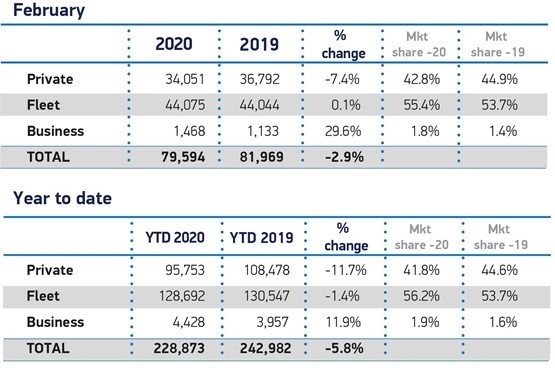
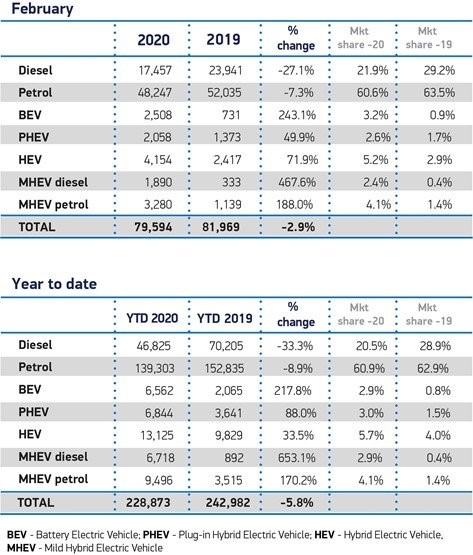
Fleet and business new car registrations fell slightly in February, when compared to the same month last year, according to data published today by the Society of Motor Manufacturers and Traders (SMMT).


There were 45,543 new cars registered to fleet and business in the month, an increase of about 1% on February 2019.


Year-to-date fleet and business new car registrations stand at 133,120 units, a 1% decline when compared to last year.


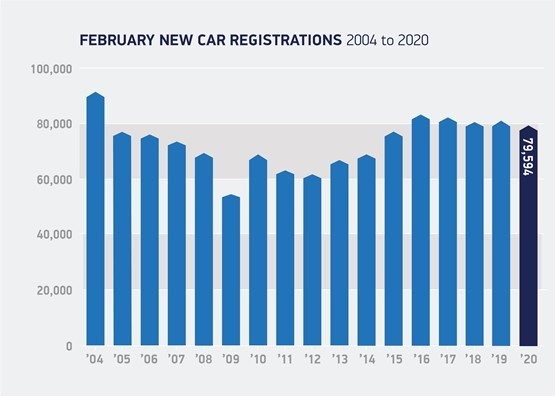
Overall, the UK new car market declined 2.9% in February, with 79,594 models were registered in the month. Registrations by private buyers were responsible for the bulk of the overall loss, down some 7.4% as 2,741 fewer people took delivery of new cars.


Demand for both diesel and petrol cars fell in the month, with registrations down 27.1% and 7.3% respectively, with diesel now accounting for just over a fifth of sales (21.9%).


Hybrids (HEVs) recorded an uplift of 71.9% to 4,154 units, while registrations of zero emission capable cars also continued to enjoy growth, with battery electric vehicles (BEVs) rising more than three-fold to 2,508 units and plug-in hybrids (PHEVs) up 49.9% to 2,058.


However, these vehicles still make up just 5.8% of the market; and BEVs only 3.2%, showing the scale of the challenge ahead.


The news comes as SMMT calls on the Chancellor to use next week’s Budget to announce bold new measures to make new-tech zero emission-capable cars, including plug-in hybrids, more affordable for mass market buyers.


In 2020, manufacturers will bring more than 23 new battery electric and 10 plug-in hybrid electric cars to the UK to add to the more than 65 already on sale, but take up of these new models depends on affordability and the provision of adequate charging infrastructure.


SMMT is calling for the removal of VAT from all new battery electric, plug-in hybrid electric and hydrogen fuel cell electric cars – a move which would cut the purchase price of an average family battery electric run-around by some £5,600.


Combined with additional measures, including the long term continuation of the critical plug-in car grant at current levels and its reintroduction for plug-in hybrids; and exemption from VED and insurance premium tax, the upfront cost of these vehicles could be cut by as much as £10,000, helping to deliver greater cost parity with conventionally powered vehicles and making them a viable option for many more buyers, it says.


Based on current market forecasts, SMMT calculations show that the removal of VAT could increase sales of battery electric cars alone to just under one million between now and 2024, resulting in an additional CO2 saving of 1.2 million tonnes over this period.


However, this must be part of a comprehensive package of incentives implemented alongside substantial investment in charging infrastructure to ensure a sustainable transition for consumers and businesses of all incomes, regions and lifestyles, it says.


Only by addressing both these issues can the government’s accelerated ambitions for zero emission vehicle sales be met.


Mike Hawes, SMMT chief executive, said: “Another month of decline for the new car market is especially concerning at a time when fleet renewal is so important in the fight against climate change.


“Next week’s Budget is the Chancellor’s opportunity to reverse this trend by restoring confidence to the market and showing that government is serious about delivering on its environmental ambitions.


“Industry has invested in the technology, with a huge influx of new zero- and ultra-low emission models coming to market in 2020, and we now need Government to match this with a comprehensive package of incentives and infrastructure spending to accelerate demand.


“To drive the transition to zero emission motoring, we need carrots, not sticks – as the evidence shows, talk of bans and penalties only means people hang on to their older, more polluting vehicles for longer.


“It’s time for a change of approach, which means encouraging the consumer to invest in the cleanest new car that best suits their needs.


“If that is to be electric, Government must take bold action to make these vehicles more affordable and as convenient to recharge as their petrol and diesel equivalents are to refuel.”


Michael Woodward, UK automotive lead, Deloitte, believes the key to maintaining growth of EVs will be investment in the supporting infrastructure.


“Where consumers were once deterred by battery range anxiety, this has now shifted to charging anxiety with access to charging now being seen as the biggest barrier to buying a full EV for UK customers,” he said.


“Manufacturers are doing their part by bringing new models to the market and adding range to batteries. What consumers need now is clarity on joined-up, long-term infrastructure development and continued financial incentives could be key to future EV growth.”


Jon Lawes, managing director at Hitachi Capital Vehicle Solutions, concluded: “The industry will be eagerly anticipating the Government’s Spring Budget next week, where further measures to support the transition to zero-emission vehicles are expected to be announced.


“As SMMT calculations have shown, the removal of VAT on electric and hybrid vehicles is one step that could support this transition, however, for any solution to be effective, clarity on considerations including Clean Air Zones, infrastructure investment and plug-in car grant incentives will also be pivotal to help achieve the UK’s zero emission targets.”


By Graham Hill thanks to Fleet News

Electric Vehicle Charge Points At Supermarkets Increases Substantially

Thursday, 5. March 2020

For years I’ve suggested that supermarket car parks are the best place for EV chargers to be installed. Unlike street parking and normal car parks visitors to supermarket car parks are very short term ranginf from just 15 minutes to an hour and a half.


From the supermarket’s point of view it generates extra income, keeps shoppers in the shop for longer and at times when the shops would be fairly empty, in the evenings, those wanting to charge their cars would be encouraged to shop outside of peak times, so I’m pleased to see the increase.


Here’s the report:


The number of electric vehicle (EV) charge points at supermarkets has doubled in the last two years, according to data analysed by Zap-Map and the RAC.


Research shows 542 EV charger units were installed by supermarkets from the end of October 2017 to the end of 2019, taking the total on their sites to 1,115 – a growth of 95%.


This means 6.5% of all the UK’s public charge points are located at supermarkets, with growth in-line with the overall growth of public charge points.


The number of stores offering charging facilities has also doubled with 608 supermarket sites now catering for battery electric and plug-in hybrid vehicles which equates to 5% of all supermarkets.


When looking at each supermarket’s store portfolios, Asda has the greatest proportion of locations where an EV can be charged – 122 of its 633 sites (19%).


Morrisons is in second spot with EV charging available at 89 of its 494 stores (18%), while Waitrose comes in third place with 14% – 49 of 349 stores.


Tesco currently only has 4% of stores with charging capability but it has highest total number of stores with charging facilities (142 of 3,961 stores).


An initiative by Volkswagen, Tesco and Pod Point has seen its free to use EV charging points installed in 100 stores.


Launched last year, the partnership aims to install around 2,400 complimentary charging points for electric vehicles (EVs) installed in Tesco store carparks.


Currently, 15% of supermarket charge points are capable of rapid charging. Morrisons leads the way with 84 rapid chargers, making for 59% of its total number of chargers. Lidl is second with 63% of its 76 units (48) equipped with rapid charging. Co-op is in third with 18% of 88 chargers (16) capable of delivering its EV-owning customers with a rapid charge.


Melanie Shufflebotham, co-founder of Zap-Map, said: “It is very encouraging to see supermarkets increasingly embracing electric vehicle charging at their stores with a dramatic shift in the number of chargers being installed over the course of the last two years.


“Our research shows that while the majority of charging is done at home, most EV drivers use the public network more than once a month. While a robust rapid infrastructure across the country is essential for longer journeys, having charge points in supermarkets provides EV drivers an excellent way to ‘graze‘ energy while doing an everyday task.


“With 89% of EV drivers taking the availability of charge points into account when selecting their parking, providing charging can be a real differentiator locally in the competitive supermarket sector. This seems to be recognised by some supermarkets, notably Tesco and Sainsbury’s, providing EV charging for free.”  By Graham Hill thanks to Fleet News

Safety Body Warns Of Dangers If Cars Are Not Properly Serviced And Maintained

Thursday, 5. March 2020

Whilst the report was aimed at business users it also applies to consumers so worth reading what Brake, the safety body has to say.


Failure to comply with basic vehicle standards can result in tragic consequences, according to the latest report released by Brake’s Global Fleet Champions.


‘Vehicle maintenance and mechanics’ outlines the consequences of not complying with vehicle standards and explains how to improve maintenance and checking procedures to ensure vehicles remain a valuable resource.


The report outlines that regular checking and servicing of safety-critical components such as brakes and tyres can fix small problems early on, removing the need for costly repairs and expensive insurance claims.


John Eastman from the Institute of Road Transport Engineers believes that fleet managers should take a systematic approach towards the maintenance of vehicles. He said that preventative maintenance has several benefits, not least the improved safety, reliability and wellbeing of people who drive for work and other road users.


The report also features advice from Autoglass, who advises fleet managers on how to effectively maintain advanced driver-assistance systems (ADAS) to ensure the technology works effectively.


Jeremy Rochfort, national sales manager for Autoglass said: “The adoption rate of ADAS in fleet vehicles is much higher as fleet cars tend to be newer and come with up-to-date safety features. However, our research shows that keeping up to date with technology ranks low down on fleet decision-maker’s priorities.


“That’s why we’re committed to educating the fleet industry on the importance of ADAS calibration and investing in our technical expertise and capabilities to ensure we can match the rising demand for these services.”


The report follows the recent release of the road safety report launched by Brake.


Global Fleet Champions is a not-for-profit global campaign to prevent crashes and reduce pollution caused by vehicles used for work purposes. ByGraham Hill thanks to Fleet News