Friday, 5. August 2016
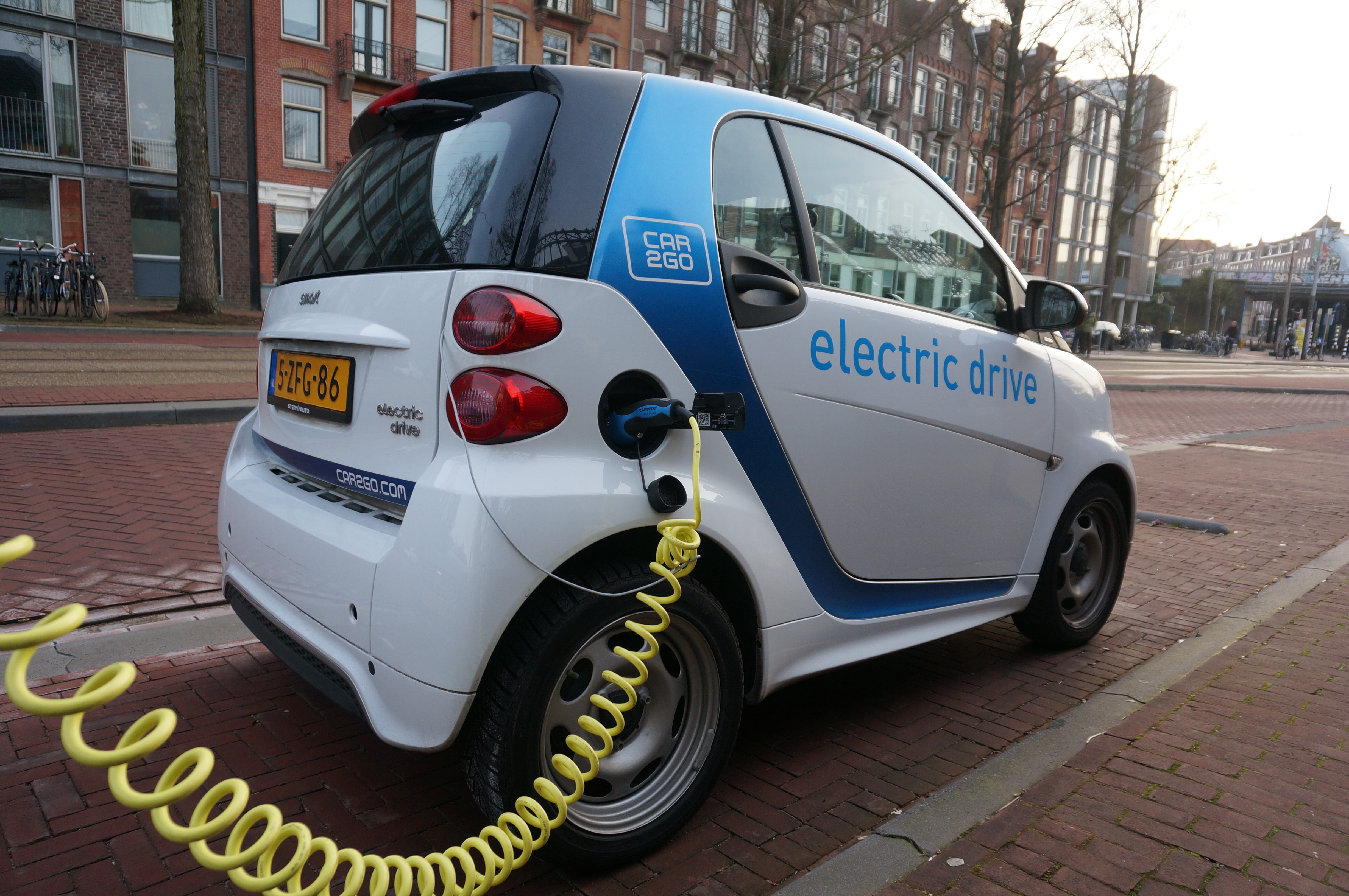
Electric vehicle sales continue to increase with a constant stream of new developments coming from manufacturers and providers of charging points and batteries. On the downside Electrocity, the providers of rapid charge points at motorway services, have announced a new charging scheme for those using their rapid chargers.
In future they will charge £6 per half hour to charge your car, currently provided for free. Whilst some believe this move to be premature others feel that it won’t affect electric vehicle sales as drivers only tend to use motorway fuel stations as a quick fix, waiting till they are off the motorway to fill up.
The same will apply to electric chargers. At the moment the charging points can be a little congested but by charging for charging (did I just say that) drivers will no doubt plan their journeys better. Another charge point provider, Chargemaster, is developing inductive charging, the same type of wireless connection that is used to boil our kettles. They claim that they can charge up to 10 plus cars at any one time at the workplace.
Mercedes are developing inductive charging for their cars and will be rolling out the first car to have it fitted, the S Class Hybrid, in 2018. The system will then filter down to the cheaper models. Technology giant Qualcomm, who licence the technology to Chargemaster, claim that the next generation of EV’s will have both methods available, inductive and the traditional plug in.
Formula E, the electric car racing series already use inductive charging for their medical and safety cars. So the system is already proven. For those worried about the safety of such devices when say a cat or dog walks onto the pad, that would be placed under the car at home, the unit stops charging and an alert is sent to your smart device.
I still can’t understand why the industry doesn’t standardise batteries with a quick swap facility at battery centres, you pull in, the old battery is slid out with the charge noted, a fully charged battery is slid in and the driver is charged for the difference in charge. Simples. Maybe I should patent this idea! By Graham Hill
Friday, 11. December 2015
Following on from my previous blog post in which I was musing over the next steps to a cleaner environment. Maybe VW/Audi had the answer all along!
Thinking of a change but unsure as to the best way to finance your car? Then you need a copy of my car finance book, Car Finance – A Simple Guide by Graham Hill. Click on the link below to buy the best car finance book on the market, available as a Kindle Book and Paper Back.
Rather than fiddle the emission figures they have been working in the back room on a revival of the hydrogen fuel cell, something of which I’m a great supporter. According to their press releases the car will be more dynamic and more efficient than anything else in production.
The only thing they haven’t revealed is the bodystyle they will use to launch the new technology. Audi have produced hydrogen powered concept cars in the past as A2 and Q5 models and they have recently been showing off the A7 h-tron prototype which can power to 62mph in 7.9 seconds with a range of 300 miles.
Dr Rene Van Doom, powertrain engineer for fuel cell technology, confirmed that Audi has four major priorities for the immediate future, one of which is alternative drivetrains. He added that Audi were set to go into volume production with fuel cells as soon as the market and infrastructure justifies the move.
Their 10 year plan includes providing an electric alternative for every model in its range. With mild hybrid (whatever that is), plug in or hydrogen cell system. In 2016 a new 48 volt hybrid will be launched with an electric compressor to eliminate the annoying turbo lag and boosting efficiency by shutting down the engine when coasting.
If that wasn’t enough to put them ahead of the game again they are now working on electronic dampers that not only reduce body roll but they use the movement to regenerate kinetic energy to charge your mobile phone and air-con in the way that kinetic energy generated in hybrid cars recharges batteries. They claim that they can recuperate 150 watts meaning a CO2 saving of 3g/km. Amazing!
They also mentioned that they still understand the importance of internal combustion engines and will not neglect development of this technology. Good to hear! By Graham Hill
Friday, 30. October 2015
The rules have always been pretty clear when it comes to claiming back business miles when an employee uses their own car. These days I see more cars being funded privately than through a business as a company car, often to avoid benefit in kind tax.
Thinking of a change but unsure as to the best way to finance your car? Then you need a copy of my car finance book, Car Finance – A Simple Guide by Graham Hill. Click on the link below to buy the best car finance book on the market, available as a Kindle Book and Paper Back.
As an employee claiming a mileage allowance, again it is very clear, you can claim up to 10,000 miles per annum at 45 pence per mile which is tax and NI free, beyond 10,000 miles you can claim 25 pence per mile, again tax and NI free. All fairly straight forward but what if the car is an electric car as the HMRC do not regard electricity as ‘fuel’.
Also what constitutes a business trip? With regard to the electricity question how does this also affect hybrids that run partly on electricity and partly on petrol? I have read various reports regarding electricity which, whilst already confusing, are further confused if the company provides charging points in the workplace and therefore provides free electricity.
Some companies are paying the full fuel allowance but could this be a problem waiting to explode when the Revenue decides that as electricity is provided at work the employee cannot claim the fuel allowance. At the moment the consensus is that as there is no rate set for electric vehicles that employees can only claim for the electricity that they provide themselves. Totally unfair.
I will keep you posted on this one but in the meantime the Revenue has provided some guidelines regarding business miles as follows, recently issued under HMRC 490 Employee Travel – a tax and NICS guide for employers:
- ‘Ordinary Commuting’ is specifically excluded from being considered a business journey. This is any travel between the employees home and a permanent workplace.
- An employee such as a service engineer, who travels between different clients throughout the day and who has no normal workplace, can treat all his journeys as business miles, including the first and last trip of each day to and from home.
- An employee who works for the same company at two different sites cannot treat as business mileage the journeys to or from either site and home. But any journeys between the two offices would be business miles.
- Travel from home to a depot where an employee picks up jobs or tools prior to setting out on appointments would be considered commuting – the depot would be a permanent workplace, even if the employee spent the rest of the day away from the site.
- If an employee leaves home and passes his permanent workplace, but does not stop, on the way to see a client then all the journey is business travel. If, however, he stops at his normal workplace for ‘substantive duties’, such as making a phone call, this would be treated as two journeys – a commute to his workplace, followed by a journey to the client, and only the latter would be classed as business miles.
So there you have it, up to date advice on claiming business mileage but still with many questions left unanswered such as stopping to do some shopping or drop the kids off at school on the way to a client, and so on. By Graham Hill
Tuesday, 13. October 2015
OK time for a little bit of insider information. It would seem that the European regulators are taking a very close look at pollution and not because of the VW/Audi situation.
Thinking of a change but unsure as to the best way to finance your car? Then you need a copy of my car finance book, Car Finance – A Simple Guide by Graham Hill. Click on the link below to buy the best car finance book on the market, available as a Kindle Book and Paper Back.
In fact it has nothing to do with what comes out of the car but more about what gets sucked into the car. Concern is increasing as congestion reaches an all time high on British roads and with many cars and vans not fitted with stop start technology or have it but switch it off, if you are sitting in a queue of traffic there is a concentration of pollutants being sucked into the cabin.
Executive electric vehicle maker Tesla revealed the investigations when they launched their new Model X SUV with the weirdest back doors that open upwards in the old seagull style. They have a new system called Bioweapon Defence Mode (seriously) which features two air filters that Tesla boss Elon Musk says will give the car, ‘air cleanliness levels comparable to a hospital operating room’.
As Musk pointed out, they are ahead of the game. It doesn’t take a mastermind to work out that the emissions from the idling car in front has to go somewhere and it makes sense that most finds its way into the car behind.
Not surprisingly, having taken steps to stop children from being damaged by cigarette smoke it is logical that other in car pollutants will come under attack. You heard it here first. By Graham Hill
Tuesday, 13. October 2015
 With so much in the press of late regarding emissions, thanks to the VW group of crooks, oops I mean vehicle manufacturers, there seems to be a new tidal wave of opinionated experts who say that we should either all walk, ride bikes or at worst drive electric cars.
Thinking of a change but unsure as to the best way to finance your car? Then you need a copy of my car finance book, Car Finance – A Simple Guide by Graham Hill. Click on the link below to buy the best car finance book on the market, available as a Kindle Book and Paper Back.
And we recently had a great deal on the BMW i3 that didn’t reflect its massive £30,000 + price ticket, it was remarkably cheap to lease. But before you join the queue of tree huggers outside your local BMW dealership you should be aware of some of the facts that you might like to consider.
You can get yourself a subsidy to install a charger at home, which is fine unless you are restricted to on-street parking, the local authorities won’t allow you to run electric cables along pavements unfortunately. A home charger operating from a standard 13a supply, I’m told, can take up to 8 hours to re-charge the car.
An installed fast charger can re-charge in a couple of hours whilst the industrial sized roadside fast-chargers can recharge the car in 20 minutes. Still a tad longer than sticking a petrol or diesel nozzle into your tank. But let’s not be negative, London, like other cities are planning on installing hundreds of fast chargers throughout their centres but if someone leaves their car charging for a couple of hours how do you get their car out of the way to allow you to get your car onto the charger?
There are also three different connectors that fit either the BMW i3, the Nissan Leaf/Mitsubishi Outlander or the Renault Zoe/Teslar S etc. depending on whether the cars are all electric or hybrids. Brilliant, they couldn’t even get some form of standardisation there – where is the EU when you need it?
Easy payments, even cameras that identify your car registration as you pull up and ready the charger before you even get out of your car speed up that part of the operation but the real sticking points are the time it takes to charge and the range. Until such times as these problems are overcome I feel that electric cars will remain last choice for most of us. By Graham Hill
Sunday, 15. June 2014
Oh dear, I once again find myself disagreeing with the self promoted ‘Motoring’s most outspoken and opinionated colomnist’ Mike Rutherford. This time over electric cars. He has described 100% electric cars as ‘stillborn’.
Thinking of a change but unsure as to the best way to finance your car? Then you need a copy of my car finance book, Car Finance – A Simple Guide by Graham Hill. Click on the link below to buy the best car finance book on the market, available as a Kindle Book and Paper Back.
He has written a rather amusing article in which he goes head to head with Richard Bruce who is the head of the Office for Low Emission Vehicles (OLEV) over the reasons why we should persevere with electric vehicles(EV’s). Quite naturally Mr Bruce is heavily in favour of EV’s as without them his job pretty much becomes meaningless so of course he is in favour.
Mr Rutherford’s point is that they are expensive and you can’t cover more than 100 miles in one charge, both of which are reasonably true – at the moment. But not everyone needs a car to cover more than 100 miles in a single trip and for those that do there will come a time when cars will be able to cover over 1,000 miles with a single charge.
Look, I’m not a huge fan of electric cars but I’m not going to suggest for one minute that after spending £millions if not £billions in research that we should simply throw out the idea and revert to fossil fuel vehicles or mixtures of fossil fuel engines and battery power packs. That Mr Rutherford is simply dopey!
And don’t forget this is electricity we are talking about – just think back to the days of Thomas Edison, it only takes one experiment to solve the problem even though it may have taken hundreds of experiments previously. With what I have read and reported upon we are rapidly moving closer to the point where cars can cover several hundred miles on one charge, chargers can charge very rapidly and as volumes grow prices will tumble as a result.
Even now we can provide a Nissan Leaf, after allowing for the Government grant for less than £200 + VAT per month on a car that costs over £21,000. My money is on Mr Bruce and whilst he is very protective about EV’s I believe he has a good point and for many drivers EV’s represent the future so go off and have a whinge about something else Mr Rutherford. Don’t you just hate these people that can only moan and groan about things! By Graham Hill
Tuesday, 8. April 2014
I remember years ago whilst training as an accountant an economics professor saying never assess what the Chancellor is saying at the dispatch box when announcing the budget because the devil is in the detail and the detail is in the small print. And so itr was with the latest budget.
Thinking of a change but unsure as to the best way to finance your car? Then you need a copy of my car finance book, Car Finance – A Simple Guide by Graham Hill. Click on the link below to buy the best car finance book on the market, available as a Kindle Book and Paper Back.
Whilst company car drivers seemed to have been left alone whilst benefitting from fuel duty freeze in the small print was the ‘leaving alone’ of a previous announcement that benefit in kind (BIK) bands that kick in 12 months from now will continue to 2017 and 2018 tax years. This is the increase of 2 percentage points for each tax band per annum.
So by 2018 the BIK tax applied to cars with a CO2 emission of 76-94g/km will be 19% of the car’s P11D value. So much for looking after the motorist. In 2018 this will raise £240 million for the treasury with a further £480 million in 2019. Those that drive low emission cars will suffer the most as we will see cars under 51g/km dropping into the 13% band with 51-74g/km up to 16% by 2018.
And all this came after the Chancellor announced at the dispatch box that he is ‘increasing the discount for low-emission vehicle.’ I think it is about time for a re-think because this will take anyone currently considering an electric vehicle from a benefit in kind threshold of zero to 13% in 4 years. But it gets worse!
Because if you look at the cost of an electric vehicle compared with the equivalent petrol vehicle the BIK tax is horrendous. Take for example the Nissan Leaf, the Tekna version has an on the road figure, according to What Car of £30,490 before the Government subsidy is applied (and therefore the figure that BIK will be based upon).
Compare this with a Nissan Juke 1.6 petrol Juke, this costs £16,295, the Leaf is nearly twice the price. I seriously think that the government needs to think again about zero emission cars and the disincentive that this brings. By Graham Hill

Nissan Leaf at Tokyo Motor Show (RHD). (Photo credit: Wikipedia)
Thursday, 6. March 2014
Bits & Pieces: Britain’s most expensive parking space is up for sale in London’s Kensington Area. The underground bay is up for sale at £400,000, 15 times the average UK salary of £26,500. It is also double the average price of a house in the UK. But with property prices in the SW7 region of London averaging £2.3 million the parking space will soon be snapped up I’m sure.
Thinking of a change but unsure as to the best way to finance your car? Then you need a copy of my car finance book, Car Finance – A Simple Guide by Graham Hill. Click on the link below to buy the best car finance book on the market, available as a Kindle Book and Paper Back.
I reported a while ago that electric cars will soon be charged wirelessly (like your kettle) in the near future. I can now confirm that Toyota are carrying out field trials on a wireless charger embedded into the floor of a number of domestic garages. The car is parked over the bed and fully charged in 90 minutes.
Trials are being carried out on the new Prius Plug In Hybrid. Again talking about Toyota they have closed on a deal with BMW to supply them with a family of diesels. The 1.6 currently fitted on the Verso will be extended across other cars in the range whilst platforms developed for 2.0 litre units are already prepared for production. By Graham Hill
Friday, 2. August 2013

English: 2011 Nissan Leaf electric car at the 2011 Washington Auto Show (Photo credit: Wikipedia)
Google led the way in the US by gaining permission to test their driverless cars on public roads. We are now about to follow suit with the Government giving permission for driverless cars to be tested on public roads in the UK, preferably somewhere in the North as I live in the Sarf.
Thinking of a change but unsure as to the best way to finance your car? Then you need a copy of my car finance book, Car Finance – A Simple Guide by Graham Hill. Click on the link below to buy the best car finance book on the market, available as a Kindle Book and Paper Back.
Researchers at Oxford University have been co-developing autonomous car tech with Nissan for some time and have already tested a prototype based on a Leaf (that’s their electric car not something hanging off a tree) on private roads and test tracks.
The announcement means that they will be able to carry out more extensive tests on quiet rural and suburban roads although to begin with they will have to test with a back-up driver as a safety precaution. By Graham Hill Car Finance
Saturday, 5. November 2011

Image via Wikipedia
Renault have now launched details of their new electric car, the Fluence Z.E. It will be sold for £22,850 down to £17,850 after the £5,000 government incentive. However, the difference between the Nissan Leaf and the Renault is the fact that when you buy the Leaf you also buy the batteries, with the Renault you buy the car and lease the batteries. Read more »