Graham Hill Wins Innovation Of The Year 2015 Award!

Tuesday, 27. October 2015

The Finance & Insurance (F & I) Conference and Awards dinner took place at the very impressive Royal Armouries in Leeds on the 15th October. The conference, run by Frontline Solutions, was hugely successful with some great presentations topped off by a motivationally impressive Simon Weston, survivor of the Argentina conflict badly burned on the bombed HMS Sir Galahad.

Spencer Halil of Alphera kicked the day off following introductions by Frontline creator Andy Shuter and MD Martin Hill (no relation). He started with a very interesting presentation on the industry and started the ‘education’ ball rolling. At several points during the presentation education of those providing finance was brought into focus as was the education of consumers and SMEs.

This was followed by Adrian Dally of the Finance & Leasing Association (FLA) who provided us with some very interesting statistics. In terms of new cars by far the most popular way of financing them in the consumer sector was now PCP (73%) followed by HP (21%) then leasing (4.5%) with personal loans lagging well behind on just 1.6%.

However, it was pointed out that whilst PCP is by far the most popular way to finance a car it had taken a while to catch on, as is happening with lease or personal contract hire (PCH). PCH more than doubled over the last year from 2% so the penny is starting to drop, especially when consumers and more to the point, dealers, start to grasp the product.

But again the education void was mentioned, something that the industry and various associations need to address. In the afternoon we had a very entertaining and informative presentation by Georg Bauer, the German vice president of Tesla Financial Services, Europe and APAC. Whoever said that German’s don’t have a sense of humour? He was very funny as well as providing an insight into the latest electric vehicle technology. Fascinating. Why are all other manufacturers lagging so far behind?

Finally, Simon Weston recalled what happened to him along with some harrowing pictures. At the time Wales were still in the Rugby World Cup whilst England had been knocked out so as a Welsh ex rugby player he had a dig at us at every opportunity – not laughing now are you Simon. He went on to explain what he was doing now to help other war victims and the massive amount of charity work he does now. What an amazing guy and more than worthy of the standing ovation he received at the end of his presentation.

The evening awards dinner was hosted by newsreader Louise Minchin, and a brilliant job she did too. The motor racing legend who is Nigel Mansell recalled many of his scary and happy moments after performing a magic trick. I hadn’t realised he is rumoured to have joined the magic circle! Finally came the awards which was the evening’s biggest shock. By the time the awards were being announced I have to say I was a little tipsy. So when people on my table pointed out that my company, GHA Finance was a finalist, according to the screen, in the category, Innovation Of The Year I was very surprised.

Then when it was announced by the lovely Louise that I had won, surprise turned to shock. I’d like to report on the rest of the evening but I have to say it was somewhat of a blur! But I would very much like to thank Andy, Martin and all the organisers for creating what is for me one of the best conferences, if not the best, of the year.

Also sincere thanks to the judging panel who awarded the prize and especially Luke Curtis and MotoNovo who sponsored the award! Thank you all so very much. Oh and I haven’t stopped, I have another app in development and I am in the middle of a re-write of my book Car Finance – A Simple Guide, available on Amazon. By Graham Hill
How Anyone Can Access Information At Companies House For Free

Tuesday, 13. October 2015

Did you know about the changes that have come about over the last few months at Companies House? It will now be easier for lenders to access your business data held by Companies House as it is now FREE for anyone to access under the new Government Corporate Transparency Rules which are part of the BIS Open Data Strategy.

Thinking of a change but unsure as to the best way to finance your car? Then you need a copy of my car finance book, Car Finance – A Simple Guide by Graham Hill. Click on the link below to buy the best car finance book on the market, available as a Kindle Book and Paper Back.

This means that anyone, including the general public, can access over 170 million records held by Companies House including such information as Registered Office, Current & Resigned Officers, Mortgage Charge Data, Previous Names Data, Insolvency Data, Document Images, Accounting Information and much more.

And in time more will be added. The new initiative also includes free access to developers who may wish to access information held at Companies House as part of a computerised assessment program.

Some may argue that little has changed as it only cost a quid to get your hands on any of this information in the past and it hasn’t exactly been widely publicised that the information is now free but more worrying is the path this is taking us.

How much more information will become available not only those who wish to use it for legitimate reasons but to those who wish to use it for less than legal reasons or for targeting. Worrying times in my opinion. By Graham Hill

Could This Be A Reason Why Uninsured Drivers Don’t Get Insurance?

Tuesday, 13. October 2015

I only found out recently that the fine for driving an uninsured car is just £300. No wonder so many young drivers drive without insurance because the fine, if they get caught, is considerably less than it would cost to take out insurance in the first place.

Even with the cheapest car the premium could be many times the fine. It must be time to increase the fine to a minimum of £5,000 for driving without insurance along with compulsory confiscation of the vehicle. Sadly we don’t seem to have punishments in this country to fit the crime. By Graham Hill

Government Pilot To Bring Down The Cost Of Motorway Fuel

Tuesday, 13. October 2015

It is very rare for me to run so low on fuel that I am forced to stop at a motorway service station to take on board some diesel but on those very rare occasions it is really irritating to find that the price they are charging is about 20p per litre more than my local Tesco – without the points!

Thinking of a change but unsure as to the best way to finance your car? Then you need a copy of my car finance book, Car Finance – A Simple Guide by Graham Hill. Click on the link below to buy the best car finance book on the market, available as a Kindle Book and Paper Back.

So I applaud the latest Government initiative through the Department for Transport to pilot a motorway sign that forewarns drivers well in advance the cost per litre at the next three motorway service stations. This scheme is set to force down the cost of fuel on motorways as it introduces competition.

Knowing that petrol is 128.9 pence per litre at the next service station in 3 miles but only 125.9 at the following service station in 32 miles, provided you are not running on fumes, you would probably hold on till you reach the following services. The trial will start at the end of the year between 5 different services between Exeter and Bristol on the M5. A further 3 signs are planned to follow in 2016.

The trial followed research that found motorway services charging more than 15p per litre than other forecourts. The initiative was welcomed by Auto Express who had found large variances between motorway services, up to 10 pence per litre and the AA who have been calling for fuel price transparency on motorways for years.

If the trial is successful the Government will consider extending the scheme across the 2,300 miles of motorways in the UK. Let’s hope they do. By Graham Hill

Insider Information – New Moves To Clean Up In Car Pollution!

Tuesday, 13. October 2015

OK time for a little bit of insider information. It would seem that the European regulators are taking a very close look at pollution and not because of the VW/Audi situation.

Thinking of a change but unsure as to the best way to finance your car? Then you need a copy of my car finance book, Car Finance – A Simple Guide by Graham Hill. Click on the link below to buy the best car finance book on the market, available as a Kindle Book and Paper Back.

In fact it has nothing to do with what comes out of the car but more about what gets sucked into the car. Concern is increasing as congestion reaches an all time high on British roads and with many cars and vans not fitted with stop start technology or have it but switch it off, if you are sitting in a queue of traffic there is a concentration of pollutants being sucked into the cabin.

Executive electric vehicle maker Tesla revealed the investigations when they launched their new Model X SUV with the weirdest back doors that open upwards in the old seagull style. They have a new system called Bioweapon Defence Mode (seriously) which features two air filters that Tesla boss Elon Musk says will give the car, ‘air cleanliness levels comparable to a hospital operating room’.

As Musk pointed out, they are ahead of the game. It doesn’t take a mastermind to work out that the emissions from the idling car in front has to go somewhere and it makes sense that most finds its way into the car behind.

Not surprisingly, having taken steps to stop children from being damaged by cigarette smoke it is logical that other in car pollutants will come under attack. You heard it here first. By Graham Hill

Should You Now Be Considering Driving An Electric Vehicle More Seriously?

Tuesday, 13. October 2015

With so much in the press of late regarding emissions, thanks to the VW group of crooks, oops I mean vehicle manufacturers, there seems to be a new tidal wave of opinionated experts who say that we should either all walk, ride bikes or at worst drive electric cars.

Thinking of a change but unsure as to the best way to finance your car? Then you need a copy of my car finance book, Car Finance – A Simple Guide by Graham Hill. Click on the link below to buy the best car finance book on the market, available as a Kindle Book and Paper Back.

And we recently had a great deal on the BMW i3 that didn’t reflect its massive £30,000 + price ticket, it was remarkably cheap to lease. But before you join the queue of tree huggers outside your local BMW dealership you should be aware of some of the facts that you might like to consider.

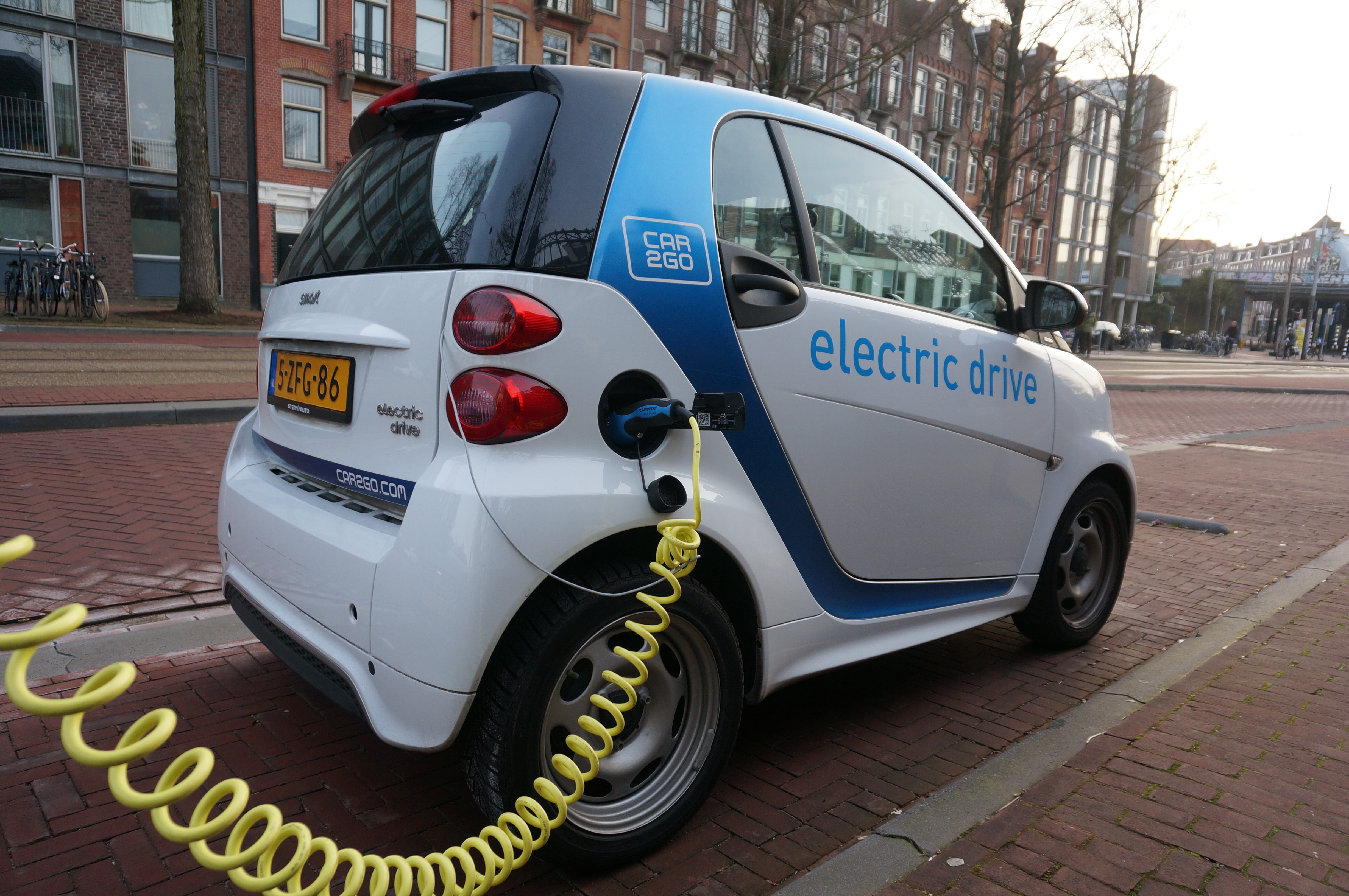
You can get yourself a subsidy to install a charger at home, which is fine unless you are restricted to on-street parking, the local authorities won’t allow you to run electric cables along pavements unfortunately. A home charger operating from a standard 13a supply, I’m told, can take up to 8 hours to re-charge the car.

An installed fast charger can re-charge in a couple of hours whilst the industrial sized roadside fast-chargers can recharge the car in 20 minutes. Still a tad longer than sticking a petrol or diesel nozzle into your tank. But let’s not be negative, London, like other cities are planning on installing hundreds of fast chargers throughout their centres but if someone leaves their car charging for a couple of hours how do you get their car out of the way to allow you to get your car onto the charger?

There are also three different connectors that fit either the BMW i3, the Nissan Leaf/Mitsubishi Outlander or the Renault Zoe/Teslar S etc. depending on whether the cars are all electric or hybrids. Brilliant, they couldn’t even get some form of standardisation there – where is the EU when you need it?

Easy payments, even cameras that identify your car registration as you pull up and ready the charger before you even get out of your car speed up that part of the operation but the real sticking points are the time it takes to charge and the range. Until such times as these problems are overcome I feel that electric cars will remain last choice for most of us. By Graham Hill

Proposed Changes To The Driving Test – Sensible Or Dopey?

Tuesday, 13. October 2015

You know how sometimes you see an idea and think ‘that is completely dopey.’ Then after a while you think, ‘actually that wasn’t such a bad idea’ but then after further mental analysis decide it was pretty dopey after all? Just me then eh? But this is what I thought when I read an article based on the proposal by the Institute of Advanced Motorists (IAM) as the driving test reached its 80th birthday earlier this year.

Thinking of a change but unsure as to the best way to finance your car? Then you need a copy of my car finance book, Car Finance – A Simple Guide by Graham Hill. Click on the link below to buy the best car finance book on the market, available as a Kindle Book and Paper Back.

They suggested that we should incorporate eco driving into the driving test. Using a scheme similar to that used by Austria of all places. They carry out an initial assessment, as we do, but after a probationary period they carry out a further examination made up of 5 parts. Moving towards dopey. During the probationary period they operate zero tolerance towards driving offences and blood alcohol levels.

Not so dopey, then the new drivers undergo 2 x fifty minute improvement lessons within 2 to 4 months of the first practical test. A day’s further training with a drive psychologist and 2 more 50 minute advanced improvement driving courses complete the test. It all sounds very admirable (and expensive) but with gallons of testosterone flushing around the arteries of our young drivers will all this make the slightest of difference?

Having said that I would like to see all new applicants, as a prequel to their theory test, have to watch the films shown on the speed awareness courses. So summing up I think the idea is pretty dopey and I’m not alone. Graham Hurdle, MD of E-training World pointed out that the driving test has massively evolved since its introduction in 1935 but if we tighten things up too much it will drop the pass rate which would have a substantial effect on the economy as driving keeps business moving (no pun intended).

The driving test can only ever be a snapshot of a driver’s ability at the time he or she takes their test but would the proposals prevent more accidents amongst new drivers? Probably not! If you have a view drop me a note. By Graham Hill

Government Takes Action Over Excessive Coning Of Motorways & A Roads

Tuesday, 13. October 2015

How often have you been driving down a stretch of road that has been coned down to 2 or just 1 lane only to find a couple of workmen fixing a few meters of damaged crash barrier right at the very start of the 10 mile stretch of coned off road with another couple close to the end?

Thinking of a change but unsure as to the best way to finance your car? Then you need a copy of my car finance book, Car Finance – A Simple Guide by Graham Hill. Click on the link below to buy the best car finance book on the market, available as a Kindle Book and Paper Back.

Having a bottleneck is bad enough but having several miles of bottleneck can cause huge jams and very frustrated drivers. As a result the Government is taking action and limiting road works to no more than 2 miles at a time. So in future when highway engineers have a substantial repair/resurfacing or widening project they must break it down to 2 mile projects instead of, as happened recently with some projects, restricted road use for more than 20 miles.

A spokesman for Highways England said, ‘We want to provide a better, safer experience for road users on England’s motorways and major A roads, including throughout road works where major upgrades are being carried out.’ So there you have it, no more shutting off half the M25 when we run out of space and have to add another couple of lanes. By Graham Hill

What Does The Expression Real World Actually Mean?

Tuesday, 13. October 2015

Have you ever heard the expression ‘Real World’? It’s used about our royalty, ‘They don’t live in the real world’. When talking about wealthy people, they don’t know what it’s like to be in the real world. Dating men or women on dating sites, it’s not like dating in the real world.

Thinking of a change but unsure as to the best way to finance your car? Then you need a copy of my car finance book, Car Finance – A Simple Guide by Graham Hill. Click on the link below to buy the best car finance book on the market, available as a Kindle Book and Paper Back.

And so on and so forth, but what is the real world? And where is it? Who are its inhabitants? Just recently journalists and reporters have gone into meltdown over ‘real world’ testing when it comes to emissions from vehicles as well as the miles per gallon they return in test conditions compared to ‘the real world’.

For years What Car has been testing cars in ‘real world’ conditions to provide a more accurate MPG reading. But in my opinion it’s an absolute nonsense because the real world simply doesn’t exist except in the minds of each individual. If a driver was to drive through the middle of London, would that be extra urban conditions in the ‘real world’ or would it be more accurate to drive through the centre of Leeds.

And what time of day would be more accurate? 11.00 in the morning or 5.30 at the height of the rush hour? How would you measure urban or motorway driving. I would measure it on the motorway I use most, the M25 on which I consider it to be my birthday and Christmas combined if I keep moving for the whole of the trip.

OK I might agree that the testing conditions could be tweaked a little which may result in cars seen to be achieving a few miles to the gallon less than currently shown in the manufacturer’s handbooks. But what about CO2 emissions? Supposing we find that the readings have been out by a few grams per kilometre as a result of the changes to the tests to make them ‘real world’ tests?

The Government has set its tables for benefit in kind tax and road tax for the next few years so would drivers be hit with additional costs? Yes, they probably would because the Government can’t suddenly say that they will increase a banding from 99g/km of CO2’s to 109g/km because of miscalculations by car manufacturers.

The changes would affect motorists’ pockets because the Government has already established that they want to pull down CO2 emissions to the 99g/km level and ultimately to zero emissions. Speed, weather conditions, temperature and the driver of the car can all affect the fuel consumption and emissions so should we change the way cars are tested when there are so many variables?

Maybe the activists should be careful for what they wish for. The changes might just come back and bite them, you and other motorists on the bum! The fact is that manufacturers will still continue to try to find ways to improve the emissions of their cars, they are obliged to, irrespective of the way that cars are tested. By Graham Hill

The EU Ensures That Stringent Safety Standards Are Met

Tuesday, 13. October 2015

Whilst I happily sit on the wall over the whole EU thing – should we be in or should we be out, there are certain things that they do that provide us with great benefits. One of these is standardisation. Safety issues sometimes require a group of people to get their heads together in order to agree a standard because clearly we can’t leave things to the individual manufacturers.

Thinking of a change but unsure as to the best way to finance your car? Then you need a copy of my car finance book, Car Finance – A Simple Guide by Graham Hill. Click on the link below to buy the best car finance book on the market, available as a Kindle Book and Paper Back.

Have I ever told you about the Ford Pinto back in the 1970’s? At the time it was the best selling compact car in the US. In fact there were 11.5 million of these cars on the road but they had a major fault. The fuel tank was mounted in the back of the car in a position where, if the car was shunted in the rear, the tank would explode. More than 500 people died as a result of the fuel tank exploding and bursting into flames with many more suffering severe burns.

This only came to light because one of the burn victims sued Ford. It then turned out that Ford engineers were fully aware of the danger posed by the fuel tank but company executives carried out a cost benefit analysis with shocking results. They decided that the benefits of fixing the problem in lives saved and injuries prevented were not worth the cost of $11 per car to fix the problem on all of the Pintos.

They calculated that if the tanks weren’t repaired there would be a further 180 deaths and 180 burn injuries. They then applied a cost of $200,000 per life and $67,000 per injury. They added to this the cost of repair and replacement of cars as a result of the tank explosions and they came up with a cost of $49.5 million but to make the cars safer at a cost of $11 per vehicle would cost $137.5 million so they chose not to repair all the cars already on the road.

When this came out in court the jury found against Ford and awarded the plaintiff $2.5 million in compensatory damages and $125 million in punitive damages (later reduced to $3.5 million). So my point is that if manufacturers were left to make their own decisions on safety I suspect that cars would be nowhere near as safe as they are now.

So on the plus side we can feel comfortable that when we get into any car across Europe we are protected by some very high standardised safety levels. God forbid we ever leave our safety in the hands of just the manufacturers. By Graham Hill