DVLA Issues A Scam Alert To Motorists

Wednesday, 13. May 2020

  • DVLA has recorded a 20% rise in the number of scams reported
  • These are all cons linked to DVLA services, such as vehicle taxation
  • Some 1,538 fraud cases were raised to the agency in the final 3 months of 2019
  • It provided examples of common scams that have been used in recent months


Motorists are being targeted by fraudsters using a range of different scam tactics in a bid to trick them into handing over money.


That’s according to a fresh warning by the DVLA last February, which has provided examples of scams it has been alerted to and traced in recent months.


There has been a 20 per cent rise in fraud attempts handed to the DVLA, with 1,538 reports made to agency in the last three months of 2019, new figures show.


Car owners have alerted the DVLA to a number of different con tactics being employed by scam artists.


Motorists have said they have been swindled out of money and targeted by fraudsters using fake DVLA websites, emails, texts and social media messages.


It has warned drivers that these are becoming more prominent, having received 1,275 scam reports in the final three months of 2018 – some 263 fewer than in the final quarter of last year.


To raise awareness of the types of fraudulent communication motorists might receive, the DVLA has released images of recent scams it has been alerted to.


It hopes this will help motorists be aware of what to look out for and issue a clear warning that if something offered online or by text message appears too good to be true, then it almost certainly is.


Scammers are targeting unsuspecting customers with links to services that don’t exist and messages of tax refunds, all of which are fake.


The reports also show that driver and vehicle documents are for sale on the internet.


The agency says anyone who is concerned about any calls, texts, emails or suspicious activity online, to always report these to the police via Action Fraud immediately.


DVLA chief information security officer David Pope said: ‘We’ve released examples of real life scams to help motorists understand when a scam is at work.


‘These websites and messages are designed to trick people into believing they can access services that simply don’t exist such as removing penalty points from driving licences.


‘All our tax refunds are generated automatically after a motorist has told us they have sold, scrapped or transferred their vehicle to someone else so we don’t ask for anyone to get in touch with us to claim their refund.


‘We want to protect the public and if something seems too good to be true, then it almost certainly is. The only trusted source of DVLA information is GOV.UK.


‘It is also important to remember never to share images on social media that contain personal information, such as your driving licence and vehicle documents.’


A spokesperson for Action Fraud added: ‘This can be a stressful time of year, sorting out finances for the year ahead. Fraudsters are aware of this and are using different ways to trick people.


‘Taking a couple of minutes to familiarise yourself with a few simple online safety tips can be significant in protecting yourself from becoming a victim of online fraud.


‘You should always be cautious when sharing personal information online and avoid being scammed by only using GOV.UK for government services online, such as the DVLA.


‘If you believe you have been a victim of fraud, please report it to us.’


Note: If you want to see the sample emails being sent out go to the original article by clicking here:


https://www.thisismoney.co.uk/money/cars/article-8037209/DVLA-says-cons-used-fraudsters-trick-motorists-handing-money.html


By Graham Hill thanks to This Is Money

Share My Blogs With Others: These icons link to social bookmarking sites where readers can share and discover new web pages.
  • MisterWong
  • Y!GG
  • Webnews
  • Digg
  • del.icio.us
  • StumbleUpon
  • Reddit
  • Alltagz
  • Ask
  • Bloglines
  • Facebook
  • YahooMyWeb
  • Google Bookmarks
  • LinkedIn
  • MySpace
  • TwitThis
  • Squidoo
  • MyShare
  • YahooBuzz
  • De.lirio.us
  • Wikio UK
  • Print
  • Socializer
  • blogmarks

Warning To Take Care Of Your Battery During Lockdown.

Wednesday, 13. May 2020

The number of drivers visiting Kwik Fit over the past four weeks needing a new battery has been double the usual rate for the time of year.


Battery failures traditionally spike in the winter months due to the greater demands placed on them in starting cold engines.


The impact of the lockdown has seen battery failures over the past month increase to levels similar to the average for January over the past five years.


While this has mainly affected older vehicles, motorists with newer cars have also found their batteries struggling, says Kwik Fit.


The number of fleet vehicles, such as company cars, requiring new batteries has risen by around 10% compared to the same period last year. This is a significant indicator of the extent of the problem as not only are fleet owned vehicles newer than the average, they are more likely to have advanced batteries, to support ‘start-stop’ technology.


Roger Griggs, communications director at Kwik Fit, said: “Most of us associate battery failure with the winter months and having to call out a breakdown service to get us started after Christmas holidays.


“The lock down has had a dramatic effect on motoring and has been positive in helping control the spread of the virus, but this is one area which is storing up potential problems for motorists.


“We certainly don’t encourage anyone to use their car unnecessarily, but we hope that our advice will help some people avoid a nasty surprise when they next need their car.”


Kwik Fit’s battery experts advise motorists to take the following steps to help avoid encountering battery problems:


  • If you are not using your car at all, start the car once or twice a week and let the engine run for at least 15 minutes (stay in your car when you are doing this and the car must be outside).
  • Bear in mind that a colder engine takes more out of the battery to start, so if possible start your car during the warmer part of the day rather than first thing in the morning.
  • Check under the bonnet and inspect the battery terminals for signs of corrosion. Clean any corrosion and residue away from the terminals to allow a good clean connection with the battery.
  • If your car is parked on a driveway or garage, consider buying a trickle charger which can be plugged into the mains and keep your battery charge topped up – always follow the guidance in your vehicle’s owners handbook prior to connecting a trickle charger.
  • Check your battery’s age – most batteries are stamped with date codes and a battery more than five years old may be at risk of failure, especially if the car is only making short or infrequent trips.


By Graham Hill thanks to Fleet News

Share My Blogs With Others: These icons link to social bookmarking sites where readers can share and discover new web pages.
  • MisterWong
  • Y!GG
  • Webnews
  • Digg
  • del.icio.us
  • StumbleUpon
  • Reddit
  • Alltagz
  • Ask
  • Bloglines
  • Facebook
  • YahooMyWeb
  • Google Bookmarks
  • LinkedIn
  • MySpace
  • TwitThis
  • Squidoo
  • MyShare
  • YahooBuzz
  • De.lirio.us
  • Wikio UK
  • Print
  • Socializer
  • blogmarks

Survey Reveals That Electric Cars Are Driven Further Than Petrol Cars

Wednesday, 13. May 2020

Electric cars are driven for 26% more miles in their first three years on the road than petrol models, research from the RAC Foundation has found.


The analysis, which pre-dates the steep fall in road traffic seen since the start of the coronavirus pandemic, is based on the MOT data for 516,936 vehicles.


It found battery electric cars cover an average of 9,435 miles per year over their first three years, compared to a petrol car’s 7,490.


Diesel cars are driven the most, and cover an average of 12,496 miles in each of their first three years.


Steve Gooding, director of the RAC Foundation, said: “Unsurprisingly people with diesels have been doing most mileage, probably seeking better long-distance fuel economy, but this study is also evidence that battery-electric powered cars are not just trophy vehicles signalling their owners’ green credentials but prior to the lockdown were racking up the miles as everyday transport.


“Tens of millions of people still drive petrol and diesel-powered cars, but this data suggests that owners of electric cars have found them to be a practical proposition, running up the sort of big annual mileages that many of us need to do, challenging preconceptions about their range and the ease of re-charging.


“The next big question is what will happen when the Covid-19 lockdown ends?


“Some say our travel behaviour might change quite dramatically as we’ve mastered on-line meetings in place of the office routine, but any ongoing desire for social-distancing might yet draw us back to our own cars for the trips we make once the travel restrictions are lifted.”


The research found a Mitsubishi Outlander plug-in hybrid – the most common PHEV on the road – averages 12,500 miles a year.


RAC Foundation reports the battery electric Tesla Model S covered an average annual mileage of 12,392, the Nissan Leaf 8,241 and the Renault Zoe 5,736.


The analysis also found there was a big difference between petrol and diesel versions of the same model. By Graham Hill thanks to Fleet News

Share My Blogs With Others: These icons link to social bookmarking sites where readers can share and discover new web pages.
  • MisterWong
  • Y!GG
  • Webnews
  • Digg
  • del.icio.us
  • StumbleUpon
  • Reddit
  • Alltagz
  • Ask
  • Bloglines
  • Facebook
  • YahooMyWeb
  • Google Bookmarks
  • LinkedIn
  • MySpace
  • TwitThis
  • Squidoo
  • MyShare
  • YahooBuzz
  • De.lirio.us
  • Wikio UK
  • Print
  • Socializer
  • blogmarks

Number Of Vehicles On UK Roads Exceeds 40 Million For The First Time Ever

Saturday, 2. May 2020

The number of vehicles registered for use on UK roads has exceeded 40 million for the first time, according to data from the Society of Motor Manufacturers and Traders (SMMT).


Analysis shows that more than 35 million cars and five million commercial vehicles were in use in the UK in 2019, an increase of 1% on the previous year.


The total includes more than 750,000 low, ultra-low and zero emission vehicles. The number of these cars grew by 26% last year, with 11,832 hybrids, 144,335 plug-in hybrids and 92,913 battery electric vehicles now in use.


Birmingham has the second highest number of battery electric and plug-in hybrid vehicles after Greater London, with some 24,000 zero and ultra-low emission cars on the city’s roads.


Light commercial vehicles grew by  2.7% on the previous year to 4.5m units, surging by 28% in the last decade. Passenger cars, meanwhile, increased 0.8% in the same period. The number of heavy goods vehicles grew by 0.4% to 608,000 – the largest number delivering for Britain since 1990.


Many of these vehicles are helping to provide transport for essential workers, deliveries and emergency services. Some 25,000 ambulance and fire service vehicles, together with more than 20,000 supermarket delivery trucks and lorries are keeping the nation safe, supermarket shelves stocked, and the flow of food, medicine and care to vulnerable people going during the coronavirus crisis.


Mike Hawes, SMMT Chief Executive, said, “As the UK continues to battle the coronavirus pandemic, keeping food, medical supplies and the people serving on the front line moving has never been so important – and these figures show the essential role Britain’s vehicle fleet plays for society. They also provide evidence that industry’s ongoing investment into ever cleaner, safer and more reliable vehicle technology is paying off, even as demand for mobility grows. To ensure this trend continues, we must get the right support for businesses and their workers in place now so that when this crisis is over, the sector can help get the whole country and our economy back on the move.”


Most popular cars


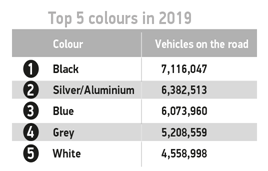
The SMMT’s Motorparc data reveals black as the most commonly seen car colour on the UK’s roads, with more than a fifth (7.1m) clad in the paint.


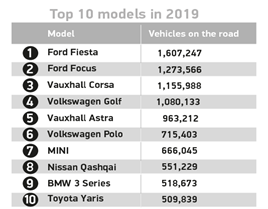
There are more superminis on UK roads than any other category of car, with the Ford Fiesta and Vauxhall Corsa the most common models.


The BMW 3 Series is the only premium badge car to feature in the top 10 list, with more than half a million examples on UK roads.


By Graham Hill thanks to Fleet News

Share My Blogs With Others: These icons link to social bookmarking sites where readers can share and discover new web pages.
  • MisterWong
  • Y!GG
  • Webnews
  • Digg
  • del.icio.us
  • StumbleUpon
  • Reddit
  • Alltagz
  • Ask
  • Bloglines
  • Facebook
  • YahooMyWeb
  • Google Bookmarks
  • LinkedIn
  • MySpace
  • TwitThis
  • Squidoo
  • MyShare
  • YahooBuzz
  • De.lirio.us
  • Wikio UK
  • Print
  • Socializer
  • blogmarks

Latest News On VW Group Production Re-starts

Friday, 1. May 2020

Volkswagen car plants were planned to restart production this week, with factories in Zwickau and Bratislava (Slovakia) the first to open.


The other plants in Germany and in Portugal, Spain, Russia and the USA were also to restart production this week.


Subsequently, in the course of May, production will be resumed successively in South Africa, Argentina, Brazil and Mexico.


Volkswagen Commercial Vehicles (VWCV) plants in Hannover and in Poland at Poznań and Września are also gradually starting production at reduced capacity levels.


Ralf Brandstätter, chief operating officer of Volkswagen, said: “With the decisions by the federal and state governments in Germany and the loosening of restrictions in other European states, conditions have been established for the gradual resumption of production.


“Volkswagen has prepared intensively for these steps over the past three weeks. In addition to developing a comprehensive catalogue of measures for the protection of our employees’ health, we have also forged ahead with the re-establishment of our supply chains.”


On this basis, short-time working is to continue at the Volkswagen plants in Germany. However, the number of employees affected by short time working will be successively reduced in line with the resumption of production.


Production will be resumed in line with the current availability of parts, Government requirements in Germany and Europe, the development of sales markets and the resulting modes of operation of the plants, it said.


Irrespective of these developments, compliance with the stringent health protection measures for employees will always be the top priority.


Andreas Tostmann, Volkswagen board member responsible for production and logistics, said: “We are resuming production and logistics with a staged approach in a well-organised way.


“The health of our employees has the highest priority. We are providing safe workplaces and the maximum possible level of health protection with a 100-point plan.


“In full awareness of our responsibility, we are ensuring that the economy regains momentum and cars once again leave the plants and reach our dealers and customers.”


Volkswagen Group Components had already started to resume production step-by-step at its plants in Brunswick and Kassel from April 6, followed by the Components plants in Salzgitter, Chemnitz and Hanover, as well as the Polish plants, starting production from April 14, to safeguard component supplies for vehicle production in China.


Thomas Schmall, CEO of Volkswagen Group components, said: “The step-by-step reopening of our plants was important in order to safeguard supplies to overseas locations. Now we need to restart the entire production network while taking comprehensive protective measures and to supply all the vehicle plants of the various brands with components. The same high requirements for the health protection of our employees apply to all our plants.”


In the resumption of production, the company can also call upon the experience gained with the production ramp-up at its plants in China, where a large number of consistent health protection measures have been successfully implemented.


Overall, 32 of the 33 plants in China have now returned to production. No cases of coronavirus have been reported among the employees there.


Volkswagen says it continues to closely monitor the global situation arising as a result of the coronavirus pandemic. Further action will be based to a large extent on dialogue and procedures within the Volkswagen Group and recommendations including those of the Robert Koch Institute.  By Graham Hill thanks to Fleet News

Share My Blogs With Others: These icons link to social bookmarking sites where readers can share and discover new web pages.
  • MisterWong
  • Y!GG
  • Webnews
  • Digg
  • del.icio.us
  • StumbleUpon
  • Reddit
  • Alltagz
  • Ask
  • Bloglines
  • Facebook
  • YahooMyWeb
  • Google Bookmarks
  • LinkedIn
  • MySpace
  • TwitThis
  • Squidoo
  • MyShare
  • YahooBuzz
  • De.lirio.us
  • Wikio UK
  • Print
  • Socializer
  • blogmarks

Massive Rise In Vehicle Thefts Over Last 3 Years

Friday, 24. April 2020

The number of vehicles stolen in England and Wales rose by more than one-fifth (21%) between 2016 and 2019, according to a freedom of information request by AX.


Responses obtained from police forces across England and Wales found much of that increase occurred between 2016/2017 and 2017/2018, with a ride of 14.1%.


The report follows research by Verizon Connect earlier this year, which found the average fleet loses around £16,000 per year as a result of vehicle or equipment theft.


Neil Thomas, director of investigative services at the provider of intelligent vehicle protection and management technologies and a former detective inspector, said: “While the lockdown may temporally reduce some types of car theft, criminals are using increasingly intelligent ways to steal vehicles and continue to find success.


“The combination of organised crime getting smarter and ability to make quick returns has drastically increased pressure on police forces to control the theft of motor vehicles.


“Car thieves are opportunists and have no respect for property and will remain determined to carry on illegal activity despite the current restrictions on movement across the UK. I have even seen recent reports of vehicles belonging to key workers being stolen.


“During this period of lockdown, it’s even more important that car owners remain vigilant and do what they can to keep their car safe while they’re using them less frequently, if at all.”


Of the 17 police forces that responded, Nottinghamshire and Staffordshire Police saw the largest increases, with Nottinghamshire Police reporting an overall rise of 60%.


Hertfordshire, Surrey, West Midlands and Essex Police each saw overall surges of more than 40%.


However, some forces have seen a decrease in motor vehicle thefts, including Merseyside Police and Avon and Somerset Constabulary. Humberside Police reported the largest drop, with a decrease of 36%.  By Graham Hill thanks to Fleet News

Share My Blogs With Others: These icons link to social bookmarking sites where readers can share and discover new web pages.
  • MisterWong
  • Y!GG
  • Webnews
  • Digg
  • del.icio.us
  • StumbleUpon
  • Reddit
  • Alltagz
  • Ask
  • Bloglines
  • Facebook
  • YahooMyWeb
  • Google Bookmarks
  • LinkedIn
  • MySpace
  • TwitThis
  • Squidoo
  • MyShare
  • YahooBuzz
  • De.lirio.us
  • Wikio UK
  • Print
  • Socializer
  • blogmarks

Dealership Group To Start Deliveries And Collections Again

Friday, 24. April 2020

Holdcroft Group Fleet will begin vehicle deliveries and collections from Wednesday (April 29), after adapting processes to provide a contactless home delivery service during the COVID-19 pandemic.


Vehicle collections and deliveries have been suspended by leasing companies during the lockdown, while carmakers have put production on hold across the world.


However, the Department for Transport (DfT) says in a letter to the logistics sector that logistics, including the collection and delivery of vehicles, should carry on during the lockdown, provided that it can be done in accordance with coronavirus safety guidelines.


The British Vehicle Rental and Leasing Association (BVRLA) urged dealerships and other delivery agents to start moving vehicles again, earlier this month.


Group fleet director at Holdcroft Group Fleet, Malcolm Pearson, told Fleet News: “In light of recent advice from the Government regarding delivery of new cars to customer’s homes and their desire to keep the UK economy going, we have adapted our process to accommodate a contactless home delivery service whilst ensuring social distancing and safety for all parties.


“From Wednesday (April 29), we will be recommencing deliveries albeit starting with a low volume while we gradually bring a number of employees back from furlough.”


However, he added: “Due to manufacturers not delivering new stock to us at the moment we can only deliver vehicles we have physically with us.”


Some manufacturers have announced plans to slowly begin production at plants in Europe.


Audi will restart car production at its plants in Europe during the coming weeks, with ‘normality’ expected by the end of the month.


The company announced the temporary suspension of production at its European sites in mid-March due to supply bottlenecks and a drop in demand due to the coronavirus pandemic.


Suppliers and service providers will also restart at the same time, in an effort coordinated with the Volkswagen Group.


PSA Group has also announced a gradual restart of its facilities, including the Ellesmere Port Vauxhall plant.


A multi-franchise dealer group based in the Midlands and North West, Holdcroft is one of largest vehicle retailers in the UK and Holdcroft Group Fleet is a fully licenced transport company operating its own fleet of transporters.


Pearson said: “We are taking all necessary precautions to deliver safely to customer addresses and have recently introduced contactless home delivery for new fleet vehicle orders.


“When booking the delivery this process will be outlined with the customer and will only progress and take place if both parties are completely satisfied with the process.


“All vehicles will be delivered on a transporter – to both reduce the number and length of time we have to spend in a customer car as well as eliminating the need for the use of any public transport ensuring safe return of our employee.”


Delivery drivers will also follow strict protocols in ensuring the vehicle is disinfected. “Drivers are fully equipped with gloves and the correct hand sanitisers,” explained Pearson.


“They will re-wipe all areas they have come into contact with once the new vehicle is parked in the correct new location, before finally wiping the keys and placing at the customers front door and stepping back to allow them to be picked up for the car checked over.”


Customers will not need to sign any paperwork or handheld device but will be asked in advance for permission to sign on their behalf once they have checked the vehicle over externally.


Pearson said: “A down-side to social distancing means the usual level of vehicle demonstration will not be able to take place, but this may also not be possible for many months to come depending on future government guidance around social distancing.


“If the customers are self-isolating, shielding or are nervous, but they still want the car delivered, we will leave the car and allow two hours after to inspect the car and advise us of any concerns.”


In terms of vehicle returns, Holdcroft Motor Group will be instructing the customer that they must be able to clean the car with appropriate anti-bacterial wipes and then not enter the car for three days prior to collection.


The keys must also be wiped at that time and placed in a bag or envelope and be left at the door in the same way it is approaching deliveries of new cars.


“This will reduce the risk of any virus remaining on hard surfaces after three days,” said Pearson. “We will re-wipe handles and keys as necessary before we move the vehicle as well.”  By Graham Hill thanks to Fleet News

Share My Blogs With Others: These icons link to social bookmarking sites where readers can share and discover new web pages.
  • MisterWong
  • Y!GG
  • Webnews
  • Digg
  • del.icio.us
  • StumbleUpon
  • Reddit
  • Alltagz
  • Ask
  • Bloglines
  • Facebook
  • YahooMyWeb
  • Google Bookmarks
  • LinkedIn
  • MySpace
  • TwitThis
  • Squidoo
  • MyShare
  • YahooBuzz
  • De.lirio.us
  • Wikio UK
  • Print
  • Socializer
  • blogmarks

Motor finance expert warns that FCA Coronavirus proposals could leave NHS and other essential workers without cars.

Friday, 24. April 2020

This is a piece written for the press:
Last Friday the FCA issued a consultation document aimed at providing drivers with the most popular forms of finance some respite by forcing the finance providers to allow drivers a 3 month payment holiday.
Monday the 20th was the cutoff for interested parties to make their feelings known to the FCA before they issued their final instructions on the target date of Friday 24th April.
Leading car finance expert Graham Hill welcomed the move, ‘Whilst several funders have already announced that they would be offering drivers reduced payments or holiday periods this is a welcome industry-wide instruction’.
‘Personal contract hire is a much easier product to adjust as it’s a more simple rental product but PCP, by far the most popular consumer car finance product, is more complex as it raises the question that if the contract is extended by 3 months will that affect the optional Guaranteed Minimum Future Value?
‘Also the holiday period accrues interest, how will that be recovered by the finance provider? And given the way that PCP interest is calculated if the contract is only a few months old nearly all of the monthly payment is interest.
The FCA has gone further than recommending a payment holiday they have also proposed a way that PCP providers should deal with cars that end their contracts during lockdown:
Rob here is the complete section. The first part is fine, it’s the second part that causes concern:

PCP agreements reaching term end during the period this guidance is in force

Where a customer wishes to retain the vehicle, but does not have funds to cover the balloon payment due to coronavirus related financial difficulties, firms should work with the customer to find an appropriate solution. Given the increased potential for disparity between the balloon payment and the value of the vehicle in the current climate, firms should ensure that solutions do not lead to unfair outcomes. For example, refinancing the balloon payment might not be appropriate in the circumstances.
Where a customer wishes to return the vehicle, but this is impractical due to the coronavirus situation, firms should inform the customer that they are unable to use the vehicle once the agreement has been terminated or come to an end (if that is the case). The firm should inform the customer of the need to make a Statutory Off Road Notification (SORN) declaration if the customer is the registered keeper of the vehicle and they want to stop taxing and insuring it because it is ‘off the road’.
If the customer doesn’t want to buy the car he would normally have two choices, either use the car as a part exchange if there is equity in the car or simply hand the car back.
According to Hill, ‘With car dealerships on lockdown it is not possible for drivers to negotiate a part exchange and given the collapse of used cars it’s unlikely that there would be any equity in the car anyway.’
‘So with most drivers that are at the end of their PCP agreements with little choice but to hand the car back they are potentially looking at a situation that could leave them without a car unless the FCA adjusts its proposals, i.e. that drivers should be informed by the funder that they are no longer able to use the car.’
.
‘This could result in those who are dependent on their cars such as emergency service workers, NHS workers, doctors, midwives, care home workers and other essential workers being without their cars. This must not happen.’
The FCA have also recommended that if a driver reaches the end of his PCP agreement that he is told not only to stop driving it but also, if the car can be stored off-road on a driveway or private land, to file with the DVLA a Statutory Off Road Notice (SORN) that will enable the driver to cancel his insurance and stop paying the car tax.
According to Hill that is a highly dangerous recommendation. As he points out, ‘Without insurance what happens if the car is stolen off the drive or the land it’s parked on or damaged in any way? There has also been an increase in theft of Caralytic Converters from cars because of their precious metal content. If any of this happens without insurance drivers could be severely out of pocket. The FCA really needs to reconsider this proposal’
‘It also raises a more fundamental question. If the car is parked on the road the driver will have to keep the car taxed and insured even though he has been told he cannot drive it per the FCA instructions. But if he has told the finance company that he wants to hand the car back under the terms of the agreement if the car cannot be collected the tax and insurance should be the responsibility of the finance company as they are the legal owners of the car.
‘As the driver has been told he cannot drive the car he cannot be seen to be the keeper so again the responsibility rests on the shoulders of the finance provider. The instructions – as they are could have some very serious consequences.
Asked about the number of consumers the proposals could affect Hill explained, ‘I have calculated that there could be around 3 million new car PCP’s that are active and therefore could be requesting payment holidays. Used car PCP’s are more difficult to assess but there could be around 3 – 4 million active agreements looking for payment holidays.
‘With regard to PCP’ agreements coming to an end, as collections of end of PCP cars stopped in March, the highest month of the year for registrations, I believe that we could be looking at 450,000 cars coming to the end of their agreements between March and June.’
With the final instructions due out on Friday it is important that we don’t leave PCP customers without their wheels if only to get then to and from their local shops, whilst avoiding as much contact as possible, and keeping them off public transport.  By Graham Hill
Share My Blogs With Others: These icons link to social bookmarking sites where readers can share and discover new web pages.
  • MisterWong
  • Y!GG
  • Webnews
  • Digg
  • del.icio.us
  • StumbleUpon
  • Reddit
  • Alltagz
  • Ask
  • Bloglines
  • Facebook
  • YahooMyWeb
  • Google Bookmarks
  • LinkedIn
  • MySpace
  • TwitThis
  • Squidoo
  • MyShare
  • YahooBuzz
  • De.lirio.us
  • Wikio UK
  • Print
  • Socializer
  • blogmarks

Is Hydrogen Still In The Frame? BMW Thinks So!

Saturday, 11. April 2020

BMW is continuing to develop hydrogen powered cars, as part of a collaboration with Toyota.


The German brand says it plans to test its next-generation powertrain in prototype X5, in 2022.


Named the BMW i Hydrogen NEXT, the powertrain combines a hydrogen fuel cell with BMW’s new eDrive electric unit.


Fuel cells from the cooperation with Toyota will be deployed in the BMW i Hydrogen NEXT, alongside a fuel cell stack and overall system developed by the BMW Group.


A peak-power battery enables the system to deliver up to 374PS, while producing no emissions. Refuelling the vehicle will take three-to-four minutes.


Klaus Fröhlich, member of the Board of Management of BMW AG, Research and Development, said: “We are convinced that various alternative powertrain systems will exist alongside one another in future, as there is no single solution that addresses the full spectrum of customers’ mobility requirements worldwide.


“The hydrogen fuel cell technology could quite feasibly become the fourth pillar of our powertrain portfolio in the long term.


“The upper-end models in our extremely popular X family would make particularly suitable candidates here.”


Although the BMW Group has said that it has no doubt as to the long-term potential of fuel cell powertrain systems, it will be some time before the company offers its customers a production car powered by hydrogen fuel cell technology. This is primarily due to the fact that the right framework conditions are not yet in place.


The OEM believes hydrogen will be used primarily in applications that cannot be directly electrified, such as long-distance heavy duty transport.


According to BMW, the requisite infrastructure, such as an extensive, Europe-wide network of hydrogen filling stations, is lacking at present.


However, it is pressing ahead with development work in the field of hydrogen fuel cell technology.


The company is using the time until the infrastructure and sustainably produced hydrogen supply are in place to substantially reduce the cost of manufacturing the powertrain system.


In the meantime, a total of 25 electrified models are slated for launch by 2023, including at least twelve with an all-electric powertrain.  By Graham Hill Thanks To Fleet News

Share My Blogs With Others: These icons link to social bookmarking sites where readers can share and discover new web pages.
  • MisterWong
  • Y!GG
  • Webnews
  • Digg
  • del.icio.us
  • StumbleUpon
  • Reddit
  • Alltagz
  • Ask
  • Bloglines
  • Facebook
  • YahooMyWeb
  • Google Bookmarks
  • LinkedIn
  • MySpace
  • TwitThis
  • Squidoo
  • MyShare
  • YahooBuzz
  • De.lirio.us
  • Wikio UK
  • Print
  • Socializer
  • blogmarks

The Truth About Wireless Electric Vehicle Charging

Saturday, 11. April 2020

If you are a regular reader of my blog you will know that I have been talking about wireless electric vehicle charging for over 3 years. It seems that the industry is seeing sense at last.


Interest is increasing in electric vehicles (EVs), but consumer anxiety and misconceptions over the ease and availability of charging has slowed EV proliferation on a global scale.


While wireless charging addresses many of those concerns, there are still myths circulating about how it works.


In reality, EV wireless charging is as efficient as plug-in options. Wireless EV charging based on magnetic resonance technology operates between 90% to 93% efficiency from the grid to the EV battery, well within the 88% to 95% efficiency range of conventional Level 1 or 2 plug-in EV chargers.


Wireless delivers the same charging power – in the same amount of time – as conventional plug-in methods.


EV wireless charging is flexible. Magnetic resonance requires neither physical contact nor fully accurate car alignment. No mess or fear of forgetting—your EV charges automatically, hands-free. The same charger can support low vehicles like a sports car up to high ground clearance SUVs.


Magnetic resonance can also work through water, snow, ice, concrete and asphalt—so the EV can charge no matter the circumstance or installation.


EV wireless charging is safe. Wireless charging is a totally hands-free experience. No gas pumps or charging cables to mess with.


Magnetic resonance systems deliver energy from a ground pad to an embedded vehicle-side receiver, and all magnetic fields are contained in a limited space underneath the vehicle.


Following years of rigorous analysis and testing by the Society of Automotive Engineers (SAE), wireless EV charging meets all regulatory guidelines for human safety.


Wireless EV charging technology keeps stray magnetic and electric fields below the well-established safety limits used in all consumer products, such as induction cooktops, cellphones or Bluetooth headsets. Sensing and processing hardware, which can detect foreign and living objects and vehicle position, ensure safety and ease of use.


EV wireless charging is being standardised on a global scale. Today, charging connectors have not been standardized across automakers and regions, and drivers sometimes have difficulty finding a plug that fits their specific model.


For wireless charging, automotive industry groups including SAE International (global), IEC/ISO (global) and CATARC (China) agreed from the beginning to create industry standards to ensure full interoperability.


EV wireless charging is dynamic. A future benefit is dynamic charging, which enables charging ‘on-the-go’. This is a breakthrough for taxi fleets which will be able to ‘power snack’ as they move through taxi queues waiting for passengers.


Wireless charging can help accelerate adoption of EVs in taxi fleets—important for the urban environment—by eliminating charging down-time and maximizing ‘in-service’ time on the roads.


EV wireless charging is a key enabler for the future of mobility. Wireless charging will also be critical for autonomous vehicles and autonomous parking, automatically charging by positioning themselves over local wireless charging pads.


While full robo-taxi deployment may be some years out, auto-valet parking is near at hand. Ultimately, robo-taxis are expected to dominate the passenger-miles in urban environments and smart cities, and wireless charging is a key enabler.


EVs are reshaping the automotive industry, and wireless charging can help make them accessible and appealing to all.  By Graham Hill thanks to Fleet News

Share My Blogs With Others: These icons link to social bookmarking sites where readers can share and discover new web pages.
  • MisterWong
  • Y!GG
  • Webnews
  • Digg
  • del.icio.us
  • StumbleUpon
  • Reddit
  • Alltagz
  • Ask
  • Bloglines
  • Facebook
  • YahooMyWeb
  • Google Bookmarks
  • LinkedIn
  • MySpace
  • TwitThis
  • Squidoo
  • MyShare
  • YahooBuzz
  • De.lirio.us
  • Wikio UK
  • Print
  • Socializer
  • blogmarks