Use Of Own Cars When Working From Home Has Potential Tax Benefits

Wednesday, 28. October 2020

The classification of journeys is causing a headache for fleets, because of the rise of homeworking due to coronavirus, says the Association of Fleet Professionals (AFP).

Describing the problem as ‘The New Commute’, the AFP says that problems revolve around whether an employee’s home is now officially their place of work.

AFP chairman Paul Hollick explained: “If someone is working from home rather than the office, then it raises the question of which is actually their place of work. This is important when it comes to both expenses and risk management.

“For example, if someone now drives their own car to the office once a week, are they allowed to reclaim their travel costs using AMAP rates, as they would for any other business journey that they undertake?

“The other major issue is whether, if someone now uses their own car to travel from home to work, whether that is now seen as a business journey from a risk management point of view, rather a commute.”

HMRC rules

Hollick says that the HMRC rules in this area were often inconsistently applied. Normally, they were based on the employee’s contract of employment showing that they were home-based but there was also a reasonableness test, to ensure that the employee is working from home rather than the office for a proportionally greater length to time.

“As always with points of taxation,” Hollick explains, “it is better to have hard and fast rules but these are open to local interpretation and fleets can potentially suffer from a lack of uniformity.”

He added that the issue of risk management was probably clearer but also open to some degree of interpretation.

“Any employees who work from home for the majority of time but sometimes visit the office using their own vehicles have, strictly speaking, all become grey fleet – and should be subject to all the usual grey fleet management practices,” he said.

“Again, we have yet to hear from any fleets who have been in touch with the Health and Safety Executive about this but it is an area that would benefit from future clarification.”

The pandemic is creating a series of questions for fleets that AFP members were currently discussing and to which they were attempting to find solutions.

“The New Commute is just one of a series of issues that we are working hard to resolve for members but sharing best practice ideas,” said Hollick.

“It is at times such as now, when so much surrounding fleet management is fluid, that the AFP can really add value.”

The AFP was formed in March from the merging of the Association of Car Fleet Operators (ACFO) and the Institute of Car Fleet Management (ICFM).  By Graham Hill thanks to Fleet News

Share My Blogs With Others: These icons link to social bookmarking sites where readers can share and discover new web pages.
  • MisterWong
  • Y!GG
  • Webnews
  • Digg
  • del.icio.us
  • StumbleUpon
  • Reddit
  • Alltagz
  • Ask
  • Bloglines
  • Facebook
  • YahooMyWeb
  • Google Bookmarks
  • LinkedIn
  • MySpace
  • TwitThis
  • Squidoo
  • MyShare
  • YahooBuzz
  • De.lirio.us
  • Wikio UK
  • Print
  • Socializer
  • blogmarks

EV Supply Problems In The UK As We Brexit.

Wednesday, 28. October 2020

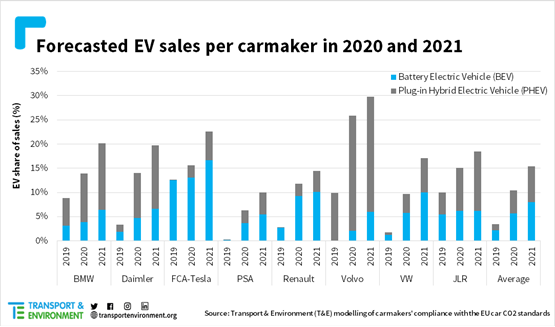
Electric cars are set to treble their market share in Europe this year, but an environmental campaign group is warning the UK could face long lead times in 2021.

Despite the pandemic, electric vehicle (EV) sales have surged since January 1 and will reach 10% this year and 15% in 2021, says Transport & Environment (T&E).

But, with carmakers having to meet targets to reduce the average emissions of the cars they sell in Europe, or pay fines, T&E says the UK supply of EVs is likely to dry up next year in the absence of British regulations equivalent to those in Europe.

Greg Archer, UK director at T&E, said: “Electric car sales are booming thanks to emissions standards. Next year, one in every seven cars sold in Europe will be a plug-in. European manufacturers have EVs to sell, but from January they’ll have no incentive to sell them in the UK unless the Government requires them to do so.”

From 2021, UK sales of EVs will not help manufacturers achieve EU standards. T&E says that the Government has so far failed to make parliamentary time available for equivalent new UK regulations to encourage sales here. These must be introduced by the end of October to be in place by January and maintain supplies of electric cars to the UK, it says.

Furthermore, it claims that the current draft regulation contains errors that will lead to about a fifth less EVs being sold in the UK than was likely if it had remained a part of the existing EU scheme. This is despite Government claims that the rules are equivalent to those in the EU.

The Department for Transport (DfT) has dismissed the claims.

Archer continued: “The electric car is becoming mainstream, but we risk turning off the tap in Britain.

“Carmakers will prioritise EV sales in markets where laws and tax breaks encourage them most, but the UK’s proposed standards are too weak and maybe too late.

“Government needs to quickly introduce regulations equivalent to the EU’s in 2021, or demand for electric cars will outstrip available supply and drivers will be left with long waits to secure their new electric car which will be more expensive.”

Read more on the UK analysis from T&E – UK Car CO2 Regulations: Going nowhere fast.

https://cdn.fleetnews.co.uk/web/1/root/forecasted-ev-sales_w555_h555.png

By Graham Hill thanks to Fleet News

Share My Blogs With Others: These icons link to social bookmarking sites where readers can share and discover new web pages.
  • MisterWong
  • Y!GG
  • Webnews
  • Digg
  • del.icio.us
  • StumbleUpon
  • Reddit
  • Alltagz
  • Ask
  • Bloglines
  • Facebook
  • YahooMyWeb
  • Google Bookmarks
  • LinkedIn
  • MySpace
  • TwitThis
  • Squidoo
  • MyShare
  • YahooBuzz
  • De.lirio.us
  • Wikio UK
  • Print
  • Socializer
  • blogmarks

Warnings Issued As More Employees Use Their Own Cars For Work

Thursday, 22. October 2020

More people are wanting to travel on their own in their own vehicle due to Covid-19, leading to an increase in private car usage for business journeys, says Jaama.

As a result, the fleet software company believes the management of grey fleet drivers should be a priority for employers.

As mentioned below if employees are now working from home then travelling to the office will now be classed as a business trip.

“Duty of care information needs to be captured and managed properly to ensure drivers are only using grey fleet vehicles which are safe, legal and appropriate for business use,” explained Martin Evans, managing director of Jaama, and director of the Association of Fleet Professionals (AFP).

“Companies who just pay allowances and mileage reimbursements without any diligence do so at their peril.”

Jaama says the buoyancy of the used car sector for four to seven-year- old sub-£10,000 cars, suggests more people are updating their own car to carry out more journeys for work purposes.

Evans continued: “Many fleet managers need to make a concerted effort to ensure they gain control of their grey fleet to avoid big problems in the future. All the signs are that the grey fleet car parc will continue to grow over the coming years.”

Fleet News has previously reported how long-term changes to the way people work could result in more employees becoming grey fleet drivers.

Paul Hollick, co-chair of the Association of Fleet Professionals (AFP), warned that this could have significant consequences for fleets, with more employees joining the ranks of those that drive their car for work, the so-called grey fleet.

Employers have a legal obligation to ensure that grey fleet vehicles are reasonably safe to use, are fit for purpose and are lawfully on the road.

Companies also typically pay Approved Mileage Allowance Payments (AMAPs) to reimburse fuel used in the course of a work trip at 45p per mile.

“Grey fleet could become a bit of a battleground, because of Covid-19,” warned Hollick. “Employees won’t be office-based (in the future), they’ll be home-based, which means their contract of employment might be changed.

“If the employee is classed as home-based rather than office-based a journey from home to the office will then become a business trip.”  By Graham Hill thanks to Fleet News

Share My Blogs With Others: These icons link to social bookmarking sites where readers can share and discover new web pages.
  • MisterWong
  • Y!GG
  • Webnews
  • Digg
  • del.icio.us
  • StumbleUpon
  • Reddit
  • Alltagz
  • Ask
  • Bloglines
  • Facebook
  • YahooMyWeb
  • Google Bookmarks
  • LinkedIn
  • MySpace
  • TwitThis
  • Squidoo
  • MyShare
  • YahooBuzz
  • De.lirio.us
  • Wikio UK
  • Print
  • Socializer
  • blogmarks

New Penalties Fail To Stop Or Reduce The Illegal Use Of Mobile Phones Whilst Driving

Thursday, 22. October 2020

One in five (18%) of drivers aged 17-24 admit to taking part in video calls while behind the wheel, while almost a third (29%) of all drivers make and take calls on handheld phones, new research from the RAC suggests.

The illegal use of handheld mobile devices has been studied by the RAC since the 2016 Report on Motoring highlighted the issue was at ‘epidemic levels’.

However, this latest data suggests tougher penalties introduced in 2016, have failed to change in behaviour among motorists, particularly younger drivers.

With police resources stretched, four out of five (79%) drivers told the RAC they support the introduction of camera technology to identify illegal mobile phone use in the UK, with the vast majority (52%) strongly in favour of this happening.

RAC road safety spokesperson Simon Williams said: “Our figures highlight what many drivers already know – that the problem of illegal phone use at the wheel has far from disappeared.”

Furthermore, Williams says that the situation is not helped by mobile phone laws. Mobile phone use that doesn’t involve telecommunications, such as checking text messages, recording a video or changing pre-downloaded music, is not covered by the legislation, although drivers could be convicted for not being in proper control of their vehicles.

He added: “It’s significant that motorists are united in their desire to see camera-based technology, like that already in use in other countries, introduced on our roads to catch drivers who risk everyone’s safety by breaking the law in this way.

“If the behaviour of those who continue to think it’s safe to use a handheld phone while driving upwards of a tonne of metal is ever going to change, they need to believe there’s a reasonable chance of being caught.”

An increased popularity in video call services from the likes of WhatsApp and Snapchat are particularly concerning, with younger drivers more than twice as likely to say they make or receive video calls while driving – on average 8% of all UK drivers say they do this, with the figure rising to 13% among those aged 25 to 44.

Equally concerning is just under one-in-10 drivers aged 17 to 24 (9%) say they play games on their phones while driving, making them three-times more likely to do this compared to the average UK driver.

Other drivers’ use of handheld phones is the second biggest overall motoring-related concern identified in the 2020 RAC Report on Motoring research, after the state of local roads – a third of all UK drivers surveyed (32%) say the issue concerns them and strikingly nearly eight-in-10 (79%) now want to see camera technology introduced to catch drivers acting illegally.

The 29% of drivers of all ages in 2020 that say they make and receive calls on handheld phones while driving is a five percentage point increase on last year and the highest proportion since 2016.

While younger drivers are still more likely to do so (42%, down from 51% last year), those in the 25 to 44 age group are also statistically more likely to break the law in this way (32% admit to doing so, almost unchanged on 2019’s figure of 33%).

More positively, the proportion of drivers admitting to other dangerous activities such as checking or sending text messages or taking photos or video appear to be reducing – although it is unclear whether this is simply down to lower overall car use this year as a result of the pandemic.

Less than one in 10 (8%) of all drivers say they text or send other messages while driving, down from 14% last year and from a high of 20% in 2016.

But young drivers are again much more likely to break the law – 15% of those aged 17 to 24 say they are doing it in 2020, although this is down substantially on 2019 (37%).

More than one-in-10 motorists (14%) this year say they check texts or other app notifications while driving, down from 17% in 2019. Among younger drivers, the proportion is 22%, down from 35% last year.

Williams said: “While there’s been a reduction in some elements of this dangerous activity, more people say they are making and taking calls now than at any point since 2016, shortly before tougher penalties were introduced.

“Our findings from 2016 were a watershed moment which led to the UK Government calling for people to make illegal mobile phone use while driving as socially unacceptable as drink-driving.

“The fact drivers still state it’s their second biggest motoring concern of all shows that more progress still needs to be made here.”

Brake, the road safety charity, is calling for a complete ban on the use of a phone when driving, including hands-free.

The road safety campaigners claim this view is supported by evidence, which shows hands-free devices impairing driving as much as hand-held and are urging the Government to provide clarity in the law, before more lives are lost.

Joshua Harris, director of campaigns for Brake said: “Any use of a phone behind the wheel is dangerous but the fact that such a large proportion of young people admit to making video calls and playing games when driving really beggars belief.

“We need clarity in the law around phone use behind the wheel, and we need it now. The Government must implement a full ban on phone use when driving, including hands-free, to make the dangers crystal clear to the public and to crack-down on this reckless behaviour. The police must also be provided with the right tools and investment to enforce the roads effectively.

“In the wrong hands, a car is a lethal weapon and even a moment’s distraction from the road can have catastrophic consequences. More than 75 people are killed on UK roads every day and with driver distraction levels seemingly on the rise, the Government must step in and act, now.” 

Inspector Frazer Davey, of the Avon and Somerset Police Roads Policing unit, said that the importance of concentrating on driving “cannot be overstated”.

“Using a mobile phone while in charge of a car puts you and everyone else at risk. The consequences of allowing yourself to be distracted while you are driving can be catastrophic. It’s simply not worth it.”

Type of handheld mobile phone use while driving2020 and 2019 figure (all drivers)2020 and 2019 figure (drivers aged 17-24)
Make and receive calls29%, up from 23%42%, down from 51%
Send texts, social media posts or use the internet8%, down from 14%15%, down from 37%
Check texts, social media posts or app notifications14%, down from 17%22%, down from 35%
Take photos or record video6%, down from 13%14%, down from 35%
Make or receive video calls8%18%
Play a game on a mobile phone3%9%

Source: representative sample of UK drivers from RAC Report on Motoring. UK sample size: 3,068  By Graham Hill thanks to Fleet News

Share My Blogs With Others: These icons link to social bookmarking sites where readers can share and discover new web pages.
  • MisterWong
  • Y!GG
  • Webnews
  • Digg
  • del.icio.us
  • StumbleUpon
  • Reddit
  • Alltagz
  • Ask
  • Bloglines
  • Facebook
  • YahooMyWeb
  • Google Bookmarks
  • LinkedIn
  • MySpace
  • TwitThis
  • Squidoo
  • MyShare
  • YahooBuzz
  • De.lirio.us
  • Wikio UK
  • Print
  • Socializer
  • blogmarks

The EU Is Getting Tough With UK Car Makers Post Brexit

Thursday, 15. October 2020

I warned of this situation even before we voted to exit the EU. Whenever the EU arranged a trade deal with a country outside the EU bloc in order for the goods (not just cars) to be considered European and therefore qualify for free tariffs the majority of the product, in this case the car, had to be manufactured within Europe.

Some reports suggested 51% others as high as 60% had to be manufactured within the EU. I raised the question at the time that whilst we would possibly end up with a deal with Europe resulting in duty free sales of cars both to and from the EU it still meant that we would be outside the EU.

So what did this mean? Whilst in  Europe we have movement of components backwards and forwards but as long as the majority of the cost of a car was sourced in Europe it met the conditions attached to free trade with other countries.

So let’s look at an example, not genuine but for illustration. The EU has a Free Trade deal with South Korea. Mercedes sell cars to South Korea duty free based on the cars being predominantly manufactured in Europe by value. So currently the Mercedes is made using UK parts, say dashboards, screens, interiors etc. all considered to be EU parts.

The UK content accounts for say 10% of the cost of the car contributing to say 55% made in the EU. The rest is sourced from say China, India, US etc. Once out of the EU the EU content drops to 45% as we no longer contribute to the EU portion which means that the car now falls outside the free trade rules and becomes subject to duty charges.

I was ignored at the time as I was told that this would all come out in the trade deal. It hasn’t and could easily lead to European manufacturers replacing UK parts with parts manufacture in the EU.

And it gets worse.

When we manufacture items in the UK we often source components from outside the EU but under the rules of origin we have been able to use parts from outside the UK but the finished item can still be sold as British. The technical term is Cumulation.

It seems that many of the components used in UK car manufacturing come in from Turkey and Japan. It seems that according to our chief negotiator David Frost the EU has thrown out the practice of cumulation insisting that 60% of the component cost of anything sold to the EU must be sourced in the UK to qualify for free trade.

Component parts from Turkey and Japan that have traditionally been regarded as part of ‘made in the UK’ under cumulation rules will in future fall outside the UK content. Which means that whilst we could have a free trade deal between us and the EU if vehicles don’t contain sufficient UK components to meet the rules, tariffs will have to be paid.

This will certainly be bad news for Jaguar Landrover, Ford, Nissan and Vauxhall all of which use a lot of parts from Turkey and Japan and sell many vehicles into Europe.

Frost has also confirmed that the EU has rejected the UK’s request for electric cars, batteries and bicycles to be treated leniently under the rules of origin if the majority of components come from elsewhere.

Sadly it seems that the originally agreed Theresa May withdrawal agreement had addressed and resolved this issue – according to the Guardian. 2 years ago the average British produced content of cars built in the UK was about 44% which means they will all fall foul of the country of origin rules.

As I understand it if we come out with a deal, components that are made in the EU that feed into British made items will pass the rules of origin test but components from outside the EU won’t in the future. We have some difficult times ahead. By Graham Hill

Share My Blogs With Others: These icons link to social bookmarking sites where readers can share and discover new web pages.
  • MisterWong
  • Y!GG
  • Webnews
  • Digg
  • del.icio.us
  • StumbleUpon
  • Reddit
  • Alltagz
  • Ask
  • Bloglines
  • Facebook
  • YahooMyWeb
  • Google Bookmarks
  • LinkedIn
  • MySpace
  • TwitThis
  • Squidoo
  • MyShare
  • YahooBuzz
  • De.lirio.us
  • Wikio UK
  • Print
  • Socializer
  • blogmarks

Insider Information Regarding Goodwill Repairs

Thursday, 15. October 2020

Every so often I receive directions to dealerships by solicitors to protect them from consumer claims. Anything to avoid carrying out a repair or paying back money. In this missive, they explain what a dealer should do when it comes to carrying out repairs as a gesture of goodwill.

Dealerships often have a policy on when they will allow goodwill repairs.  They may be offered because the warranty has recently run out, the problem is recurring due to possible driver error, or because the customer just likes to complain and it gets them off your back.

Most customers will accept goodwill gestures for what they are, a goodwill gesture and not a legal obligation. But there is always one customer who tries it on, pushing to get all they can out of you, taking advantage of your generosity.

There is a danger that you carry out a goodwill repair to something that didn’t exist at the point of sale or has been described as falling within the constraints of the Consumer Rights Act, giving the customer the impression the problem is the dealer’s responsibility and the problem existed when they bought the car.

By carrying out a repair, you are potentially taking ownership of the problem. The repair must resolve the problem brought to you in the first place or else you could be pursued to court on the basis that your repair caused the fault that is now being complained about. 

A goodwill repair can blow up in your face as it could infer an extension to the warranty or that there is a warranty on the parts that you fit.  This is made worse if you suspect that the problem has been caused by the customer driving or modifications carried out.

Your repairs could mask the true cause of the original problem and make it difficult to prove further down the line. 

If legal proceedings are issued by the customer, goodwill repairs can also make it more difficult in your defence to argue that there was nothing wrong with the vehicle when sold. Judges don’t generally need too much persuading to conclude that a vehicle was faulty at the point of sale.

This doesn’t mean that goodwill repairs should not be carried out. They are an important tool in generating loyal customers, especially as for many consumers it’s how a complaint is dealt with that can say far more about you than how the sale was dealt with.

However, it is important you document your decision by making it clear it is a goodwill repair – it is not under the warranty, there is no warranty for any new parts fitted as part of(s) provision, and it is in no way an admission the vehicle has any defects or issues. By Graham Hill

Share My Blogs With Others: These icons link to social bookmarking sites where readers can share and discover new web pages.
  • MisterWong
  • Y!GG
  • Webnews
  • Digg
  • del.icio.us
  • StumbleUpon
  • Reddit
  • Alltagz
  • Ask
  • Bloglines
  • Facebook
  • YahooMyWeb
  • Google Bookmarks
  • LinkedIn
  • MySpace
  • TwitThis
  • Squidoo
  • MyShare
  • YahooBuzz
  • De.lirio.us
  • Wikio UK
  • Print
  • Socializer
  • blogmarks

Those Responsible For Business Use Cars Risk Conviction For Employees Driving Offences

Tuesday, 6. October 2020

The following article mentioned specifically fleet managers being responsible for offences that drivers are convicted for. But beware if you are a director, owner or partner of a company that either provides company cars or pays an allowance for employees to use their own cars on business (either a car allowance or mileage allowance) as the same rules apply to the person responsible.

Fleet decision-makers could face the same penalty points as their employees should they be convicted of a driving offence, the Licence Bureau is warning.

The supplier of driver licence validation services says it is witnessing an increasing number of these cases being recorded on its system.

Responsible parties can incur the same penalty points as the actual vehicle driver due to the often unknown and much misunderstood ‘cause or permit to drive’ legislation.

Licence Bureau says that it means even though the initial offence was committed by a third party, it was ultimately the fleet manager’s responsibility.

Steve Pinchen, sales director of Licence Bureau, explained: “This much unknown rule has some very serious implications indeed for individuals and businesses alike.

“Those responsible for business fleets – of any scale – really do need to do their homework and ensure that they have all bases covered when it comes to compliance. Not only that, but there is a cultural aspect here too where everyone must be attuned to minimising road safety risk.”

According to the Road Traffic Act 1988/1991, ownership of a vehicle involved in an offence is irrelevant. This therefore implicates both owned business fleet and grey fleet operators.

The Act also cites that causing or permitting driving otherwise than in accordance with a licence can incur three to six points with fine up to £1,000.

The points remain for four years on licence from date of offence. The ‘person responsible for the fleet’ can have the points added to their own personal driving licence.

At present, the majority of these ‘dual penalty recipient’ offences recorded on Licence Bureau’s system relate to ‘causing or permitting using a vehicle uninsured against third party risks’ – an offence which carries six to eight penalty points.

Pinchen said: “Beyond the actual penalty points there are the knock-on implications for elevated risk profiles within the business and what that might mean for insurance premiums; professional and personal impacts for fleet managers; as well as potential for reputational damage for the company.”

Other offences recorded on Licence Bureau’s system include ‘using a vehicle with defective tyres’ which carries three penalty points for each individual implicated, and ‘using a mobile phone while driving a motor vehicle’ which carries three to six penalty points.

The volume of motoring fines and penalties incurred by company car and van drivers increased by 3% in 2019, according to figures from Lex Autolease released earlier this year.  By Graham Hill thanks to Fleet News

Share My Blogs With Others: These icons link to social bookmarking sites where readers can share and discover new web pages.
  • MisterWong
  • Y!GG
  • Webnews
  • Digg
  • del.icio.us
  • StumbleUpon
  • Reddit
  • Alltagz
  • Ask
  • Bloglines
  • Facebook
  • YahooMyWeb
  • Google Bookmarks
  • LinkedIn
  • MySpace
  • TwitThis
  • Squidoo
  • MyShare
  • YahooBuzz
  • De.lirio.us
  • Wikio UK
  • Print
  • Socializer
  • blogmarks

British Car Auctions Report Strong Used Car Sales

Monday, 28. September 2020

Average used car values exceeded £8,000 for the third month in a row in August, with sold volumes continuing to rise, up by 3.9% over the month, reports BCA.

BCA sold record numbers of vehicles online in August. Daily online sales entries averaged more than 6,000 units, with a record number of 7,400 vehicles offered on Wednesday, August 19, the highest volume of vehicles ever offered by BCA online in one day.

BCA chief operating officer for UK Remarketing, Stuart Pearson, said it has seen “improving levels” of supply reaching the marketplace throughout the period of the pandemic with “well-matched demand” for stock from its buyer base.

“The marketplace is operating very efficiently and this is good news for all professional operators in the used vehicle sector.”

He added: “Anecdotally, many dealers are telling us that their stock churn has improved significantly, with many holding lower volumes of stock but still selling as many vehicles as they might have expected pre-Covid19.”

Used car challenges ahead

Indicata, however, suggests that the UK used market showed its first signs of cooling off in August, according to its latest used car report.

During August, it says that the UK was the only one out of 13 European countries to experience a year-on-year fall (-3.3%) with the sub-three-year sector down by 15.75%.

Volumes were also down by 50% in the sub 12-month sector caused by OEMs reducing their push on self-registrations and demonstrators as new car shortages continue following the Covid-19 pandemic lockdown. The six-nine-year age group was the only one to rise during August by 8.8%.

Hybrids and electric vehicle (EV) sales were up year-on-year by nearly 50%.

Meanwhile, market stock levels grew by 3% in August as used cars stuck in the wholesale supply chain have finally seen the light of day.

“The UK used car market saw an interesting blend of high prices, improving stock levels and a fall in demand year-on-year,” explained Jon Mitchell, Indicata’s group sales director.”  By Graham Hill thanks to Fleet News

Share My Blogs With Others: These icons link to social bookmarking sites where readers can share and discover new web pages.
  • MisterWong
  • Y!GG
  • Webnews
  • Digg
  • del.icio.us
  • StumbleUpon
  • Reddit
  • Alltagz
  • Ask
  • Bloglines
  • Facebook
  • YahooMyWeb
  • Google Bookmarks
  • LinkedIn
  • MySpace
  • TwitThis
  • Squidoo
  • MyShare
  • YahooBuzz
  • De.lirio.us
  • Wikio UK
  • Print
  • Socializer
  • blogmarks

No Deal Brexit – The Effect On The Motor Industry

Monday, 28. September 2020

Automotive companies from across the UK and EU are calling for an ambitious free trade deal, warning that ‘no deal’ will have a catastrophic impact on the industry.

If no deal is reached and ratified before December 31, World Trade Organisation (WTO) non-preferential rules, including a 10% tariff on cars and up to 22% on vans and trucks would apply.

Such tariffs – far higher than the small margins of most manufacturers – would almost certainly need to be passed on to consumers, making vehicles more expensive, reducing choice, and impacting demand. Furthermore, automotive suppliers and their products will be hit by tariffs, they say.

New calculations, published on Monday, September 14 by the Society of Motor Manufacturers and Traders (SMMT), suggest that a reduction in demand resulting from a 10% WTO tariff for cars and vans could reduce EU and UK factory output over the next five years by three million units.

That would equate to losses worth €52.8 billion (£48.7bn) to UK plants and €57.7bn (£53.2bn) to those based across the EU. Suppliers would also suffer from these changes, it says.

The lead organisations representing vehicle and parts makers across the EU, the European Automobile Manufacturers Association (ACEA) and the European Association of Automotive Suppliers (CLEPA), along with 21 national associations, including the SMMT, have joined forces to warn that this combined loss in trade value would seriously harm one of Europe’s most valuable assets.

Collectively, the EU27 and UK automotive sector is responsible for 20% of global motor vehicle production and spends some €60.8bn (£56bn) on innovation each year, making it Europe’s largest R&D investor.

The SMMT’s chief executive, Mike Hawes, said:  ”These figures paint a bleak picture of the devastation that would follow a ‘no deal’ Brexit.

“The shock of tariffs and other trade barriers would compound the damage already dealt by a global pandemic and recession, putting businesses and livelihoods at risk.

“Our industries are deeply integrated so we urge all parties to recognise the needs of this vital provider of jobs and economic prosperity, and pull out every single stop to secure an ambitious free trade deal now, before it is too late.”

The industry says that any deal should include zero tariffs and quotas, appropriate rules of origin for both internal combustion engine and alternatively fuelled vehicles, plus components and powertrains, and a framework to avoid regulatory divergence.  

Crucially, it says that businesses need detailed information about the agreed trading conditions they will face from January 1, 2021, to make preparations. This, combined with targeted support and an appropriate a phase-in period that allows for greater use of foreign materials for a limited period of time, will ensure businesses are able to cope with the end of the transition period.

Eric-Mark Huitema, ACEA director general, said: “The stakes are high for the EU auto industry – we absolutely must have an ambitious EU-UK trade agreement in place by January. Otherwise our sector – already reeling from the COVID crisis – will be hit hard by a double whammy.”  By Graham Hill thanks to Fleet News

Share My Blogs With Others: These icons link to social bookmarking sites where readers can share and discover new web pages.
  • MisterWong
  • Y!GG
  • Webnews
  • Digg
  • del.icio.us
  • StumbleUpon
  • Reddit
  • Alltagz
  • Ask
  • Bloglines
  • Facebook
  • YahooMyWeb
  • Google Bookmarks
  • LinkedIn
  • MySpace
  • TwitThis
  • Squidoo
  • MyShare
  • YahooBuzz
  • De.lirio.us
  • Wikio UK
  • Print
  • Socializer
  • blogmarks

Major Changes Expected To Company & Private Car Ownership Post Covid-19

Friday, 11. September 2020

Early terminations and contract extensions from fleets and company car drivers are being reported by leasing companies as job losses increase.

Over the past three months, the number of people claiming out-of-work benefits (job seekers allowance and low income benefits) has more than doubled, reaching 2.7 million in July, according to the Office for National Statistics (ONS).

The latest data also shows more than three million people were still furloughed as the Government scheme begins to wind down.

The ONS says that more than one-in-10 workers (12%) were, effectively, having their wages paid by the Government between late July and the middle of August, a 50% reduction on May’s figures.

Unsurprisingly, the highest number of furloughed staff were found in those companies yet to re-open – almost three-quarters of staff (71%) compared to 11% at those businesses back trading.

The scale of the downturn is unprecedented. The UK economy is now 17.2% smaller than it was in February 2020.

Furthermore, Quarter 2 2020 is now 22.1% below Quarter 4 2019, which is more than three times greater than the total fall during the next largest period of recession, which occurred during the global economic downturn of 2008 to 2009.

The Bank of England has warned that UK unemployment is expected to peak at 2.5 million by 2021, with more than a million jobs expected to be lost in the second half of this year.

It highlighted what it called the “considerable uncertainty” remaining about the prospects for employment after the furlough scheme finishes in October.

WINNERS AND LOSERS

Paul Hollick, chairman of the Association of Fleet Professionals (AFP), said: “Some companies have taken the bit between the teeth by introducing redundancies quickly, but they were already on shaky ground, with plans already in place.”

However, he explained there have been “winners and losers” as a result of the pandemic, with those in the hospitality and travel sector hit particularly hard, while anything that is digitised and can create online services and solutions is able to tap into growing demand.

The amount of money spent online increased by 61.9% in June when compared with February, ONS data suggests. This has resulted in an increase of £943.5 million in average weekly sales from £1.5 billion in February to a staggering £2.5bn in June.

Courier fleets have been among some of the biggest winners, with DPD announcing it was recruiting 6,000 new staff, including 3,500 drivers, in response to the unprecedented boom in online shopping.

The delivery firm is investing £200m this year to expand its next-day parcel capacity, including £100m on vehicles, £60m on 15 new regional depots (10 more than originally planned in 2020) and the remainder on technology.

The new jobs will include delivery and HGV drivers, warehouse staff, management positions and support staff, including mechanics.

CEO Dwain McDonald said the business was experiencing the “biggest boom in online retailing in the UK’s history”.

It is a similar story at APC, with 100 new roles available, all of which will be permanent positions, including drivers, warehouse operatives, customer services staff and IT.

The courier firm’s chief executive, Jonathan Smith, explained that the past five months have seen “unprecedented demand” for its delivery services.

For firms facing a more uncertain outlook, Hollick believes business owners and operators do not know what to do in terms of “rightsizing their business”.

He explained: “No one really understands the total impact yet, because everything is being propped up (by the Government), but I wouldn’t want to be an account manager at this time.

“The way that you operate with customers is going to fundamentally change post-Covid. I think it’s going to be a case of sitting in an office or at home to do an account review rather than face-to-face.”

EARLY TERMINATIONS

Account management and sales teams would, typically, be out on the road, potentially covering long distances to visit their customer base on a regular basis.

But lockdown has shifted customer meetings online and, with obvious productivity gains, returning to pre-pandemic working practices is not on the cards.

Volkswagen Financial Services Fleet reported it was seeing “no demand” from customers for a return to face-to-face meetings. Head of sales and marketing, Tom Brewer, said: “We’re seeing a desire to continue with remote meetings at the moment.

“In our experience, this approach doesn’t seem to have any detriment to the quality of the conversations or the effectiveness of the meetings. There are upsides for all parties – aside from minimising the risk to everyone’s health – in the productivity benefits for us and our customers; meetings tend to be shorter and there is no fuel cost and no time lost to travel.”

It is not planning a reduction in headcount, but elsewhere companies looking to tighten their belts are recognising that they can do more with less.

As a result, Hollick expects the traditional company car market will shrink due to the significant job losses already being seen and those yet to come as the furlough scheme ends.

Furthermore, he says other employees, who qualified for a car due to the amount of annual mileage they covered, face having the benefit removed due to now not hitting the required threshold.

Three-quarters (74.8%) of fleets told Fleet News in a recent survey that they expect greater use of video conferencing in the long term, while almost 61% expect to see average mileages fall. And more than a third (35.8%) said that they expect to be running fewer company cars in the future.

Alphabet has reported an increase in early terminations and reschedule requests in recent months, driven predominantly by individual and small-to-medium enterprise (SME)customers.

However, Gavin Davies, Alphabet’s general manager for customer relationship management and public sector, said: “We are seeing bulk early termination requests from some of our corporate fleets as well, but they are also utilising other options, such as putting new car orders on hold while they assess their individual situations and future fleet needs.

“This has been the case particularly in those industries that have been hit hardest by the lockdown or still have staff on furlough.”

He added: “As the furlough scheme has given an artificial stimulus to current demand, we do expect to see an increase in early terminations as the scheme comes to an end in October.”

Matthew Walters, head of consultancy and customer data services at LeasePlan UK, says contract extensions have increased by approximately 50% above average. “Many businesses are also increasingly interested in the efficiency savings gained by outsourcing their operations and fleet activity.”

Jon Lawes, managing director of Hitachi Capital Vehicle Solutions, told Fleet News that sales teams were particularly impacted by a lack of travel. “We’re seeing customers looking to reduce their contract mileage moving forward, meaning that policy benchmark mileages have reduced by approximately 10% across certain customers,” he said.

The greatest impact has been in the retail sector, with job losses resulting in company car numbers being cut.

“The headcount and vehicle allocation for retail store area managers has reduced as a result of companies streamlining their middle management to respond to the economic impact of the virus,” said Lawes.

Since March, Lex Autolease has granted payment holidays to more than 3,000 customers, from small fleets to those with thousands of vehicles.

Mileages have also been amended to encourage rental cost-savings and existing vehicles redistributed. As a result, Andy Barrell, head of business development at Lex Autolease, said: “We’re not seeing mass vehicle terminations across our customer base.

“Customers are naturally more inclined towards short-term agreements when there is ongoing uncertainty, so it’s no surprise we’ve seen an increase in demand for short-term daily rental, alongside our informal extension agreements – giving customers more time to assess future requirements.”

The total number of new cars registered to fleet and business so far this year is 45.3% down year-on-year, with 433,868 units registered in 2020, compared with 792,091 in the same period last year.

Historic HMRC data shows a declining pool of company cars, with 890,000 employees receiving the benefit in 2017/18, compared with 940,000 the previous year.

Officials blamed the dramatic decline on reporting issues leaving some vehicles unaccounted for, but the figures for 2018/19, in the coming weeks, are still expected to show a downward trend.

Hollick, however, is predicting leasing firms and carmakers could benefit from a renewed interest in salary sacrifice. He explained: “A few big fleets have already mentioned to me that they are relaunching salary sacrifice schemes to take advantage of the low rates for electric vehicles (EVs). But it’s going to be a fascinating market and I don’t think anybody will know the true impact until the start of next year.”

Hitachi Capital’s Lawes says employees are concerned about the long-term economic impact of Covid-19 and committing to a company car contract, with some perk schemes affected.

That being said, he also sees the renewed potential of salary sacrifice. He told Fleet News: “Now is a prime time to take a salary sacrifice EV with 0% BIK charges.”

Although Alphabet has seen an increasing demand to move to cash incentives in recent years, Davies also highlighted the “significant taxation benefits” for companies and drivers who choose to adopt ultra-low-emission vehicles (ULEVs).

“Alphabet has seen a huge uptake in EVs since the 0% BIK rates were introduced earlier this year,” he said.  By Graham Hill thanks to Fleet News

Share My Blogs With Others: These icons link to social bookmarking sites where readers can share and discover new web pages.
  • MisterWong
  • Y!GG
  • Webnews
  • Digg
  • del.icio.us
  • StumbleUpon
  • Reddit
  • Alltagz
  • Ask
  • Bloglines
  • Facebook
  • YahooMyWeb
  • Google Bookmarks
  • LinkedIn
  • MySpace
  • TwitThis
  • Squidoo
  • MyShare
  • YahooBuzz
  • De.lirio.us
  • Wikio UK
  • Print
  • Socializer
  • blogmarks