New Pound Coin Will Increase Cost Of Parking Says Graham Hill

Friday, 2. May 2014

Whilst catching up on some of the stranger things to come out of the budget I noticed that the pound coin is about to change. Well when I say ‘about’ I mean in 2017 when it will be launched. I have seen the design and if you are as old as me you will immediately think of the thrupney piece.

Thinking of a change but unsure as to the best way to finance your car? Then you need a copy of my car finance book, Car Finance – A Simple Guide by Graham Hill. Click on the link below to buy the best car finance book on the market, available as a Kindle Book and Paper Back.

It’s the usual bronze colour but it has 12 sides and has been described by the Rotal Mint as the most secure in the world. However the new design comes at a cost as all vending machines will have to be modified at a cost. According to the British Parking Association, the cost to local authorities of the modification to their parking metres will be £50 million alone.

However, they also said that this will give the authorities the opportunity to upgrade their machines to also accept credit/debit cards at the same time. The move has been instigated by the Treasury because 4% of all £1 coins in circulation are counterfeit and this is already costing local authorities a fortune as banks refuse to accept them.

Personally I’m confused as I can’t see that making the £1 coin 12 sided makes it any less capable of being replicated. If there was some hidden ingredient in the metal that made it detectable I could understand it but it’s a lump of metal that has either been stamped out or forged (that’s metal forged not as in illegally forged – oh you know what I mean).

Royal Mint X Mirai Suenaga

Royal Mint X Mirai Suenaga (Photo credit: Danny Choo)

So I can’t see how it will stop the crooks? Obviously the Royal Mint knows more about these things than me! By Graham Hill

Enhanced by Zemanta
Share My Blogs With Others: These icons link to social bookmarking sites where readers can share and discover new web pages.
  • MisterWong
  • Y!GG
  • Webnews
  • Digg
  • del.icio.us
  • StumbleUpon
  • Reddit
  • Alltagz
  • Ask
  • Bloglines
  • Facebook
  • YahooMyWeb
  • Google Bookmarks
  • LinkedIn
  • MySpace
  • TwitThis
  • Squidoo
  • MyShare
  • YahooBuzz
  • De.lirio.us
  • Wikio UK
  • Print
  • Socializer
  • blogmarks

Graham Hill Solves Recharging Problem With Electric Cars

Wednesday, 9. April 2014

I actually invented the domestic smoke detector. It’s absolutely true, I was working in a large fire alarm company called Sound Diffusion at the time. They sold their equipment for cash although most was leased and hence this is where my background in leasing started.

Thinking of a change but unsure as to the best way to finance your car? Then you need a copy of my car finance book, Car Finance – A Simple Guide by Graham Hill. Click on the link below to buy the best car finance book on the market, available as a Kindle Book and Paper Back.

After chatting to an engineer about our smoke detectors that all had to be hard wired into a central control panel I found out that the amount of electricity required to maintain a detector on standby was incredibly small. In the first instance whilst doodling one day I came up with a light bulb that above the light was a smoke detector.

I then ‘developed’ the idea further to a battery driven unit. I showed our chairman at the time and it was dismissed as not saleable. He explained that consumers never expect catastrophes to happen, ‘it always happens to the next door neighbour, not to us.’ was his conclusion. A year later a company brought out a stand alone smoke detector for £29.99 and a matter of months later Black and Decker brought out theirs for £9.99.

In the words of Del Boy I could have been a millionaire! So why have I explained my flair for coming up with amazing ideas? Well I have just been reading about the latest announcement regarding electric cars. A series of quick charge units have opened up across the centre of the country, referred to as the Milton Keynes Crosslink.

There are 14 of these charging points capable of charging a car in 20 minutes, located in Cambridge, Bedford, Milton Keynes, Buckingham and Oxford. Now I don’t know about you but I still wouldn’t feel comfortable relying upon these points to get me home in the same way that I might hope to find a service station open at 11.00 at night.

And frankly I don’t consider 20 minutes as a fast charge when I can fill my car up with diesel in 2 minutes. So have we really found the answer to the problem? I don’t think so! Hence my invention! Don’t laugh! First of all it requires all batteries that are used in electric cars to be standardised in terms of size. We also need standard fittings into which a battery could be slotted into close to the ground (the batteries are bloody heavy).

You then enter a drive through bay and with the speed and precision of a group of F1 mechanics someone comes out with a trolley type jack and removes the fitted battery whilst making a note of the electricity reading on a visible dial on the outside of the battery. A freshly charged battery is is then slid into place, locked in place and the car is good to go.

The car drives up to a payment booth, pays for the electricity that he has used, as shown on the old battery, and he is good to go. If the F1 mechanics are anything to go by a driver could be through in about 5 seconds. There you go problem solved! Oh and the old battery goes straight back on charge on a rack of fast chargers. Brilliant or what? By Graham Hill

Enhanced by Zemanta
Share My Blogs With Others: These icons link to social bookmarking sites where readers can share and discover new web pages.
  • MisterWong
  • Y!GG
  • Webnews
  • Digg
  • del.icio.us
  • StumbleUpon
  • Reddit
  • Alltagz
  • Ask
  • Bloglines
  • Facebook
  • YahooMyWeb
  • Google Bookmarks
  • LinkedIn
  • MySpace
  • TwitThis
  • Squidoo
  • MyShare
  • YahooBuzz
  • De.lirio.us
  • Wikio UK
  • Print
  • Socializer
  • blogmarks

The Dangers Of Buying Used Cars Following The Floods

Tuesday, 8. April 2014

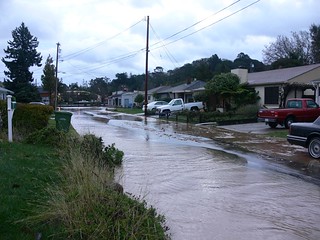
Flooding on our street

Flooding on our street (Photo credit: jessicafm)

We saw the sad pictures on TV following the floods in various parts of the country. People’s homes were wrecked with thousands of pounds of damage caused to furniture and possessions.

Thinking of a change but unsure as to the best way to finance your car? Then you need a copy of my car finance book, Car Finance – A Simple Guide by Graham Hill. Click on the link below to buy the best car finance book on the market, available as a Kindle Book and Paper Back.

But what about all the cars we saw up to their bonnets in muddy water. Many would be subject to insurance claims and be paid out with a large number being written off according to the AA. And if a car is written off they are subjected to some very stringent rules before, if ever, they are allowed back on the road.

But it would seem that many drivers either didn’t make a claim or couldn’t because their policy didn’t cover them for flood damage. They simply dried the car out, maybe changed the carpets and have been selling them privately or through auction, possibly ending up on dealer forecourts.

Amazingly 70% of all cars that have been submersed in water are written off due to engine damage or electrical safety problems. Water can also seriously damage air bags and catalytic converters, something you may not notice when buying a used car. So be very careful if you are buying a used car, you might find yourself buying an ex flood damaged car. By Graham Hill

Enhanced by Zemanta
Share My Blogs With Others: These icons link to social bookmarking sites where readers can share and discover new web pages.
  • MisterWong
  • Y!GG
  • Webnews
  • Digg
  • del.icio.us
  • StumbleUpon
  • Reddit
  • Alltagz
  • Ask
  • Bloglines
  • Facebook
  • YahooMyWeb
  • Google Bookmarks
  • LinkedIn
  • MySpace
  • TwitThis
  • Squidoo
  • MyShare
  • YahooBuzz
  • De.lirio.us
  • Wikio UK
  • Print
  • Socializer
  • blogmarks

Company Electric Cars Dealt A Blow By The Chancellor

Tuesday, 8. April 2014

I remember years ago whilst training as an accountant an economics professor saying never assess what the Chancellor is saying at the dispatch box when announcing the budget because the devil is in the detail and the detail is in the small print. And so itr was with the latest budget.

Thinking of a change but unsure as to the best way to finance your car? Then you need a copy of my car finance book, Car Finance – A Simple Guide by Graham Hill. Click on the link below to buy the best car finance book on the market, available as a Kindle Book and Paper Back.

Whilst company car drivers seemed to have been left alone whilst benefitting from fuel duty freeze in the small print was the ‘leaving alone’ of a previous announcement that benefit in kind (BIK) bands that kick in 12 months from now will continue to 2017 and 2018 tax years. This is the increase of 2 percentage points for each tax band per annum.

So by 2018 the BIK tax applied to cars with a CO2 emission of 76-94g/km will be 19% of the car’s P11D value. So much for looking after the motorist. In 2018 this will raise £240 million for the treasury with a further £480 million in 2019. Those that drive low emission cars will suffer the most as we will see cars under 51g/km dropping into the 13% band with 51-74g/km up to 16% by 2018.

And all this came after the Chancellor announced at the dispatch box that he is ‘increasing the discount for low-emission vehicle.’ I think it is about time for a re-think because this will take anyone currently considering an electric vehicle from a benefit in kind threshold of zero to 13% in 4 years. But it gets worse!

Because if you look at the cost of an electric vehicle compared with the equivalent petrol vehicle the BIK tax is horrendous. Take for example the Nissan Leaf, the Tekna version has an on the road figure, according to What Car of £30,490 before the Government subsidy is applied (and therefore the figure that BIK will be based upon).

Compare this with a Nissan Juke 1.6 petrol Juke, this costs £16,295, the Leaf is nearly twice the price. I seriously think that the government needs to think again about zero emission cars and the disincentive that this brings. By Graham Hill

Nissan Leaf at Tokyo Motor Show (RHD).

Nissan Leaf at Tokyo Motor Show (RHD). (Photo credit: Wikipedia)

Enhanced by Zemanta
Share My Blogs With Others: These icons link to social bookmarking sites where readers can share and discover new web pages.
  • MisterWong
  • Y!GG
  • Webnews
  • Digg
  • del.icio.us
  • StumbleUpon
  • Reddit
  • Alltagz
  • Ask
  • Bloglines
  • Facebook
  • YahooMyWeb
  • Google Bookmarks
  • LinkedIn
  • MySpace
  • TwitThis
  • Squidoo
  • MyShare
  • YahooBuzz
  • De.lirio.us
  • Wikio UK
  • Print
  • Socializer
  • blogmarks

The Latest British Standard For Petrol Can Damage Engines

Monday, 7. April 2014

This next item is of particular interest if you drive or are thinking of driving a petrol car. You may or not be aware that when petrol is manufactured, or whatever the correct expression is, it has to conform to British standards and for many years the standard blend of fuel in the UK has been known as E5.

Thinking of a change but unsure as to the best way to finance your car? Then you need a copy of my car finance book, Car Finance – A Simple Guide by Graham Hill. Click on the link below to buy the best car finance book on the market, available as a Kindle Book and Paper Back.

This means that petrol has to be blended with 5% Ethanol which cuts down greenhouse gas emissions. The downside is that it delivers 30% less power than petrol but with just 5% added the difference has hardly been noticeable. However, this is about to change because from March 2013 British Standard EN228 has allowed petrol companies to increase the ethanol content to 10%, known surprisingly as E10.

To date none seem to have adopted the new blend as it has been found to cause a problem in older cars. In the US they have investigated the differences the new blend makes to cars and found that there is a drop in economy of about 3-4% between E10 and pure petrol (E0).

In real terms, following an investigation by What Car, on a Dacia Sandero 89bhp, the drop in MPG meant a difference in fuel cost of £202 every 12,000 miles. A 98bhp Hyundai i30 had a 9.8% drop in economy between E0 and E10 amounting to an extra £16 per month. Hybrids performed a little better.

It is thought that 39% of UK road transport CO2 comes from petrol engines and Ethanol has been proposed as a quick fix to help to reduce this. The expected carbon saving is anticipated to be 58% but What Car tests have found that there is actually a slight increase in carbon emissions.

The general feel is that whilst the fuel companies won’t introduce E10 before the end of this year – it will come eventually. Before you start to panic the Society of Motor Manufacturers and Traders(SMMT) have said that 92.2% of all cars are OK with E10 and that cars built after 2002 should be in the clear but check the manual before filling up.

E5 will still be available so we will be back to the days of ‘Super’ grade and ‘Super Plus’ grade petrol. If a garage sells 3 million litres a year it must offer both grades, less than this and the site will need to decide which grade to offer. Retailers don’t have to identify E5 petrol however the Biofuel (labelling) Regulations state that pumps dispensing more than 5% Ethanol must clearly show it on the pumps so E10 will be clearly labelled.

Manufacturers have known about this for a few years so all new cars will be compatible with E10, yet another reason why you should lease a new car rather than HP a used car! By Graham Hill

Enhanced by Zemanta
Share My Blogs With Others: These icons link to social bookmarking sites where readers can share and discover new web pages.
  • MisterWong
  • Y!GG
  • Webnews
  • Digg
  • del.icio.us
  • StumbleUpon
  • Reddit
  • Alltagz
  • Ask
  • Bloglines
  • Facebook
  • YahooMyWeb
  • Google Bookmarks
  • LinkedIn
  • MySpace
  • TwitThis
  • Squidoo
  • MyShare
  • YahooBuzz
  • De.lirio.us
  • Wikio UK
  • Print
  • Socializer
  • blogmarks

Beware Of Accident Claims Management Companies

Monday, 7. April 2014

Over the years there have been many reports about claims management companies, otherwise known as ‘ambulance chasers’ allegedly paying off police, health staff and insurance staff for details of anyone involved in car accidents. They then contact the driver to see if he or his passengers suffered any personal injuries and offering to manage any claims, whether injuries were suffered or not.

Thinking of a change but unsure as to the best way to finance your car? Then you need a copy of my car finance book, Car Finance – A Simple Guide by Graham Hill. Click on the link below to buy the best car finance book on the market, available as a Kindle Book and Paper Back.

In extreme cases those involved in accidents have been ‘encouraged’ to make a personal injury claim after suggesting that a little bit of residual back pain could be whiplash. They also provide a management service including a hire car that is recharged to the insurance company.

You could often deal with these things much more efficiently yourself or via your broker than using the claims management company who have been known to recharge the insurance company with the cost of renting a BMW and providing a Citroen C1 (that’s nothing like a BMW).

The latest occurrence of this crime was a crooked staff member working for AVIVA Insurance who passed on details of accident claims to claims management companies. Drivers started getting calls from several claims management companies offering their services – free of charge following an accident.

They would say that they would look after the whole of the accident claim on your behalf. One gentleman had a simple bang into his neighbour’s car which was settled immediately, he then had up to 5 calls a day from accident management companies offering legal advice to cover his ‘injury claim’ when there clearly wasn’t one.

The AVIVA employee has been sacked and an investigation is being carried out by the police and AVIVA have confirmed that no personal or medical data has been passed on and apologised. Their advice, which is the same as mine if phoned, is simply say the claim has been settled and hang up.

They are charlatans trying to make a quick buck whilst increasing all our premiums. I’m sure, whilst greed exists, we haven’t heard the last of this type of crime. Just don’t get into a conversation whenever they call. By Graham Hill

Enhanced by Zemanta
Share My Blogs With Others: These icons link to social bookmarking sites where readers can share and discover new web pages.
  • MisterWong
  • Y!GG
  • Webnews
  • Digg
  • del.icio.us
  • StumbleUpon
  • Reddit
  • Alltagz
  • Ask
  • Bloglines
  • Facebook
  • YahooMyWeb
  • Google Bookmarks
  • LinkedIn
  • MySpace
  • TwitThis
  • Squidoo
  • MyShare
  • YahooBuzz
  • De.lirio.us
  • Wikio UK
  • Print
  • Socializer
  • blogmarks

How To Wear A Seatbelt Properly

Sunday, 6. April 2014

You know when someone mentions something you see them everywhere. For example someone will say ‘Haven’t seen many magpies about for a while and you agree, only to be confronted by acres of the damned things like a scene out of the Hitchcock thriller, The Birds. A couple of weeks ago it was pancakes, couldn’t move for them and as for Easter eggs I won’t even go there (Morrisons buy one get one free).

Thinking of a change but unsure as to the best way to finance your car? Then you need a copy of my car finance book, Car Finance – A Simple Guide by Graham Hill. Click on the link below to buy the best car finance book on the market, available as a Kindle Book and Paper Back.

But on a serious note I was reading about seat belts and the wearing thereof. In this enlightened age and probably down to the fact that I, along with all my passengers just click up every trip without even giving it a second thought, I believed that the non wearing of seatbelts was a thing of the past.

I even have to belt up my weekly shopping when I put it on the back seat rather than put up with the warning light flashing on the dashboard and the warning ding that gets progressively louder till it drowns out the stereo. But after reading about seatbelts I saw a ridiculous number of drivers unbelted. I couldn’t believe it.

Not only do seatbelts save lives you can also face a very nasty fine and points on your licence. Last year the fixed penalty increased from £60 to £100 along with 3 points on your licence. But what many don’t understand is that the maximum fine for not wearing a seatbelt is actually £500, it is up to the officer who stops you whether to give you a fixed penalty or send you to court so please don’t endanger your life or those of your passengers, make sure to belt up every trip especially if you think you won’t have an accident when popping round the corner to the shops, that’s when most accidents happen.

I have had two cars written off within 100 yards of where I lived at the time. Neither of which was my fault by the way. Oh and finally a bit of good advice from a doctor, when you fasten the seatbelt make sure the belt does NOT sit on your stomach. The belt should fit below the stomach and across the hips.

Illustration of a three-point seatbelt.

Illustration of a three-point seatbelt. (Photo credit: Wikipedia)

Make sure you check this next time you get into the car, there are normally adjusters in the door pillar mountings for drivers and front seat passengers to position the lap belt in the right place. By Graham Hill

Enhanced by Zemanta
Share My Blogs With Others: These icons link to social bookmarking sites where readers can share and discover new web pages.
  • MisterWong
  • Y!GG
  • Webnews
  • Digg
  • del.icio.us
  • StumbleUpon
  • Reddit
  • Alltagz
  • Ask
  • Bloglines
  • Facebook
  • YahooMyWeb
  • Google Bookmarks
  • LinkedIn
  • MySpace
  • TwitThis
  • Squidoo
  • MyShare
  • YahooBuzz
  • De.lirio.us
  • Wikio UK
  • Print
  • Socializer
  • blogmarks

Alloy Wheels Set To Be Replaced!

Saturday, 5. April 2014

When alloy wheels came onto the market they were revolutionary, they were smarter than the old steel wheels, didn’t need wheel covers that had a habit of flying off if you took a corner faster than 20 miles per hour, they were lighter and by simply changing the design of alloys fitted to your suped up Ford Fiesta you would change it’s whole appearance, like changing the design of glasses that you may wear.

Thinking of a change but unsure as to the best way to finance your car? Then you need a copy of my car finance book, Car Finance – A Simple Guide by Graham Hill. Click on the link below to buy the best car finance book on the market, available as a Kindle Book and Paper Back.

The downside, from my point of view, is the ease with which they scuff. The light weight alloy looks good, is lighter and these days easy enough to fit tyres onto but when a lease car is returned this is the one part of the car that causes most disputes. Scuffed alloys are not fair wear and tear as many drivers believe.

Hit the pavement and damage the alloy it must be repaired before it is returned or you will be charged for a repair. If you opt for the cheapest lease rates you should also be aware that in order to return a decent profit some leasing companies will even try to charge for replacement wheels (check your agreement).

A smart repair to an alloy would be around £30 – £50 per wheel but not good news if you have scuffed all four wheels. However, a better solution may be arriving soon. BMW have developed a new carbon fibre wheel following along behind the carbon tech designed i3 and i8.

Lightweight production boss at BMW, Franz Storkenmaier has been using carbon waste from the car production to develop other products including a carbon fibre steering wheel and combined the carbon with plastic to develop other lightweight components. But his main priority is the carbon fibre wheel rim. We saw some initial ideas fitted on the 2011 Mini Rocketman concept car.

With over a third weight saving over a traditional alloy they will have a measured improvement on CO2 emissions and fuel consumption when fitted. Herr Storkenmaier pointed out that the weight saving was the best sort of saving as it is ‘unsprung mass’ (no I don’t either), he added ‘Carbon Fibre wheels are more damage resistant, scratch them and it’s easier to polish out than an alloy.’

He pointed out that he has two wheels under development, one completely carbon and another with an alloy rim and carbon spokes. BMW has also added that the wheels, whilst lighter, are also stronger. Unfortunately we may not see them in full production for a while as they have yet to be certified by European regulators. By Graham Hill

BMW E63 M6 Coupé Wheel

BMW E63 M6 Coupé Wheel (Photo credit: Wikipedia)

Enhanced by Zemanta
Share My Blogs With Others: These icons link to social bookmarking sites where readers can share and discover new web pages.
  • MisterWong
  • Y!GG
  • Webnews
  • Digg
  • del.icio.us
  • StumbleUpon
  • Reddit
  • Alltagz
  • Ask
  • Bloglines
  • Facebook
  • YahooMyWeb
  • Google Bookmarks
  • LinkedIn
  • MySpace
  • TwitThis
  • Squidoo
  • MyShare
  • YahooBuzz
  • De.lirio.us
  • Wikio UK
  • Print
  • Socializer
  • blogmarks

Frightening Info About Dangerous High Sided Vehicles

Thursday, 3. April 2014

I was shocked to hear on Radio 5 Live that there is no-one responsible for advising drivers of high sided vehicles when it is safe or unsafe to drive in high winds.

Thinking of a change but unsure as to the best way to finance your car? Then you need a copy of my car finance book, Car Finance – A Simple Guide by Graham Hill. Click on the link below to buy the best car finance book on the market, available as a Kindle Book and Paper Back.

Drivers of trucks explained that during the recent high winds there was no agency responsible for stopping them from driving, in fact under pressure from their employers, drivers found themselves driving in highly dangerous conditions. Whilst employers said that they left it to the drivers to assess whether it was dangerous the drivers themselves admitted to driving in treacherous conditions for fear of losing their jobs.

They also admitted to being blown into the middle lane of motorways causing problems for car drivers. One driver explained that there was no legislation, nor were any warnings posted on the motorway warning Matrix signs warning of the dangers. As a result of this Auto Express decided to carry out an investigation to see who is responsible and why it doesn’t seem to be working.

They first spoke to the Highways Agency who denied responsibility and referred them to the Department for Transport for ‘any legislation that exists on this’. Passing the buck the DfT suggested that as this was health and safety in the workplace that it must surely be the responsibility of the Health and Safety Executive.

They, in turn, said it wasn’t a matter for them, go to the DfT or the Department of Business Innovation and Skill (BIS). What? Having already tried the DfT without success they moved on to BIS who suggested that they try the DfT who could contact the Highways Agency or one of their partners. So there you have it – bloody useless.

So whilst the drivers of high sided vehicles dice with death make sure that when it is windy you don’t travel too close to the side of a truck or you might find yourself sharing the cab with the driver or more seriously involved in a very nasty accident. By Graham Hill

Enhanced by Zemanta
Share My Blogs With Others: These icons link to social bookmarking sites where readers can share and discover new web pages.
  • MisterWong
  • Y!GG
  • Webnews
  • Digg
  • del.icio.us
  • StumbleUpon
  • Reddit
  • Alltagz
  • Ask
  • Bloglines
  • Facebook
  • YahooMyWeb
  • Google Bookmarks
  • LinkedIn
  • MySpace
  • TwitThis
  • Squidoo
  • MyShare
  • YahooBuzz
  • De.lirio.us
  • Wikio UK
  • Print
  • Socializer
  • blogmarks

Which Are The Most Dangerous Occupations?

Wednesday, 2. April 2014

GoCompare.com have analysed 6 million quotes to find out which occupations were most likely to make insurance claims only to find that at a shuddering 44% of healthcare workers were by far the most likely. The conclusions were based on analysis of 2013 figures and resulted in a top 50 of professions most likely to make an insurance claim.

Thinking of a change but unsure as to the best way to finance your car? Then you need a copy of my car finance book, Car Finance – A Simple Guide by Graham Hill. Click on the link below to buy the best car finance book on the market, available as a Kindle Book and Paper Back.

Next with a meagre 16% were professionals (this includes chartered surveyors and engineers). With the same percentage but in 3rd place was Finance (advisors and accountants), followed by Local Government (town planners) with 12% and Legal at 5th (probation officers/solicitors) with 8% making claims.

Of the medical profession it was GP’s most likely to make a claim with 28% making a claim in the last 5 years. That is nearly twice the national average of 13.1%. In the top ten list of jobs 8 were in healthcare with nurses, dentists and psychologists featuring highly. Professor Andrew Smith at Cardiff University, expert on occupational and health psychology, said that the stressful nature of healthcare no doubt made it top and added, ‘Stress can cause drivers to become clumsy and absent minded at the wheel.’

Many of the claims were the result of minor lapses in concentration brought about by stress and resulting in relatively minor bumps. Surprisingly car dealers had the best record of all with just 3% having made a claim in the past 5 years. Having said that, like all statistics, they aren’t all as they seem, having had Trader Insurance myself in the past it costs a fortune because it allows all named drivers on the policy to drive absolutely any car with maybe one or two restrictions.

But to get the premium down we took an excess of £1,500 so if any damage was under £1,500 we wouldn’t claim but simply pay for the repair. Even if the repair was a little more we still wouldn’t claim because the no claims discount was worth a fortune. So car traders aren’t any more responsible drivers than healthcare workers, it’s just that the costs were in favour of paying for the repair rather than making a claim.

However it doesn’t explain why a motor dealer would be quoted more for insurance if taken out in his own name than a GP! Something wrong there – or is there? By Graham Hill

Enhanced by Zemanta
Share My Blogs With Others: These icons link to social bookmarking sites where readers can share and discover new web pages.
  • MisterWong
  • Y!GG
  • Webnews
  • Digg
  • del.icio.us
  • StumbleUpon
  • Reddit
  • Alltagz
  • Ask
  • Bloglines
  • Facebook
  • YahooMyWeb
  • Google Bookmarks
  • LinkedIn
  • MySpace
  • TwitThis
  • Squidoo
  • MyShare
  • YahooBuzz
  • De.lirio.us
  • Wikio UK
  • Print
  • Socializer
  • blogmarks