The fitment of camera systems/digital recording has reduced collisions or near-misses for 59% of fleets, a survey by Brigade Electronics, has revealed.
55% of survey respondents also said it improved driver behaviour, while 44% safety technology had helped with insurance claims.
The road safety company comissioned a survey of the readers of Commercial Motor and Motor Transport magazines to get their views on the reasons they use cameras and video technology on their fleets, how useful they are, and what they consider when they decide to invest.
Brigade said that clients are playing an increasing role in the adoption of this technology, as 12% of respondents said cameras are a contractual requirement from a client, a 3% rise on 2020.
The survey revealed that one-fifth of operators have no plans to use road safety technology and the most common reason (44%) is that it is not seen as relevant to the operation.
Brigade said that, changes to the Highway Code that came into effect in November with further new guidance being added on January 29, will increase the responsibility of commercial vehicle drivers, making it more important to be able to mitigate risk.
The new hierarchy of road users means those who are most likely to be seriously harmed, such as pedestrians and cyclists, will have greater priority over other road users – with HGV drivers ranked lowest.
Chris Hanson-Abbot chairman BE of Brigade Electronics, said: “It’s good to see that the benefits of cameras and other safety technology are being recognised by fleet operators.
“As cameras on their own are a passive technology that does not alert the driver to act, Brigade always recommends that they are combined with active technology such as sensor systems with driver alerts to reduce collisions.
“However, there is still some way to go. Only 47% of fleets have 100% of vehicles fitted with the technology – despite overwhelming evidence they improve safety and save lives.
“That said, only 2% of operators said their fleets had no safety technology at all, which is encouraging.”
The survey also revealed how customers who start using the technology are quickly convinced of the benefits – on a scale of 1 to 5, 73% rate vehicle camera and recording technology as a 4 or 5. By Graham Hill thanks to Fleet News
Share My Blogs With Others:These icons link to social bookmarking sites where readers can share and discover new web pages.
Soaring energy prices could lead to increases in the price of new cars, SMMT chief executive Mike Hawes has warned.
Vehicle manufacturers are already facing a rise in the cost of materials such as lithium and cobalt, key to electric vehicle production, with some experts expecting this alone to be enough to push vehicle prices up as the car parc increasingly electrifies.
However, Hawes said the cost of energy will become the industry’s most pressing challenge once the ongoing semiconductor supply issue is resolved.
“There is the expectation will improve as the year goes on, particularly in the second half of the year, but there will still be ripples into 2023,” said Hawes, speaking at a media event where it was announced that the number of cars produced in the UK in 2021 fell 6.7% to 859,575 units.
“If the semiconductor issue can be resolved, energy will be the most immediate and pressing challenge as we can see what’s coming down the line in terms of price increases.
“The margins on volume car manufacturers are wafer thin and energy will potentially be going up 50%, 60% or 70%.
“There were vehicle price increases last year and, like any other manufacturing sector, if you’re facing increasing input costs, it is going to pull pricing up.
“But manufacturers will always do everything they can to mitigate those costs, either through investment or reductions in other areas.”
This means EVs could face a pricing double whammy. Typically a battery accounts for around 40% of the cost of making a BEV, with the cost of producing them having fallen by almost 90% in the past 10 years.
Figures from Bloomberg New Energy Finance show the inflation-adjusted price of battery packs for cars was $1,200 per kWh in 2010. This had fallen to $132 last year.
The impact this has on the cost of producing an EV is significant. Assuming a kWh price of $132, it would have cost $6,000 to produce a 50kWh battery last year. In 2010, this would have been $60,000.
Prices of many of the elements used in EV battery production rose sharply in the second half of 2021: for example, battery-grade lithium carbonate rose to a record high of $41,060 per tonne, more than five times higher than last January, cobalt doubled to $70,208, while nickel jumped 15% to $20,045 a tonne.
“We’ve got an ever-increasing reliance upon elements such as nickel, cobalt, lithium, manganese and copper for EV batteries,” said James Nicholson, partner in advanced manufacturing and mobility at EY.
“For a while now, a lot of those commodities have had supressed prices and there’s a strong chance that as demand goes up and these metals become quite scarce, we will see some of those material prices continue to lift.
“That’s going to put a pinch point on the cost of the materials that go into battery cells and that could lift the price to the carmaker and eventually the consumer.”
James Frith, head of energy storage research at Bloomberg New Energy Finance, added: “This creates a tough environment for automakers, particularly those in Europe, which have to increase EV sales in order to meet average fleet emissions standards,” says
“These automakers may now have a choice between reducing their margins or passing costs on, at the risk of putting consumers off purchasing an EV.” By Graham Hill thanks to Fleet News
Share My Blogs With Others:These icons link to social bookmarking sites where readers can share and discover new web pages.
In my book Electric Car – The Truth Revealed I announced the fact that portable chargers were available to charge up to a maximum of 75 miles but they were heavy and cost an eye-watering £8,000. At the time I mentioned that a new portable charger was being worked on and that it would be much cheaper. It will finally be here later this year.
One of the major obstacles facing those considering transitioning to electric cars and fleet-decision-makers seeking to electrify their fleets is the question of not having access to home charging.
Where an organisation doesn’t operate a back-to- base model in which vehicles are charged at a depot, this means a driver is reliant on off-street, destination or rapid charging, all of which are potentially less convenient and/or more expensive than charging at home.
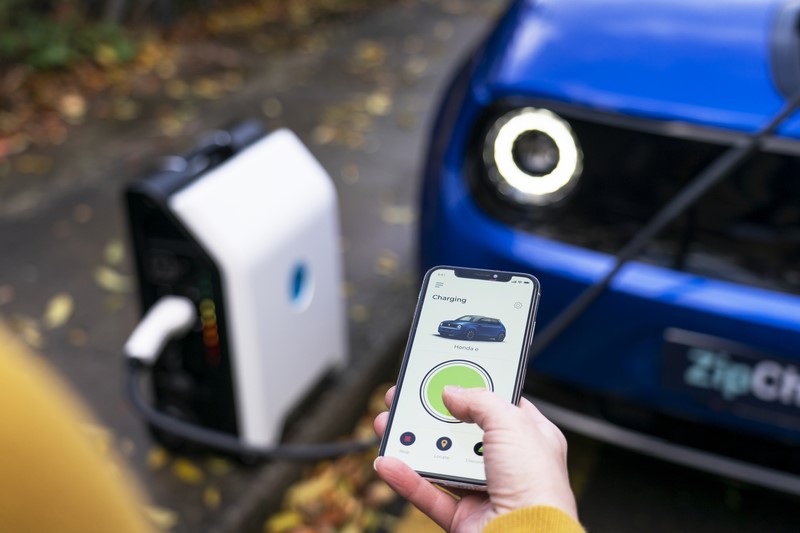
This is an issue ZipCharge aims to tackle with its Go unit.
Founded by Richie Sibal and Jonathan Carrier, the London-based company has developed a portable charger.
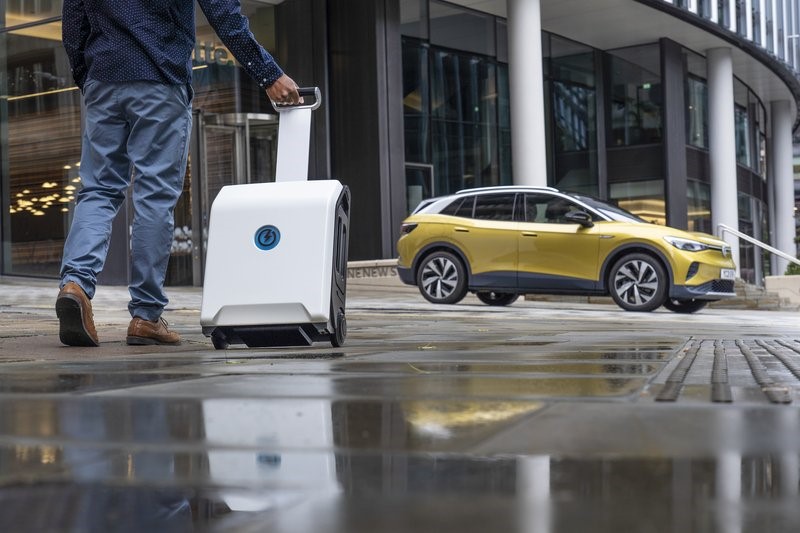
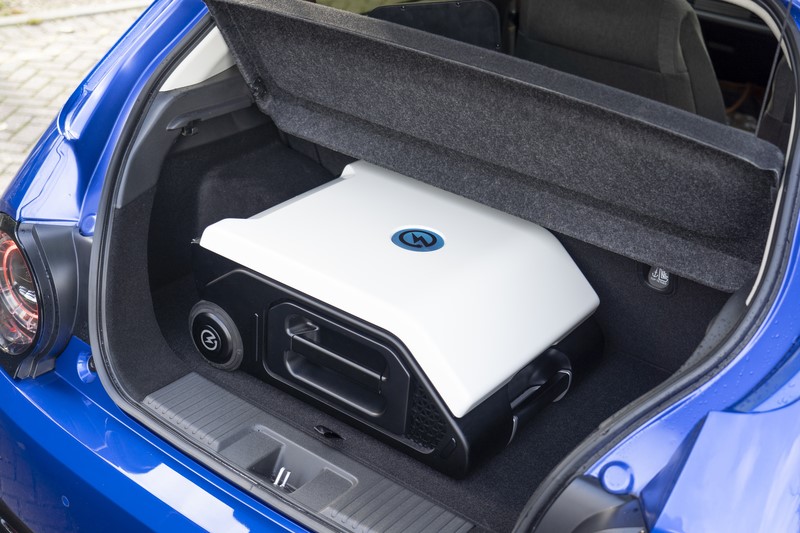
It is the size of a small suitcase, weighs from 25kg and contains lithium-ion batteries with capacities of either 4kWh or 8kWh.
This can be charged at a domestic three-pin socket before being transported – it is wheeled and has a retractable handle, again, similar to a suitcase – to the vehicle where it will take either 30 or 60 minutes to transfer its charge to the BEV, dependent on the version of Go being used.
This is, says Carrier, enough charge to power a BEV for up to 20 miles (4kWh version) or 40 miles (8kW), which means it can be used in place of a home charger or in a number of other situations to help a fleet increase efficiency and reduce charging costs.
“ZipCharge Go was entirely conceived with the fleet market in mind,” says Carrier.
“We’ve done a significant amount of work over the past year-and-a-half speaking to a range of different prospective customers.
“We’ve been fortunate that we’ve had the privilege of speaking to car rental fleets, to car-sharing, to return-to-base operations through to logistics providers.
“We’ve had the opportunity to learn from them – not to pitch our solution, but to gain an understanding of what their needs are.”
Automotive industry experience
Both Carrier and Sibal are steeped in automotive industry experience. Sibal has spent more than 20 years in electronics, software and systems engineering and leadership at manufacturers including McLaren Automotive, London Electric Vehicle Company (LEVC)/London Taxi, Lotus Sportscars and Gordon Murray Automotive.
Carrier has worked for a similar time in product planning, commercial and strategy at OEMs and start-ups including McLaren Automotive, JLR, Mazda and Fiat. The pair worked together at McLaren.
“My career has been in product planning and product strategy, which means I’ve been involved in conceptualising a product from the ground up, working with the designers and engineers to say who is the market? What’s the car for? How will they use it? How do you deliver it?,” says Carrier.
“In the car industry we’re absolutely focused on total cost of ownership (TCO) and, particularly, fleet users.
“I’ve done it with cars like the Jaguar XE, for example, and we’ve applied exactly the same philosophy in the conceptualisation of a car as we have to this charger and, therefore, incorporating the needs of the fleet market.”
Sibal began developing the product in March last year, with Carrier joining in October.
“Many fleets will typically operate on a daily mileage of somewhere between 20 and 50 miles, and our 8kWh can deliver up to 40 miles, so it’s well suited to the daily operational needs those fleets have.
“However, we recognise that not all fleets are homogenous in terms of their driving distances and profiles, so we don’t see the Go as a solution for every fleet in every circumstance.”
He says that as well as a replacement for a home charger, the Go can be used in a variety of ways to help fleets optimise their operations.
Destination charging
Carrier says this includes using the Go for destination charging to fit the process into a vehicle’s daily operation.
“If you take fleets that have a 30-minute to one-hour dwell time where an engineer may, for example, be mending a boiler or servicing a photocopier, they can use that time to charge their vehicle using Go no matter where they are parked,” he says.
“Allowing a fleet to charge during its normal operations increases the range of a vehicle, not only by the mileage from a Go unit, but by the distance the vehicle would have to drive to a charge point.
“It also increases the efficiency of the asset because it charges while the employee is doing their job, so it reduces downtime as well.
“This is a far more efficient way of deploying charging. It fits around how a fleet would otherwise operate the vehicle and increases the efficiency of the asset which, ultimately, improves the customer service of their end operation.”
The Go also has a three-pin plug socket which means it can be used to power tools and equipment which would otherwise be powered by electricity generated by diesel.
“It can reduce CO2 emissions that way as well,” says Sibal. “4kWh is quite a lot: a domestic home uses about 4.4kWh a day if it doesn’t have electric heating.”
Carrier says the Go can also be used to complement depot-based chargers which may reduce any need for a costly upgrade to a depot’s grid connection or reduce the number of chargers which may be needed.
The unit will also be able to integrate with transparency and efficiency.
Sibal adds: “We’re designing the back office from scratch, which allows us to develop a rich API (application programming interface) that will allow our cloud network to interact with any fleet network in accordance with their requirements.
“Just like fleet managers have fleet management software, if they take a take a large number of the units, we will provide them with charger management software.
“That will allow them to learn and optimise the deployment of the chargers to where they can be most effective for their fleets.
“Therefore, the API interfaces with their fleet management software, not only for utilisation and TCO tracking but, critically, as and when they deploy their vehicles, how and when the ZipCharge Go should be deployed and to which vehicles to maximise its utilisation and therefore the efficiency gain a fleet can realise.”
First units due Q4 2022
ZipCharge will begin trials with select partners from next spring with a delivery of the first units to customers expected in quarter four.
“We are looking for fleet partners who would be willing to work with us so we can get some realworld learning and feedback,” says Carrier.
“We want some tangible data that we can share publicly that says ‘this is the real impact and benefit’ and then, hopefully, that becomes a trigger for other fleets to go ‘that’s worth looking at’.”
Go will be available to buy either outright (price has yet to be announced) or leased through a subscription from £49 a month.
Further product development is due to follow.
“We have a roadmap over the next six-to-eight years, where we have forecast and planned in improvements in battery chemistry and energy density,” says Carrier.
“This means we can either make that 4kWh unit lighter with the same energy, or keep the weight the same and increase the energy density.
“We have plans for a range of different products as well as how those are deployed, but we are not talking about those at the moment.
“They are all a part of delivering our vision and that vision is to democratise EV charging so we can allow anybody to charge no matter where they park.” By Graham Hill thanks to Fleet News
Share My Blogs With Others:These icons link to social bookmarking sites where readers can share and discover new web pages.
Users of autonomous vehicles should be legally protected in event of a collision, a new report suggests.
The Law Commission of England and Wales and the Scottish Law Commission have published a joint report, making recommendations for the safe and responsible introduction of self-driving vehicles.
Under the Law Commissions’ proposals, when a car is authorised by a regulatory agency as having “self-driving features” and those features are in-use, the person in the driving seat would no longer be responsible for how the car drives. Instead, the company or body that obtained the authorisation – typically the vehicle manufacturer should face regulatory sanctions if anything goes wrong.
The report recommends introducing a new Automated Vehicles Act, to regulate vehicles that can drive themselves and suggests that a clear distinction should be made between features which just assist drivers, such as adaptive cruise control, and those that are self-driving.
Nicholas Paines QC, public law commissioner, said: “We have an unprecedented opportunity to promote public acceptance of automated vehicles with our recommendations on safety assurance and clarify legal liability. We can also make sure accessibility, especially for older and disabled people, is prioritised from the outset.”
Modern vehicles are fitted with many driver assistance systems and the report anticipates that, in future, these features will develop to a point where an automated vehicle will be able to drive itself for at least part of a journey, without a human paying attention to the road. For example, a car may be able to drive itself on a motorway, or a shuttle bus may be able to navigate a particular route.
The report follows a consultation into the legal ramifications of autonomous driving technology.
The Law Commissions recommend a new system of legal accountability once a vehicle is authorised by a regulatory agency as having self-driving features, and a self-driving feature is engaged.
The person in the driving seat would no longer be a driver but a “user-in-charge”. A user-in-charge cannot be prosecuted for offences which arise directly from the driving task. They would have immunity from a wide range of offences – from dangerous driving to exceeding the speed limit or running a red light.
However, the user-in-charge would retain other driver duties, such as carrying insurance, checking loads or ensuring that children wear seat belts.
If the vehicle drives in a way which would be criminal or unsafe if performed by a human driver, an in-use regulator would work with the carmaker to ensure that the matter does not recur. Regulatory sanctions would also be available to the regulator.
In the case of autonomous taxis or minibuses, where there is no driver, any occupants of the vehicle would simply be passengers. Instead of having a ‘user-in-charge’, a licensed operator would be responsible for overseeing the journey.
Matthew Avery, chief research strategy officer at Thatcham Research, an organisation which was part of the consultation for the Law Commissions’ report, said: “The transition to safe introduction of automation with self-driving capabilities is fraught with risk as we enter the early stages of adoption.
Today’s report is a significant step, as it provides important legal recommendations and clarity for the safe deployment of vehicles with self-driving features onto the UK’s roads.
“In the next 12 months, we’re likely to see the first iterations of self-driving features on cars on UK roads. It’s significant that the Law Commission report highlights driver’s legal obligations and they understand that their vehicle is not yet fully self-driving. It has self-driving features that, in the near future, will be limited to motorway use at low speeds.
“The driver will need to be available to take back control at any time, won’t be permitted to sleep or use their mobile phones, the vehicle won’t be able to change lanes and if the driver does not take back control, when requested, it will stop in lane on the motorway. It is critical that early adopters understand these limitations and their legal obligations.”
The report has been laid before Parliament and the Scottish Parliament. It will be for the UK, Scottish and Welsh Governments to decide whether to accept the Commissions’ recommendations and introduce legislation to bring them into effect. By Graham Hill thanks to Fleet News
Share My Blogs With Others:These icons link to social bookmarking sites where readers can share and discover new web pages.
A reduction in car travel by a quarter is needed by 2030 if the UK is to stay on track to achieve net zero emissions, a new report suggests.
Transport is the fastest growing source of global greenhouse gas emissions and biggest polluting sector of the UK economy, says Greener Transport Solutions.
It is calling for an urgent re-think on the UK’s transport decarbonisation strategy as it publishes a new report: Pathways to Net Zero – Building a framework for systemic change.
The report concludes that technological solutions will be insufficient to hit net zero in the UK. Urgent focus must now be given to traffic reduction, it says.
Transport emissions in the UK are only 3% lower than they were in 1990. People have driven more and in larger vehicles as engines have become more efficient.
The Major of London has pledged 27% reduction in car miles by 2030. The Scottish Government has pledged a 20% reduction.
Research for the Green Alliance shows that a reduction in car kms of 20-27% by 2030 will be needed.
Global greenhouse gas (GHG) emissions must halve by 2030 to stay within 1.5C. However, after a reduction caused by lockdowns GHG emissions have bounced back and are set to rise strongly this year.
Latest figures from the International Energy Agency show that carbon emissions rose to their highest levels in history in 2021 after the world rebounded from the Covid pandemic with heavy reliance on fossil fuels.
CO2 emissions linked to energy climbed 6% last year. Transport has the highest reliance on fossil fuels of any sector and accounts for 37% of CO2 emissions from end‐use sectors.
Claire Haigh, founder and CEO of Greener Transport Solutions, said: “At a time of rising geopolitical uncertainty, insecurity of supplies, and escalating fuel and gas prices, it becomes more critical than ever to design policies in a way that avoids unintended consequences and ensures a fair and just transition to net zero.
“We need a massive shift to clean technologies, but we must also reduce energy demand. Energy demand reduction supports the three key goals of energy policy: security, affordability and sustainability.
“Our climate is heating up at great speed. We have less than a decade to get on track. We cannot rely on technological solutions alone. Traffic reduction will also play a critical role.”
Greener Transport Solutions is a not-for-profit organisation dedicated to the decarbonisation of transport. By Graham Hill thanks to Fleet News
Share My Blogs With Others:These icons link to social bookmarking sites where readers can share and discover new web pages.
The average price of both petrol and diesel climbed to new records again on Wednesday, but wholesale prices have fallen offering some possible respite for fleets.
Unleaded is now 159.57p a litre while diesel increased by another 2p to 167.37p – making for a rise of more than 5p in two days.
A tank of petrol is now almost £88 while diesel has now gone over £92.
RAC fuel spokesman Simon Williams said: “Diesel unfortunately appears to be on a clear path to £1.70 a litre. As this is an average price, drivers will be seeing some unbelievably high prices on forecourts as retailers pass on their increased wholesale costs.
“But there was a hint of better news yesterday on the wholesale market with substantial drops in both petrol and diesel which could lead, in a week or so, to a slight slowing in the daily pump price increases and records being broken less frequently.”
Oil prices have jumped more than 30% since February 24, touching $139 (£105) a barrel at one point this week.
The oil price had fallen back to about $106 a barrel at one point on Wednesday (March 9), but was trading at around $114 today (Thursday, March 10).
Fleet News has teamed up with Allstar to bring you the fuel prices locator, enabling you to compare fuel prices and find the cheapest petrol or diesel in your area.
Even one penny per litre can make all the difference when filling up your fleet vehicles, potentially saving your company thousands of pounds a year. By Graham Hill thanks to Fleet News
Share My Blogs With Others:These icons link to social bookmarking sites where readers can share and discover new web pages.
Thatcham Research has revealed the safest new cars that launched in 2021, with EV and Hybrid models among the best performers.
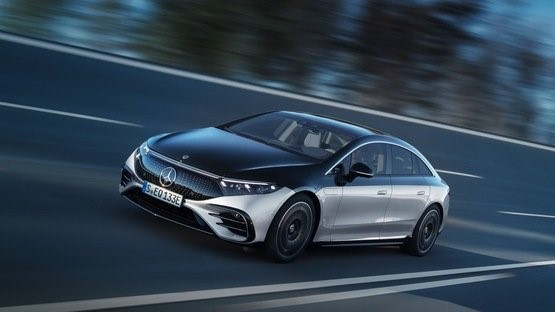
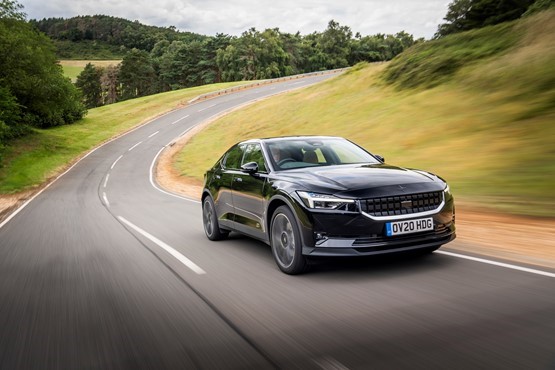
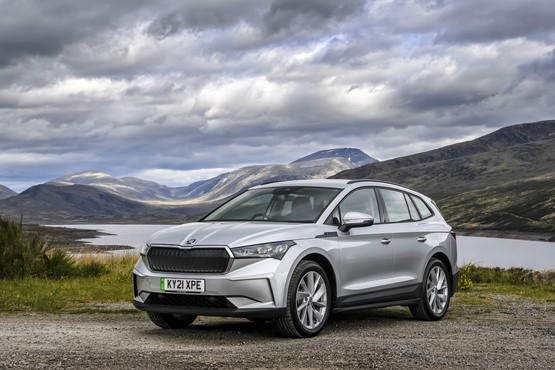
A total of five cars were highlighted by the safety research organisation, including the Skoda Enyaq, Mercedes EQS and Polestar 2.
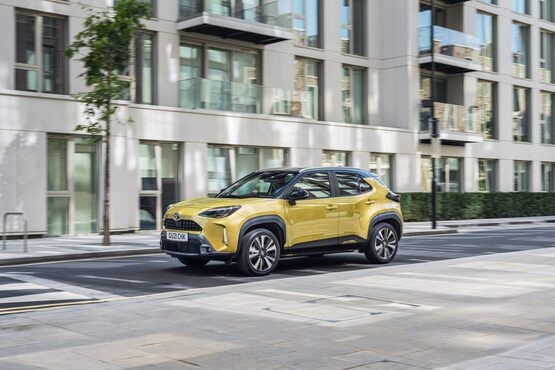
The Nissan Qashqai and Toyota Yaris Cross also made the list.
Matthew Avery, Chief Research Strategy Officer, Thatcham Research comments: “It’s fantastic to see carmakers continuing to prioritise safety, with all but four vehicles tested by Euro NCAP in 2021 achieving a four or five-star rating. Most are rising to the safety challenge and it’s encouraging to note EVs are performing very well as a group too.
“As well as the development of active safety technology to help avoid crashes and protect vulnerable road users, we also welcome the continued introduction of passive safety innovations such as centre-airbags, which prevent occupants from colliding into one another during side impacts.”
The panel of judges who selected 2021’s safest cars includes: Thatcham Research’s Matthew Avery; Claire Evans, What Car? consumer editor; Michiel van Ratingen, Euro NCAP secretary general; and Loughborough University’s Pete Thomas, Emeritus Professor in Road and Vehicle Safety.
Judges favoured affordable vehicles that will bring the biggest safety benefits to the greatest number of drivers. Of particular importance were robust ‘active’ crash-avoidance systems, effective ‘passive’ occupant protection features, well-delivered driver interface technology, and a commitment to standard fitment across the range.
Selections will now form the shortlist for the 2022 What Car? Safety Award. The overall winner and two runners up will be revealed on January 20.
The Mercedes EQS scored some of the best Euro NCAP test results of the year, impressing judges with its improved Safety Assist technology and occupant protection, including a centre console-mounted airbag to contain occupants during side impacts.
The top-selling Qashqai is one of the best-ever performing cars in Euro NCAP tests, achieving more than 90% in three out of four safety categories. Applauded for its Reverse Automatic Braking, Lane Support and Emergency Lane Keeping functions, the Qashqai’s popularity and price point offset the current absence of all-electric or hybrid versions from its range, according to judges.
The Polestar 2 is the first model from the new electric-car brand to be tested against Euro NCAP protocols and has all the safety features expected from a Volvo-derived EV. The car was commended for its impressive passive safety performance, due to its excellent body structure and very effective restraint systems.
Skoda’s Enyaq scored well in frontal offset testing, with the car engineered to minimise damage to other vehicles in a collision, and its Adult Occupant Protection score of 94% was the second highest of all the cars tested. Skoda is planning improvements to the Enyaq’s Lane Assistance technology, which judges felt was a little ‘over-zealous’.
The Toyota Yaris Cross was commended for its encouraging overall performance in safety tests and its affordability. Judges felt the car’s popularity will help democratise safety technology, allowing many motorists to access and benefit from recent innovations. By Graham Hill thanks to Fleet News
Share My Blogs With Others:These icons link to social bookmarking sites where readers can share and discover new web pages.
Gridserve has increased the cost of charging an electric vehicle (EV) on its network, blaming spiralling costs impacting the energy sector.
Pricing for medium power chargers – typically 60kW – which are primarily located at motorway service areas is increasing from 30p to 39p per kWh with immediate effect.
However, it said that pricing for high power chargers – up to 350kW – located at its newly developed Electric Hubs (of which it currently has 13 in construction), is 45p per kWh.
It is also keeping pricing at 39p per kWh – even for 350kW chargers – at its Electric Forecourts thanks to onsite solar generation and battery storage which gives the company more control over energy and distribution costs.
Gridserve says that it recognises the better the economics are for using EVs versus petrol or diesel, “the quicker people will make the switch”.
It is why the company says it is investing in new solar energy and battery projects which help to protect customers against the type of price hikes and instability that is currently affecting the energy market.
Gridserve says it wants to revolutionise EV charging across the UK, following the acquisition of Ecotricity’s Electric Highway network in June 2021.
It is expecting to open more than 20 ‘electric hubs’, each featuring 6-12 x 350kW ultra high-power electric vehicle (EV) charge points with contactless payment, at motorway service stations across the UK by Q2 2022.
The majority should be installed by the end of March, with a further 50 additional electric hub sites set to follow.
Two Electric Forecourts situated adjacent to major transport routes and motorways, including a flagship site at Gatwick Airport and Norwich, are also in construction, due to open in 2022.
Several additional Electric Forecourt sites now also have planning permission including Uckfield, Gateshead, Plymouth and Bromborough, with more than 30 additional sites also under development as part of the company’s commitment to deliver over 100 Electric Forecourts.
Gridserve’s price hike follows InstaVolt raising its prices from 40p/kWh to 45p/kWh from December 1, as a result of the increases in the wholesale price of energy.
BP Pulse also increased its prices from December saying that the charging network was “no longer able to absorb the rising costs”. By Graham Hill thanks to Fleet News
Share My Blogs With Others:These icons link to social bookmarking sites where readers can share and discover new web pages.
Handover is becoming an increasingly vital part of the vehicle delivery process as more fleets adopt electric vehicles (EVs), according to DMN Logistics.
The Birmingham-based national vehicle movement and inspection firm says handover is the driver’s best chance to find out as much information about their new vehicle.
With the increase in online vehicle transactions, many drivers may be less familiar with the actual functionality of vehicles with some only seeing their new car or van for the first time on delivery.
With operational differences and different driving and charging experiences, DMN says vehicle delivery operatives are best placed to inform, educate and offer quick and practical demonstrations during the vehicle handover.
Nick Chadaway, managing director at DMN Logistics said, “When taking delivery of your new EV you should take the time to become accustomed to the new vehicle and use the time with the delivery driver wisely. Our vehicle delivery operatives have had to adapt to new learning systems and therefore are best equipped to advise new car owners on how to drive an EV most efficiently.
“They are in the best position to ask for advice, and we suggest customers utilise their knowledge to gain familiarity and a better understanding of their new vehicle so that they feel more confident making the switch.
“It is vital to gain as much insight into the vehicle before getting on the road.”
DMN Logistics has outlined some key tips for drivers taking delivery of a new vehicle:
Before the delivery of your new vehicle, think about questions you have about the car to ask the delivery operatives – they will be able to answer your questions as they drive these vehicles every day.
Ask about the basic differences in driving an ICE to an EV, especially slowing down / braking. The answer should help you feel more confident in driving it for the first time.
Ask about charging. Delivery operatives can explain the ‘handshake’ between the plug and the car so that you are aware of the correct technique to use to ensure efficient charging and no delays.
Ask about any features included in the car to help with driving efficiency. Ask for a demonstration of the technology to gain a better understanding and real-time experience on the software.
To help deter range anxiety, ask questions about expected mileage in relation to battery charge levels. The operative will be able to give you a ‘typical’ mileage on a certain percentage of charge. It is also a good idea to ask about eco-mode and how this improves range.
By Graham Hill thanks to Fleet News
Share My Blogs With Others:These icons link to social bookmarking sites where readers can share and discover new web pages.
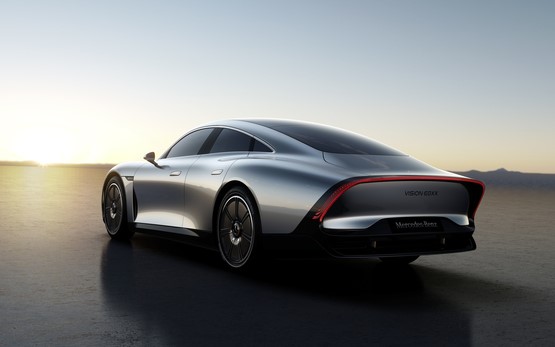
Mercedes-Benz has revealed the Vision EQXX concept, an electric saloon with the capability to cover 620 miles on a single charge in real world driving.
The car achieves its impressive efficiency through a combination of aerodynamics and the use of lightweight materials.
It uses a 100kWh battery, which is ultra-compact, with a footprint that is 50% smaller and 30% lighter than the 107.8kWh pack used in the Mercedes EQS.
The EQXX is capable of achieving an efficiency figure of 6.2 miles/kWh, double that of the EQS.
“Electric range sounds easy but is a complex technical challenge. The easiest way is to put a bigger battery in the car. However, this leads to diminishing returns due to size and weight. This is definitely not the smartest route and it’s also not the best use of scarce resources.
“With the Vision EQXX, we’re presenting the results of an extraordinary challenge: we pushed efficiency to a totally new level. And we explored new ways to increase the range of an electric car,” said Joerg Bartels, vice president for Vehicle Engineering and Overall Vehicle Functions at Mercedes-Benz.
As a running and driving prototype, the EQXX showcases the potential capability of future Mercedes EQ models. The new battery technology, for example, will feature in production models by 2024.
The EQXX is said to sit one segment beneath the upcoming EQE saloon, suggesting it serve as an electric equivalent to the C-Class when it goes into production.
Mercedes EQXX interior
Mercedes-Benz has already announced plans to become a fully-electric car brand by the end of the decade, following a ramp-up in the development of zero-emission vehicles.
The German car maker says it will offer electric models in all segments by the end of the year and, from 2025, it will only launch electric platforms. By Graham Hill thanks to Fleet News
Share My Blogs With Others:These icons link to social bookmarking sites where readers can share and discover new web pages.