Car Delivery Con To Lead To Overcharge Claims From New Car Buyers & Lessees.

Tuesday, 24. March 2020

Millions of motorists have been ripped off in a £150million delivery scheme to inflate the price of new cars, it is claimed.


Eight in ten new cars have seen price increases of up to £60 after shipping firms conspired to fix delivery costs, according to a lawsuit.


A total of 17million cars are said to have been affected over ten years. Now lawyers are to launch a US-style ‘class action’ against five of the world’s biggest shipping firms to try to win money back for consumers.


Customers affected include those who bought from Ford, Vauxhall, Volkswagen, Peugeot, BMW, Mercedes-Benz, Nissan, Toyota, Citroen and Renault, between October 2006 and September 2015.


At the heart of the case is a line near the end of every customer’s new-car bill which reads: ‘Plus delivery.’


The exact amount of ‘overpayment’ owed per customer will vary based on how far the car may have travelled, including from the Far East and the US.


The maximum overpayment is £60 with an average of about £9 per car. But if a family has bought or leased a number of new cars over the decade the sums quickly add up, according to legal firm Scott+Scott which is bringing the action.


The ‘class action’ – a group legal suit under the Consumer Rights Act 2015 – has been filed in the Competition Appeal Tribunal on behalf of consumers and businesses who purchased or leased new cars and vans between 2006 and 2015.


In 2018, EU watchdogs found the five shipping firms guilty of running an anti-competitive price-fixing cartel – and fined them £330million.


They ruled that the firms had coordinated tenders, allocated customers, conspired on capacity reductions, and exchanged commercially sensitive pricing information to maintain or increase shipping prices.


All the companies had acknowledged their involvement and agreed to settle the cases, watchdogs said.


The shippers were caught out by a so-called ‘ratters’ charter’ which gives immunity to the first member of any cartel to blow the whistle on their partners. This gives guilty firms an incentive to ‘rat’ first on the others to avoid hefty fines.


Lawyers say car-makers are not the guilty parties, pointing out that they too were outraged by the rip-off.


The five companies are Japanese carriers MOL, K Line, and NYK, Sweden’s WWL/EUKOR, and Chile’s CSAV. Although not household names, their role in moving cars around the world is huge.


The case is being led by Mark McLaren, formerly of consumers’ group Which? A pre-trial hearing is expected in the autumn.


He said: ‘When UK consumers and businesses purchased or leased a new car, they paid more for the delivery than they should have done… I strongly believe that compensation should be paid when consumers are harmed by such deliberate, unlawful conduct.’


David Scott, of Scott+Scott, said: ‘Consumers and businesses who bought or leased a new Ford, Volkswagen, Peugeot, BMW, Mercedes or Toyota, for example, are owed money.’


He added: ‘Just because these international shipping companies aren’t household names shouldn’t mean that they are able to get away with it.’


If the ‘class action’ case is won anyone who bought an affected car will be automatically entitled to money back. All they need to do is provide their details and proof of purchase or lease and they will get paid.


The shippers have already been hit be penalties beyond the EU, including Australia, China, Japan and the US.  By Graham Hill thanks to the Daily Mail

Share My Blogs With Others: These icons link to social bookmarking sites where readers can share and discover new web pages.
  • MisterWong
  • Y!GG
  • Webnews
  • Digg
  • del.icio.us
  • StumbleUpon
  • Reddit
  • Alltagz
  • Ask
  • Bloglines
  • Facebook
  • YahooMyWeb
  • Google Bookmarks
  • LinkedIn
  • MySpace
  • TwitThis
  • Squidoo
  • MyShare
  • YahooBuzz
  • De.lirio.us
  • Wikio UK
  • Print
  • Socializer
  • blogmarks

Lack Of Trained Electric Vehicle Repairers Set To Become A Major Problem As Sales Increase.

Tuesday, 17. March 2020

Electric vehicle drivers are set to face longer periods of downtime in the event of a mechanical failure or collision if automotive aftersales businesses don’t adapt more quickly to handle new models.


As CO2 caps and taxation are expected to push more drivers into electrified cars over the coming years, and environmentally-conscious businesses seek to increase their electric van fleets, dealerships, workshops and bodyshops are under greater pressure to deal with repairs and maintenance to the batteries and high-voltage electrical components in these vehicles.


While maintaining an electric or hybrid car or van is often no more difficult than one powered by a combustion engine, technicians must be specially trained in order to avoid getting shocked by the electrical system.


EVs with a driveline fault, or those involved in a collision can prove the most difficult to deal with as manufacturers are often slow to release technical repair information and roll out training.


Michael Brown, fleet manager at Virgin Media, said: “You need to build in things like if an EV is involved in an accident, it’s going to have to go to a specialised dealer to be repaired. There is also a higher risk of the vehicle getting written off if the battery is damaged.


“We’ve had problems with Teslas. Someone had a rear bumper repaired and it was literally just a new bumper needed to be put on. Our approved bodyshop wasn’t allowed to touch it, so they had to put it on a recovery truck, drive it 200 miles to a Tesla-approved repairer and then the driver sat there and waited while it got repaired.”


The number of plug-in cars on UK roads is low at the moment, accounting for less than 1%. Many of them are in the hands of private buyers as fleets have struggled to get hold of high volumes of stock.


This year, a number of manufacturers promise to increase EV fleet volumes, meaning there will be more on the road doing more miles.


By 2030, the National Grid predicts there will be between 2.7 and 10.6 million EVs on UK roads. As part of its Road to Zero Strategy, the Government plans to end the sale of petrol, diesel and hybrid cars altogether by 2035.


Pete Eden, national business process and technical manager at the National Body Repair Association (NBRA), said: “Most OEMs have prog-rammes in place that see hybrids and EVs are recovered and taken to facilities that have trained personnel to repair them. They also have recovery agents in place trained to lift such vehicles safely.”


But not all UK dealers have the personnel or equipment to work on electrified vehicles – yet.


“EV/hybrid tooling is widely available now, the main thing missing from the repair of EVs/hybrids is knowledge,” Eden added.


Paul Taylor, fleet manager at Morgan Sindall, said manufacturers are still playing catch up when it comes to maintaining EVs.


He explained: “The problem, particularly with electric commercial vans, for us in the outlying areas is getting the maintenance done because they’ve not got that big a range. When we put our first few (electric vans) in at Heathrow, the supplier told me where the nearest dealer was and I said I couldn’t get there.”


Work is being done to boost the level of EV-trained technicians in the industry, which currently stands at about 5% according to the Institute of the Motor Industry (IMI).


Sue Robinson, director of the National Franchised Dealers Association (NFDA), which represents franchised car and commercial vehicle retailers in the UK, said: “Due to the rapid growth of the EV market, franchised dealers and manufacturers are quickly retraining their staff and, as a result, there is currently no expectation of longer waiting times for repair and servicing of EVs.


The organisation launched its own Electric Vehicle Approved (EVA) scheme last year, which requires that retailers have enough EV trained technical staff so customers will not face ‘unreasonable wait times and barriers to servicing or emergency repair work’.


More than 60 dealerships have now been ‘EV approved’ responsible for several major brands. These include Nissan, Volkswagen, Kia, Hyundai, Renault, Audi, Mitsubishi, JLR, BMW and Volvo.


Last October, the IMI’s TechSafe standards for car technicians working with EVs were officially endorsed by the Government’s Office for Low Emission Vehicles (OLEV).


The accreditation is designed to give fleet operators and EV drivers confidence that their vehicle is being maintained or repaired by competent individuals.


Allianz Partners UK, which provides roadside assistance technicians to work on behalf of OEMs, is ensuring its entire workforce achieves the accreditation. Its technical development manager Ian Burchette, said: “As EVs become more popular we have a duty of care as an assistance provider to protect not only our technicians when they repair these vehicles, but also the public and our partners.


“We have always invested in the continual professional development of our technicians, making sure they are trained to the highest level. The skills and professionalism of our roadside assistance technicians are at the heart of our success, and this new commitment enables us to continue to deliver the best customer service on behalf of our manufacturer clients.”


The AA told Fleet News that all its technicians are trained to work on EVs, minimising the wait time in the event of a call-out.


A spokesperson said that, while the most common reason for a call-out was a flat tyre, easily fixed at the roadside, if the vehicle was to suffer a failure of the driveline components, the technician would not attempt a roadside repair and, instead, the vehicle would be recovered to a suitable workshop.


Bodyshops replace workshops


Much of the danger involved in the handling of EVs and hybrids is best understood by the body repair industry, where risks from damaged components are higher, leaving it best placed to handle repairs of these vehicles.


Graham O’Neill, CEO of ACIS, a distributor to the accident repair market, predicts 21st century bodyshops will replace traditional mechanical garages and servicing centres as EVs become mainstream.


He says bodyshops will become vehicle “hospitals” with all the expertise to perform battery transplants.


“Bodyshops are different to what they used to be, and the more professional ones are certainly ahead of the game when it comes to EV training on how to repair vehicles safely.


“We have put many of these bodyshop technicians through the ACIS EV and ADAS (advanced driver assistance systems) training programmes, as the demand is there,” O’Neill said.


It’s possible that in the future there won’t be servicing of engines, simply the replacement of the batteries or the repair of electronic components.


Currently, many dealerships are already outsourcing these services to manufacturer-approved bodyshops because they don’t have the room or the ability to recalibrate the vehicle’s ADAS systems post-repair.


“This outsourcing extends the process and the complexity and cost to drivers who are increasingly looking to reduce their key-to-key time so they can get back on the road as fast as possible. Today’s bodyshops have become more agile and customer-centric,” O’Neill added.


Initially, manufacturers only provided training to approved bodyshops, making it difficult for the independents to attend. This has changed, according to Eden, who says there is a “growing market” offering training on hybrid/EV systems.


“The OEMs don’t always get the vehicle directed to them as some are insured independently. These vehicles find their way into independent repair facilities. Today, many of the UK independent repair shops are investing in the equipment to repair EVs and hybrids,” Eden said.


How Norway is coping with EV repair and maintenance


Norway is often seen as a benchmark for electric vehicle adoption. In just a few years, the country has achieved a rapid growth of EVs on its roads, enabling it to have Europe’s lowest average CO2 emissions.


The country’s network of workshops and recovery agents has been forced to adapt rapidly to this changing dynamic.


Car manufacturers have been instrumental, by internally certifying Norwegian mechanics to be able to handle the high-voltage batteries and other diagnostic tools required to repair and maintain the vehicles.


Erik Lorentzen, head of analysis and consultancy at the Norwegian EV Association, said: “In 2019, the market share for new EVs reached 42%. It was a significant growth of 30% compared with 2018. So, of course, we have seen a significant growth in workshops offering service and repair on electric cars, by providing both the necessary tools and certification.


“This increases competition. The Norwegian EV Association has been encouraging this for a number of years since it benefits all EV owners.” By Graham Hill thanks to Fleet News.

Share My Blogs With Others: These icons link to social bookmarking sites where readers can share and discover new web pages.
  • MisterWong
  • Y!GG
  • Webnews
  • Digg
  • del.icio.us
  • StumbleUpon
  • Reddit
  • Alltagz
  • Ask
  • Bloglines
  • Facebook
  • YahooMyWeb
  • Google Bookmarks
  • LinkedIn
  • MySpace
  • TwitThis
  • Squidoo
  • MyShare
  • YahooBuzz
  • De.lirio.us
  • Wikio UK
  • Print
  • Socializer
  • blogmarks

The Implications of VAT On Monthly PCH Payments

Tuesday, 17. March 2020

The Government will have to help businesses to recover from the effects of Coronavirus. In the US they have cut interest rates to 0% down from 1.75% which is a massive drop aimed at stimulating the economy.


However, the UK’s Bank Of England was only at 0.75% in the first place so dropping to 0.25% was never going to have the shot in the arm effect that the massive drop in the US would have on its economy.over there.


So one of the rumours flying around at the moment to stimulate the UK economy is a temporary drop in VAT.


Some are suggesting a drop from 20% to 15% with some suggesting a drop of as much as 10% to a standard rate of 10%.


This would immediately affect the quotes going out as soon as the drop is confirmed by the Chancellor but how will it affect you if you already have an agreement?


Well, years ago I was criticised for showing my monthly figures for a PCH excluding VAT. The reason for this was to make it clear that your monthly payments can be adjusted in line with the current VAT rate.


So to be clear if the VAT rate is dropped and you have an ongoing PCH agreement your monthly payments will also drop accordingly.


So if you are currently paying £200 + VAT you’ll be paying £240 per month. But if the rate drops from 20% to 10% your payments will drop to £220 per month.


However, when the rate increases you will be back to where you were. But you will enjoy a short term benefit which you wouldn’t enjoy if you had a PCP. By Graham Hill

Share My Blogs With Others: These icons link to social bookmarking sites where readers can share and discover new web pages.
  • MisterWong
  • Y!GG
  • Webnews
  • Digg
  • del.icio.us
  • StumbleUpon
  • Reddit
  • Alltagz
  • Ask
  • Bloglines
  • Facebook
  • YahooMyWeb
  • Google Bookmarks
  • LinkedIn
  • MySpace
  • TwitThis
  • Squidoo
  • MyShare
  • YahooBuzz
  • De.lirio.us
  • Wikio UK
  • Print
  • Socializer
  • blogmarks

Coronavirus And Sanitising Your Car Without Damage

Tuesday, 17. March 2020

In this article I’m warning about Coronavirus and how to best protect the inside of your car without damage. Whilst most of us are taking precautions at work and at home it’s easy to forget about our cars. And if we remember to protect our cars you should know that some cleaners that we use on work surfaces are not suitable for the inside of your car and can cause serious damage.


For example, bleach and hydrogen peroxide both kill the virus but can damage your upholstery. And I’m not talking neat I’m talking about those chemicals as a constituent part of the cleaner. So it’s important that you check the component parts of any cleaner that you intend to use. Another dodgy ingredient is ammonia. You should not use any ammonia-based product on car touchscreens as they can damage the anti-glare and anti-fingerprint coatings.


If you are the only person in your car then the risk is reduced but of course if you participate in a car share or you regularly rent cars you need to take more care. Make sure you have some sanitiser gel to use in the car and to share with passengers. Then also treat the steering wheel (considered to be one of the highest sources of germs that you will regularly come into contact with – higher than a toilet seat).


Clean the gear shift, door handles, inside and out, indicator and windscreen wiper stalks, buttons, touch screens, armrests, grab handles, seat adjusters, in fact anything that you or a passenger may have come into contact with.


So having checked the ingredients for the above you also don’t want to pay over the odds for product that is aimed at auto interiors but are being sold at a premium. So what can you use that is cheap? Experts recommend Isopropyl Alcohol as being the most effective against Coronavirus and safe for the interior of your car. The most effective contain over 70% alcohol.


Manufacturers of product in the US suggest that most, if not all car surfaces have been tested safe to be cleaned with Isopropyl alcohol, from plastic to metal and leather, even soft cloth upholstery. If in doubt consult the manufacturer/dealer and if you are really worried use their proprietary product. Don’t forget if you use say a bleach-based product and it damages the leather seats etc.and the car is being handed back at the end of the agreement you could be charged a substantial amount to repair/replace the damaged seating.


Vigorous washing with soap and water can also destroy a coronavirus. Coronaviruses are surrounded by a protective envelope that helps them to infect other cells, and destroying that envelope can effectively disarm them.


“Friction from cleaning also participates in the destruction,” says Stephen Thomas, M.D., chief of infectious diseases and director of global health at Upstate Medical University in Syracuse. “You want to do the best with what you have, so even soap and water can chip away at the risk.”


Soap and water are also safe for most car interiors—especially fabrics and older leather that may have begun to crack. Just be sure not to scrub too hard, says Larry Kosilla, president of car detailing company AMMO NYC and host of a popular YouTube channel about car detailing.


Most car leathers and imitation leathers have urethane coatings for protection, which is safe to clean with alcohol. But most leathers are dyed, and cleaning too vigorously can remove the dye.


Kosilla says he’s heard from car owners who think their light-colored leather is getting dirtier as they scrub it, which isn’t the case. “It’s not getting dirtier, you’re removing all the color on top,” he says.


Take care of your leather upholstery after you clean it, says John Ibbotson, chief automotive services manager at CR. “You should use a good leather cleaner, then a good leather conditioner afterwards,” he says.


If your car has fabric upholstery, Kosilla warns against cleaning it with too much water or too much soap. “The goal is not to create too many suds. If you get suds, you’ll have suds forever,” he says. In addition, if you soak through the fabric down to the cushion beneath, it could end up creating a musty smell or encouraging mould growth in the cushions. Instead, Kosilla recommends lightly agitating the fabric with a small amount of water and laundry detergent.


Both Stout and Kosilla recommend cleaning all surfaces with a microfiber cloth. That’s because they’re made of fabric that consists of tiny little loops that capture and sweep away dirt and dust particles before they can scratch delicate or shiny plastic surfaces. By comparison, the dirt and debris in your car can stick to even the cleanest paper towels or napkins and scratch surfaces—”like sandpaper,” Kosilla says.


Once you’re finished cleaning, don’t forget to wash your hands before and after driving. It’s a good habit to get into even outside of the spread of COVID-19, as it will keep your steering wheel and other frequently touched surfaces in your car from looking dingy.


“The number one thing is to clean your hands,” Kosilla says. “You can clean your steering wheel, but if you have dirty hands, you put that dirt back on.”


Washing your hands is still one of the best ways to defend yourself against COVID-19, says Thomas.


“It is known that coronaviruses can persist on surfaces, but as of right now we still think infections via respiratory transmission are still primarily the main route from person to person,” he says.


So there you have it, views that I’ve collated from the UK, US and other countries. The thing is don’t panic but take extra precautions and hopefully, you’ll be safe and virus free. By Graham Hill

Share My Blogs With Others: These icons link to social bookmarking sites where readers can share and discover new web pages.
  • MisterWong
  • Y!GG
  • Webnews
  • Digg
  • del.icio.us
  • StumbleUpon
  • Reddit
  • Alltagz
  • Ask
  • Bloglines
  • Facebook
  • YahooMyWeb
  • Google Bookmarks
  • LinkedIn
  • MySpace
  • TwitThis
  • Squidoo
  • MyShare
  • YahooBuzz
  • De.lirio.us
  • Wikio UK
  • Print
  • Socializer
  • blogmarks

Drivers In The UK Spend More Time Stuck In Traffic

Wednesday, 11. March 2020

Latest Government statistics have revealed that UK drivers spent more time stuck in traffic in 2019 than the year before.

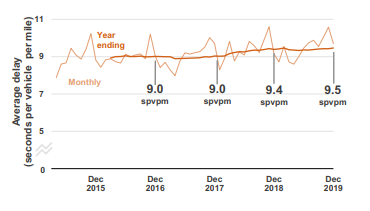
In 2019, the average delay on the Strategic Road Network increased by 0.1 seconds per vehicle per mile (up 0.9% on 2018). The average delay on local ‘A’ roads increased by 0.8 seconds per vehicle per mile (1.8% increase on 2018), according to statistics from the Government’s latest statistical release.

The findings from the Department for Transport’s Travel time measures for the Strategic Road Network and local ‘A’ roads, England: January to December 2019 show that on the Strategic Road Network (SRN) in 2019, the average delay is estimated to be 9.5 seconds per vehicle per mile compared to speed limits, a 0.9% increase on the previous year.


The statistical release also shows that the average speed of drivers was 58.8mph, down 0.5% from 2018.

The reliability of travel times is measured using the Planning Time Index which shows 67.3% of additional time is needed compared to speed limits on average, on individual roads sections to ensure on time arrival. This figure is up 1.1 percentage points in comparison to 2018.

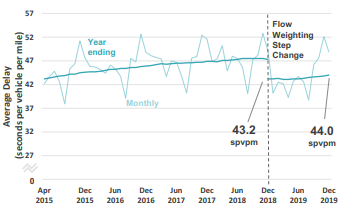
On local ‘A’ roads in 2019, the average delay is estimated to be 44.0 seconds per vehicle per mile compared to free flow, up 1.8% compared to 2018.

The average speed on local ‘A’ roads was 25.3 mph, no change compared to the previous year.

If you want to read the full document, you can find it here: https://assets.publishing.service.gov.uk/government/uploads/system/uploads/attachment_data/file/870292/travel-time-measures-srn-local-a-roads-2019.pdf   By Graham Hill thanks to Fleet News.

Share My Blogs With Others: These icons link to social bookmarking sites where readers can share and discover new web pages.
  • MisterWong
  • Y!GG
  • Webnews
  • Digg
  • del.icio.us
  • StumbleUpon
  • Reddit
  • Alltagz
  • Ask
  • Bloglines
  • Facebook
  • YahooMyWeb
  • Google Bookmarks
  • LinkedIn
  • MySpace
  • TwitThis
  • Squidoo
  • MyShare
  • YahooBuzz
  • De.lirio.us
  • Wikio UK
  • Print
  • Socializer
  • blogmarks

Latest Car Registrations Show A Drop With Calls For More Incentives To Go EV

Thursday, 5. March 2020

Fleet and business new car registrations fell slightly in February, when compared to the same month last year, according to data published today by the Society of Motor Manufacturers and Traders (SMMT).


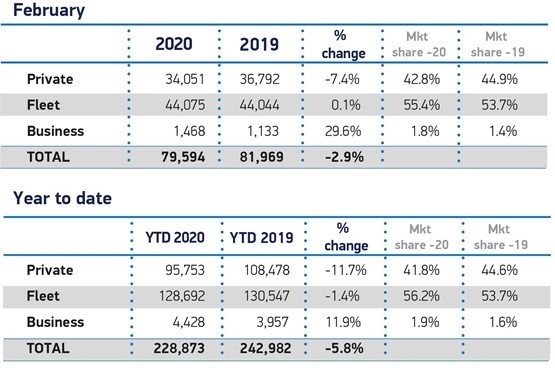
There were 45,543 new cars registered to fleet and business in the month, an increase of about 1% on February 2019.


Year-to-date fleet and business new car registrations stand at 133,120 units, a 1% decline when compared to last year.


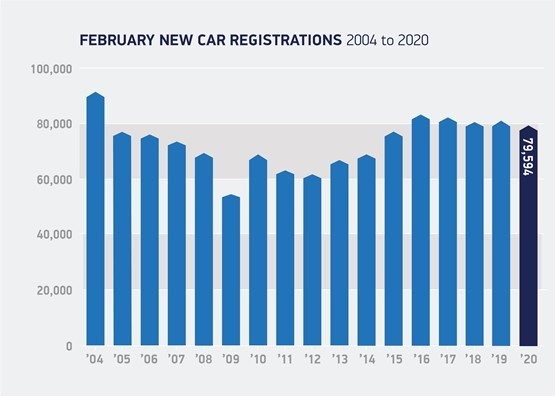
Overall, the UK new car market declined 2.9% in February, with 79,594 models were registered in the month. Registrations by private buyers were responsible for the bulk of the overall loss, down some 7.4% as 2,741 fewer people took delivery of new cars.


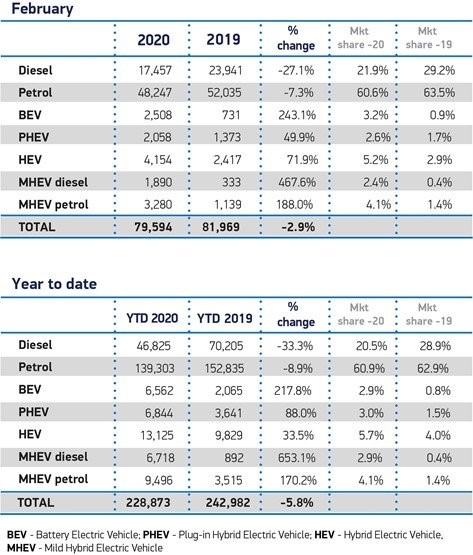
Demand for both diesel and petrol cars fell in the month, with registrations down 27.1% and 7.3% respectively, with diesel now accounting for just over a fifth of sales (21.9%).


Hybrids (HEVs) recorded an uplift of 71.9% to 4,154 units, while registrations of zero emission capable cars also continued to enjoy growth, with battery electric vehicles (BEVs) rising more than three-fold to 2,508 units and plug-in hybrids (PHEVs) up 49.9% to 2,058.


However, these vehicles still make up just 5.8% of the market; and BEVs only 3.2%, showing the scale of the challenge ahead.


The news comes as SMMT calls on the Chancellor to use next week’s Budget to announce bold new measures to make new-tech zero emission-capable cars, including plug-in hybrids, more affordable for mass market buyers.


In 2020, manufacturers will bring more than 23 new battery electric and 10 plug-in hybrid electric cars to the UK to add to the more than 65 already on sale, but take up of these new models depends on affordability and the provision of adequate charging infrastructure.


SMMT is calling for the removal of VAT from all new battery electric, plug-in hybrid electric and hydrogen fuel cell electric cars – a move which would cut the purchase price of an average family battery electric run-around by some £5,600.


Combined with additional measures, including the long term continuation of the critical plug-in car grant at current levels and its reintroduction for plug-in hybrids; and exemption from VED and insurance premium tax, the upfront cost of these vehicles could be cut by as much as £10,000, helping to deliver greater cost parity with conventionally powered vehicles and making them a viable option for many more buyers, it says.


Based on current market forecasts, SMMT calculations show that the removal of VAT could increase sales of battery electric cars alone to just under one million between now and 2024, resulting in an additional CO2 saving of 1.2 million tonnes over this period.


However, this must be part of a comprehensive package of incentives implemented alongside substantial investment in charging infrastructure to ensure a sustainable transition for consumers and businesses of all incomes, regions and lifestyles, it says.


Only by addressing both these issues can the government’s accelerated ambitions for zero emission vehicle sales be met.


Mike Hawes, SMMT chief executive, said: “Another month of decline for the new car market is especially concerning at a time when fleet renewal is so important in the fight against climate change.


“Next week’s Budget is the Chancellor’s opportunity to reverse this trend by restoring confidence to the market and showing that government is serious about delivering on its environmental ambitions.


“Industry has invested in the technology, with a huge influx of new zero- and ultra-low emission models coming to market in 2020, and we now need Government to match this with a comprehensive package of incentives and infrastructure spending to accelerate demand.


“To drive the transition to zero emission motoring, we need carrots, not sticks – as the evidence shows, talk of bans and penalties only means people hang on to their older, more polluting vehicles for longer.


“It’s time for a change of approach, which means encouraging the consumer to invest in the cleanest new car that best suits their needs.


“If that is to be electric, Government must take bold action to make these vehicles more affordable and as convenient to recharge as their petrol and diesel equivalents are to refuel.”


Michael Woodward, UK automotive lead, Deloitte, believes the key to maintaining growth of EVs will be investment in the supporting infrastructure.


“Where consumers were once deterred by battery range anxiety, this has now shifted to charging anxiety with access to charging now being seen as the biggest barrier to buying a full EV for UK customers,” he said.


“Manufacturers are doing their part by bringing new models to the market and adding range to batteries. What consumers need now is clarity on joined-up, long-term infrastructure development and continued financial incentives could be key to future EV growth.”


Jon Lawes, managing director at Hitachi Capital Vehicle Solutions, concluded: “The industry will be eagerly anticipating the Government’s Spring Budget next week, where further measures to support the transition to zero-emission vehicles are expected to be announced.


“As SMMT calculations have shown, the removal of VAT on electric and hybrid vehicles is one step that could support this transition, however, for any solution to be effective, clarity on considerations including Clean Air Zones, infrastructure investment and plug-in car grant incentives will also be pivotal to help achieve the UK’s zero emission targets.”


By Graham Hill thanks to Fleet News

Share My Blogs With Others: These icons link to social bookmarking sites where readers can share and discover new web pages.
  • MisterWong
  • Y!GG
  • Webnews
  • Digg
  • del.icio.us
  • StumbleUpon
  • Reddit
  • Alltagz
  • Ask
  • Bloglines
  • Facebook
  • YahooMyWeb
  • Google Bookmarks
  • LinkedIn
  • MySpace
  • TwitThis
  • Squidoo
  • MyShare
  • YahooBuzz
  • De.lirio.us
  • Wikio UK
  • Print
  • Socializer
  • blogmarks

Safety Body Warns Of Dangers If Cars Are Not Properly Serviced And Maintained

Thursday, 5. March 2020

Whilst the report was aimed at business users it also applies to consumers so worth reading what Brake, the safety body has to say.


Failure to comply with basic vehicle standards can result in tragic consequences, according to the latest report released by Brake’s Global Fleet Champions.


‘Vehicle maintenance and mechanics’ outlines the consequences of not complying with vehicle standards and explains how to improve maintenance and checking procedures to ensure vehicles remain a valuable resource.


The report outlines that regular checking and servicing of safety-critical components such as brakes and tyres can fix small problems early on, removing the need for costly repairs and expensive insurance claims.


John Eastman from the Institute of Road Transport Engineers believes that fleet managers should take a systematic approach towards the maintenance of vehicles. He said that preventative maintenance has several benefits, not least the improved safety, reliability and wellbeing of people who drive for work and other road users.


The report also features advice from Autoglass, who advises fleet managers on how to effectively maintain advanced driver-assistance systems (ADAS) to ensure the technology works effectively.


Jeremy Rochfort, national sales manager for Autoglass said: “The adoption rate of ADAS in fleet vehicles is much higher as fleet cars tend to be newer and come with up-to-date safety features. However, our research shows that keeping up to date with technology ranks low down on fleet decision-maker’s priorities.


“That’s why we’re committed to educating the fleet industry on the importance of ADAS calibration and investing in our technical expertise and capabilities to ensure we can match the rising demand for these services.”


The report follows the recent release of the road safety report launched by Brake.


Global Fleet Champions is a not-for-profit global campaign to prevent crashes and reduce pollution caused by vehicles used for work purposes. ByGraham Hill thanks to Fleet News

Share My Blogs With Others: These icons link to social bookmarking sites where readers can share and discover new web pages.
  • MisterWong
  • Y!GG
  • Webnews
  • Digg
  • del.icio.us
  • StumbleUpon
  • Reddit
  • Alltagz
  • Ask
  • Bloglines
  • Facebook
  • YahooMyWeb
  • Google Bookmarks
  • LinkedIn
  • MySpace
  • TwitThis
  • Squidoo
  • MyShare
  • YahooBuzz
  • De.lirio.us
  • Wikio UK
  • Print
  • Socializer
  • blogmarks

Tesla Driver Dies On Autopilot Playing A Game On Phone

Thursday, 27. February 2020

An investigation into a fatal crash involving a Tesla Model X being driven on autopilot in Mountain View, Calfornia, has found that the driver was distracted using his mobile phone.


The National Transportation Safety Board (NTSB) held a public board meeting on Tuesday ( February 25) during which it determined the probable cause for the fatal March 23, 2018, crash.


Based on the findings of its investigation the NTSB issued a total of nine safety recommendations whose recipients include the National Highway Traffic Safety Administration, the Occupational Safety and Health Administration, SAE International, Apple and other manufacturers of portable electronic devices.


The NTSB also reiterated seven previously issued safety recommendations.


The NTSB determined the Tesla autopilot system’s limitations, the driver’s overreliance on the autopilot and the driver’s distraction – likely from a mobile phone game app – caused the crash.


It found that the Tesla vehicle’s ineffective monitoring of driver engagement was determined to have contributed to the crash.


Systemic problems with the California Department of Transportation’s repair of traffic safety hardware and the California Highway Patrol’s failure to report damage to a crash attenuator led to the Tesla striking a damaged and non-operational crash attenuator, which the NTSB said contributed to the severity of the driver’s injuries.


“This tragic crash clearly demonstrates the limitations of advanced driver assistance systems available to consumers today,” said NTSB chairman Robert Sumwalt.


“There is not a vehicle currently available to US consumers that is self-driving. Period. Every vehicle sold to US consumers still requires the driver to be actively engaged in the driving task, even when advanced driver assistance systems are activated.


“If you are selling a car with an advanced driver assistance system, you’re not selling a self-driving car. If you are driving a car with an advanced driver assistance system, you don’t own a self-driving car.”


He continued: “In this crash we saw an overreliance on technology, we saw distraction, we saw a lack of policy prohibiting cell phone use while driving, and we saw infrastructure failures that, when combined, led to this tragic loss.


“The lessons learned from this investigation are as much about people as they are about the limitations of emerging technologies.


“Crashes like this one, and thousands more that happen every year due to distraction, are why ‘Eliminate Distractions’ remains on the NTSB’s Most Wanted List of Transportation Safety Improvements.”


The 38-year-old driver of the 2017 Tesla Model X P100D electric vehicle (EV) died from multiple blunt-force injuries after his SUV entered the gore area of the US-101 and State Route 85 exit ramp and struck a damaged and non-operational crash attenuator at a speed of 70.8 mph.


The Tesla was then struck by two other vehicles, resulting in the injury of one other person.


The Tesla’s high-voltage battery was breached in the collision and a post-crash fire ensued. Witnesses removed the Tesla driver from the vehicle before it was engulfed in flames.


The NTSB learned from Tesla’s ‘Carlog’ data (data stored on the non-volatile memory SD card in the media control unit) that during the last 10 seconds prior to impact the Tesla’s autopilot system was activated with the traffic-aware cruise control set at 75 mph.


Between six and 10 seconds prior to impact, the SUV was traveling between 64 and 66 mph following another vehicle at a distance of about 83 feet.


The Tesla’s lane-keeping assist system (autosteer) initiated a left steering input toward the gore area while the SUV was about 5.9 seconds and about 560 feet from the crash attenuator.


No driver-applied steering wheel torque was detected by autosteer at the time of the steering movement and this hands-off steering indication continued up to the point of impact.


The Tesla’s cruise control no longer detected a lead vehicle ahead when the SUV was about 3.9 seconds and 375 feet from the attenuator, and the SUV began accelerating from 61.9 mph to the preset cruise speed of 75 mph.


The Tesla’s forward collision warning system did not provide an alert and automatic emergency braking did not activate. The SUV driver did not apply the brakes and did not initiate any steering movement to avoid the crash.


The driver was an avid gamer and game developer. A review of mobile phone records and data retrieved from his Apple iPhone 8 Plus showed a game application was active and was the frontmost open application on his phone during his trip to work.


The driver’s lack of evasive action combined with data indicating his hands were not detected on the steering wheel, is consistent with a person distracted by a portable electronic device.


Seven safety issues were identified in the crash investigation:


Seven safety issues were identified in the crash investigation:

  • Driver Distraction
  • Risk Mitigation Pertaining to Monitoring Driver Engagement
  • Risk Assessment Pertaining to Operational Design Domain (the operating conditions under which a driving automation system is designed to function)
  • Limitations of Collision Avoidance Systems
  • Insufficient Federal Oversight of Partial Driving Automation Systems
  • Need for Event Data Recording Requirements for Driving Automation Systems
  • Highway Infrastructure Issues

To address these safety issues the NTSB made nine safety recommendations that seek:

  • Expansion of NHTSA’s New Car Assessment Program testing of forward collision avoidance system performance.
  • Evaluation of Tesla autopilot- equipped vehicles to determine if the system’s operating limitations, foreseeability of misuse, and ability to operate vehicles outside the intended operational design domain pose an unreasonable risk to safety.
  • Collaborative development of standards for driver monitoring systems to minimize driver disengagement, prevent automation complacency and account for foreseeable misuse of the automation.
  • Review and revision of distracted driving initiatives to increase employers’ awareness of the need for strong cell phone policies prohibiting portable electronic device use while driving.
  • Modification of enforcement strategies for employers who fail to address the hazards of distracted driving.
  • Development of a distracted driving lock-out mechanism or application for portable electronic devices that will automatically disable any driver-distracting functions when a vehicle is in motion.
  • Development of policy that bans nonemergency use of portable electronic devices while driving by all employees and contractors driving company vehicles, operating company issued portable electronic devices or when using a portable electronic device to engage in work-related communications.

Lessons learned from the emergency response to the post-crash fire will be incorporated into a separate NTSB report on electric vehicle battery fires. That report is expected to be released in the third quarter of calendar year 2020.  By Graham Hill thanks to Fleet News

Share My Blogs With Others: These icons link to social bookmarking sites where readers can share and discover new web pages.
  • MisterWong
  • Y!GG
  • Webnews
  • Digg
  • del.icio.us
  • StumbleUpon
  • Reddit
  • Alltagz
  • Ask
  • Bloglines
  • Facebook
  • YahooMyWeb
  • Google Bookmarks
  • LinkedIn
  • MySpace
  • TwitThis
  • Squidoo
  • MyShare
  • YahooBuzz
  • De.lirio.us
  • Wikio UK
  • Print
  • Socializer
  • blogmarks

Tracker Reveals The UK’s Most Stolen Vehicles – Very Interesting!

Thursday, 27. February 2020

The Range Rover Sport was the number one choice for thieves in 2019, jumping from eighth place in the Tracker Most Stolen and Recovered League Table in 2018.


It replaces the BMW X5 which topped the chart in 2018 and now sits at number two. This in turn, has pushed the 2018 number two, the Mercedes-Benz C Class, to third place in 2019.


Range Rover, BMW and Mercedes-Benz dominate the Tracker league table in 2019.


Furthermore, analysis of theft data recorded by Tracker reveals that 92% of the cars it recovered last year were taken without using the keys. This is an increase from 2018’s figure which stood at 88% and a worrying increase of 26% compared with four years ago. The figure in 2016 stood at 66%.


“Our data has revealed that keyless car theft continues to rise, with nine out of 10 of the stolen cars we recovered in 2019 taken this way,” explained Clive Wain, head of police liaison for Tracker.


“Thieves exploit keyless technology by using sophisticated equipment, which can hijack the car key’s signal from inside an owner’s home and remotely fool the system into unlocking the doors and start the engine. This is commonly known as a relay attack.”


To help prevent car owners falling victim to keyless car theft, traditional visual deterrents, such as crook locks and wheel clamps can help deter thieves and are a good investment to make, according to Wain.


However, he said: “In the event of a car being stolen, vehicle tracking technology will not only help police close the net on thieves but see a stolen vehicle returned to its rightful owner.”


Premium vehicles are frequently stolen to order by organised criminal groups. The cars are often shipped abroad, predominantly to Eastern Europe and North Africa.


The most expensive vehicle recovered by Tracker in 2019 was a Range Rover SV Autobiography, valued at £150,000. However, cars at the lower end of the market are still a target, with a VW Polo valued at £575 being the least expensive car recovered.


“Thanks to our long-standing working relationship with all UK police forces, 54 suspected thieves were arrested in connection with the vehicles we recovered last year,” continued Wain. “In addition to the vehicles recovered by Tracker, 67 other non-Tracker fitted stolen vehicles were also found as a result.”


Top Models Stolen & Recovered in 2019


  1. Range Rover Sport


  1. BMW X5


  1. Mercedes-Benz C Class


  1. Range Rover Vogue


  1. Land Rover Discovery


  1. BMW X6


  1. Range Rover Evoque


  1. BMW 3 Series


  1. Range Rover Autobiography


  1. Mercedes E Class


Top Models Stolen & Recovered in 2019


  1. BMW X5


  1. Mercedes-Benz C Class


  1. BMW 3 Series


  1. Mercedes E Class


  1. BMW 5 Series


  1. Range Rover Vogue


  1. Land Rover Discovery


  1. Range Rover Sport


  1. Mercedes S Class


  1. Mercedes GLE


By Graham Hill thanks to Fleet News

Share My Blogs With Others: These icons link to social bookmarking sites where readers can share and discover new web pages.
  • MisterWong
  • Y!GG
  • Webnews
  • Digg
  • del.icio.us
  • StumbleUpon
  • Reddit
  • Alltagz
  • Ask
  • Bloglines
  • Facebook
  • YahooMyWeb
  • Google Bookmarks
  • LinkedIn
  • MySpace
  • TwitThis
  • Squidoo
  • MyShare
  • YahooBuzz
  • De.lirio.us
  • Wikio UK
  • Print
  • Socializer
  • blogmarks

Frightening Increases in CO2 Emissions Following WLTP Findings Will Cause Changes To Car Choices.

Thursday, 27. February 2020

I mentioned last week that as of the 1st April 2020 the new WLTP emissions ratings come into force. This will affect drivers’ benefit in kind tax if you drive a company car but it could also affect the 1st year road fund licence costs which could also increase the rental costs as this is part of the ‘on the road’ cost of the car. So if you’ve been quoted on a car that will be delivered after 1st April you could be paying a little more per month.


Some company cars could disappear from choice lists as new emissions test results put them beyond CO2 thresholds used by fleets.


Data published by manufacturers show some vehicles that were below 130g/km or 110g/km, using the NEDC-correlated CO2 figure, now fall outside those key benchmarks, thanks to the tougher testing regime.


The new CO2 values, derived from the Worldwide harmonised Light vehicle Test Procedure (WLTP), will be used for tax purposes for all new cars registered from April.


However, as manufacturers begin to publish the data, fleets are finding that the new test has seen CO2 values for some cars increase.


For example, the BMW 520d M Sport originally had a NEDC-correlated CO2 figure of 108g/km, but under WLTP it has risen to 131g/km.


It’s a similar story for the Volvo XC40 D3 R Design, which will increase from 127g/km to 144g/km, and the Volkswagen Tiguan 2.0 TDI SE L, which will rise from 122g/km to 156g/km.


“We’re seeing a lot of vehicles breaching the 110g/km and even the 130g/km cap,” said David Bushnell, principal consultant at Alphabet GB.


It means some familiar models on today’s choice lists will have to be replaced by more tax-efficient, hybrid or fully electric versions.


Bushnell says the impact of WLTP on fleets will be comparable to the “re-set” of company car policies in 2002, when taxation moved from mileage to CO2.


Emissions caps for vehicles used by some fleets have followed the downward trajectory of the threshold for capital allowances and lease rental restrictions.


The main threshold for capital allowances and lease rental restrictions was reduced from 130g/km to 110g/km in 2018, after originally being cut from 160g/km in 2013.


Under capital allowance rules, cars bought by companies that emit up to 50g/km are eligible for 100% write-down in the first year; for those emitting 51-110g/km, it’s 18% a year; and for more than 110g/km it is 6% a year.


Under the lease rental restriction, new cars with emissions of 110g/km or less are eligible for 100% of their lease payments to be offset against corporation tax. For those with emissions of 111g/km or more, only 85% is claimable.


The Government refused to consider the impact of WLTP on capital allowances and the lease rental restriction when last year it launched a consultation on what it should do to mitigate its effect on company car tax and vehicle excise duty (VED).


Bushnell called for their inclusion at the time but says Treasury “weren’t prepared to talk about the (110g/km) derogation and now we’re seeing a lot of vehicles impacted”.


Fleets have used the CO2 thresholds to benchmark their emissions cap to ensure they are as tax efficient as possible.


Nick Hardy, sales and marketing director at Ogilvie Fleet, says 130g/km became the norm for many companies, with an increasing number choosing the lower 110g/km cap.


Faced with some cars potentially falling outside company car policies, because of an increase in CO2, he urged fleets not to be tempted to increase their cap to simply maintain vehicle choice.


He explained: “It’s not the right thing to do; it completely defeats what we’re all trying to achieve.”


However, in the short term, while WLTP CO2 data is still missing on many models (see page 4), Bushnell thinks fleets could consider a temporary removal of CO2 caps.


He said: “It’s not exactly palatable, but the issue is we could be delivering a car that we perceive is below the cap, but then by the time it’s configured and registered, it’s actually over the cap.”


Not only are large swathes of CO2 data missing for base models, but the impact of vehicle options on the final figure is also an issue for fleets.


Bushnell urged fleet operators to allow wholelife costs to guide vehicle choice.


Wholelife costs take account of several factors, including fuel, employer Class 1A National Insurance Contributions, service, maintenance and repair, and insurance, as well as any cash allowances paid to employees.


Bushnell said: “You’ve got to be looking at your choice list on a wholelife cost basis, but there are still a lot of businesses that don’t.”


PricewaterhouseCoopers (PwC) has previously reported that just 32% of employers offering company cars use wholelife costs to determine the vehicles available.

Share My Blogs With Others: These icons link to social bookmarking sites where readers can share and discover new web pages.
  • MisterWong
  • Y!GG
  • Webnews
  • Digg
  • del.icio.us
  • StumbleUpon
  • Reddit
  • Alltagz
  • Ask
  • Bloglines
  • Facebook
  • YahooMyWeb
  • Google Bookmarks
  • LinkedIn
  • MySpace
  • TwitThis
  • Squidoo
  • MyShare
  • YahooBuzz
  • De.lirio.us
  • Wikio UK
  • Print
  • Socializer
  • blogmarks