Government Starts Consultation Into Standardised EV Charging.

Monday, 19. April 2021

The Government wants charge point operators to make charging an electric vehicle (EV) no different to fuelling a petrol or diesel car.

A consultation, launched by Department for Transport (DfT) over the weekend, outlines a series of measures it believes could transform the charge point experience for EV drivers.

Key is interoperability, with the Government suggesting customers should be able to make a contactless payment, without having to download an app.

The consultation – The consumer experience at public electric vehicle charge points – also reveals how the Government wants to improve charge point reliability by forcing operators to respond to faults quickly and provide a 24/7 helpline for drivers.

“Standardisation to a pence-per-kilowatt hour (kWh) basis will enable a simpler pricing framework for all users.”

Furthermore, it is proposing charge point operators have to make pricing information more readily available, along with location and power output data.

The Government says that this is essential for ensuring costs are fair, for driving competition, and for increasing the confidence of both existing EV drivers and those considering making the switch.

“These proposals will ensure that it’s as easy – or even easier – for drivers to charge their car as it is to refuel a petrol or diesel vehicle,” said the Department for Transport (DfT).

The consultation is also seeking evidence on three emerging policy areas: accessibility for disabled consumers; weatherproofing and lighting; and signage.

Jack Cousens, head of roads policy for the AA, said: “In simple terms, drivers want charge points to be as easy and simple to use as a fuel pump.

“They don’t want to have a multitude of apps or membership cards, but the ability to simply understand how much it will cost them and pay by card.”

EV charge point pricing

By opening up chargepoint data, the Government believes it will enable the development of consumer-friendly apps and improve consumer experience.

It will also reduce costs by encouraging competition and innovation, and support system planning across the transport and electricity sectors, it says.

Fleet operators and company car drivers have long argued for a far simpler payment system for charge points.

The Association of Fleet Professionals, when ACFO, highlighted how ‘charge point anxiety’ could thwart the wider adoption of EVs.

“We would caution against interventions that would stymie innovation that will benefit consumers,” Daniel Brown, REA

The consultation says that consumers should be able to understand and compare pricing offers across the UK network to select the best available price, as is currently the case for petrol and diesel vehicles.

“Standardisation to a pence-per-kilowatt hour (kWh) basis will enable a simpler pricing framework for all users,” it adds. “Providers would still be able to offer a range of bundled services tariffs.”

It’s an approach which, it says, will ensure alignment with the energy sector and the price of electricity used across the network, helping consumers compare how much they are paying at home with how much they are paying when they use the public charging network.

The Government says it is also essential that the charge point network is maintained, and faults are repaired quickly, to ensure a minimum 99% reliability across the charging infrastructure.

Daniel Brown, head of transport at the Association for Renewable Energy and Clean Technology (REA), believes an open, reliable, and “simple-to-navigate” charging network is crucial to keep the confidence of drivers and fleets and take EVs into the mainstream.

“We welcome Government setting baseline expectations and ‘guard rails’ for the industry to deliver on,” he said.

“The EV charging sector, however, is a complex blend of telecoms, electricity provision, payments, real estate, and hardware and we would caution against interventions that would stymie innovation that will benefit consumers and be the backbone of emerging British brands.”

The consultation was launched at the same time as the DfT announced it would be expanding the Workplace Charging Scheme (WCS) to include small to medium enterprises (SMEs) and the charity sector for the first time.

In addition, it said that the Electric Vehicle Homecharge Scheme (EVHS), which provides up to £350 towards a charge point, will continue next year and be expanded to target people in rented and leasehold accommodation.

The consultation will run until April 10, 2021. Fleets can respond using the online form.

There will also be consultation workshops running throughout the consultation period. Anybody interested in attending these events, can contact consumerofferconsult@olev.gov.uk.  By Graham Hill thanks to Fleet News

Share My Blogs With Others: These icons link to social bookmarking sites where readers can share and discover new web pages.
  • MisterWong
  • Y!GG
  • Webnews
  • Digg
  • del.icio.us
  • StumbleUpon
  • Reddit
  • Alltagz
  • Ask
  • Bloglines
  • Facebook
  • YahooMyWeb
  • Google Bookmarks
  • LinkedIn
  • MySpace
  • TwitThis
  • Squidoo
  • MyShare
  • YahooBuzz
  • De.lirio.us
  • Wikio UK
  • Print
  • Socializer
  • blogmarks

Jaguar Make A Shocking Announcement That They Will Only Sell Electric Cars After 2025!

Monday, 19. April 2021

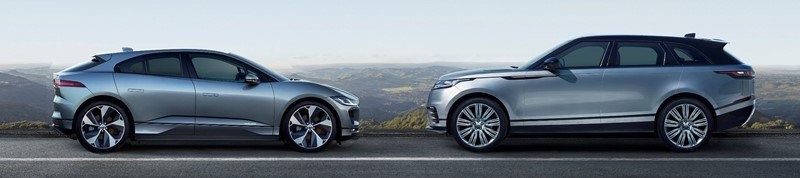
Jaguar Land Rover (JLR) has outlined its electrification strategy which will see Jaguar offer an entirely electric model line-up by 2025.

The Reimagine strategy was revealed by the car maker’s new CEO Thierry Bollore on Feb 15th 2021.

“Reimagine will see us transition to being an electric-first business. By the end of the decade we will have achieved that goal, nameplate by nameplate every model will be available with full battery power,” he said.

Currently the only fully electric model offered by JLR is the Jaguar I-Pace. It has recently launched a wide range of plug-in hybrid variants across some of its most popular models including the Evoque and Discovery Sport, however.

Bollore confirmed there will be six all-electric Land Rovers within the existing Range Rover, Discovery and Defender families by 2030, with the first launching in 2024. Land Rover models will continue to be offered with a mixture of powertrains, including plug-in hybrid, until 2036.

Jaguar will only sell electric cars by 2025, but the revised model range will not include the replacement XJ that was due to launch this year. That project has now been cancelled, although Bollore hinted that the model name could be retained for future use.

No further details have been given on how the existing range of Jaguar models, such as the recently facelifted XE, XF and F-Pace, will be affected between now an 2025, but a statement issued by JLR outlining the new strategy said: “By the middle of the decade Jaguar will have undergone a renaissance to emerge as a pure electric luxury brand with a dramatically beautiful new portfolio of emotionally engaging designs and pioneering next-generation technologies.”

The brand expects 60% of Land Rovers will be sold with zero-emission powertrains by 2030 and will begin to phase out diesel engines from its model range from 2026. By Graham Hill thanks to Fleet News

Share My Blogs With Others: These icons link to social bookmarking sites where readers can share and discover new web pages.
  • MisterWong
  • Y!GG
  • Webnews
  • Digg
  • del.icio.us
  • StumbleUpon
  • Reddit
  • Alltagz
  • Ask
  • Bloglines
  • Facebook
  • YahooMyWeb
  • Google Bookmarks
  • LinkedIn
  • MySpace
  • TwitThis
  • Squidoo
  • MyShare
  • YahooBuzz
  • De.lirio.us
  • Wikio UK
  • Print
  • Socializer
  • blogmarks

New Report Reveals That Electric Vehicle Charge Points Are On The Increase

Friday, 9. April 2021

 Ultra-rapid charge points are proving popular with usage increasing five-fold over the past year, according to a new report from Zap-Map.

In 2020, it found that 16% of electric vehicle (EV) drivers used ultra-rapid chargers, up from 3% the year before.

Over the past 12 months, the roll-out of these charge points has been stepped up significantly, with 788 ultra-rapid chargers now installed across the country, up from 476 at the end of 2019.

The average charge time from an ultra-rapid charger is half that of a standard 50-kilowatt rapid charger, with the majority of the latest EV models such as VW ID range, Jaguar I-Pace, Tesla Model 3, Hyundai Kona and Vauxhall Corsa-e, able to take advantage of these higher charge speeds. 

Zap-Map also found that the 50-kilowatt rapid chargers remain the most popular – 64% of respondents use these devices which can add 100 miles of range in around 25 mins.

Dr Ben Lane, co-founder and chief technical officer at Zap-Map, said: “This new report comes at a crucial time for the EV market.

“Competition among car manufacturers and charge point operators is becoming fierce and the industry is growing fast. The insights in this year’s wide-ranging report show that EV drivers are adapting to changes in the market.

“One of the clear conclusions is the importance of having a robust and reliable charging network. As the number of EVs continues its upward march, it’s vital that drivers are offered the simplest and smoothest experience possible.”

The Zap-Map report, which surveyed 2,200 EV drivers, also showed how drivers are now using the public network.

The survey found that while 83% of EV drivers regularly charge at home, 90% also use the public charging network, with 39% using the public network at least once a week.

This overall usage has fallen from the 2019 figure of 94%, most likely due to the impact of the coronavirus pandemic on driving patterns and car usage.

In addition, over 48% of respondents now charge at supermarkets, closely followed by motorway service stations (47%) and public car parks (32%).

In previous years, motorway service stations have been the most popular location types.

It is thought that the increase in the number of charge points available at supermarkets – now standing at 1631 chargers in 952 locations – combined with the availability of free charging at some of the major chains are driving this shift.

Other key findings from the report include: a new top 16 ranking of charging networks based on driver satisfaction. less than 1% want a return to petrol or diesel; and growing issues around accessibility for disabled users.

EV adoption rates surge

The Zap-Map report is published as pure EVs surged to take a 15% share of new lease car registrations in the third quarter of 2020

According to the BVRLA’s latest Quarterly Leasing Survey, plug-in and hybrid vehicles overtook diesel in gaining a 36% share of new lease car registrations during the same period and look set to overtake petrol very soon.

Nearly one-fifth of the BVRLA car leasing fleet now relies on some form of powertrain electrification as the fleet sector continues to drive the transition to cleaner road transport.

Diesel’s share of the total lease car market fell below 50% for the first time, while petrol held steady with a 34% share.

Average CO2 emissions for BVRLA car leasing fleet new registrations fell from 107g/km to 105g/km in Q3-2020, a new low and around 8% lower than the national average.

The car leasing market, excluding PCP and Motability vehicles, saw its fleet shrink by 6%, with the biggest reduction seen in the business fleet, down 8.7% year-on-year.

This decline was driven by an 11% fall in the business contract hire fleet compared to the same period of 2019. These fleet size declines were partially offset by an increase in the consumer leasing fleet, which was up 4% year-on-year. 

The LCV lease fleet continued to increase in Q3, albeit at a slower rate of 1.1% year-on-year, following two consecutive quarters of a 2.1% growth.

“Quarter three of last year delivered the long-awaited surge in BEV registrations that we expected after the introduction of the zero-rate BiK incentive,” said BVRLA chief executive, Gerry Keaney.

“A massive 21% of new business contract hire car registrations were BEVs, once again demonstrating that the company car sector is driving the transition to zero emission motoring.”

Salary sacrifice searches increase

Using Google data, research from Tesla online valuation website ‘We Love Tesla’ identified an increase in the number of drivers searching for EV charging facilities while on the move.

Local searches for ‘Electric Chargers Near Me’ increased by 2,850% between January 2020 and January 2021.

Consumers and businesses also seem to be considering making their premises more EV-friendly, with a 350% increase in searches for EV charging installations made during the same period, and a 250% increase for homeowners searching for EV charging at home.

Chris Davies, founder of We Love Tesla, said: “Brands such as Tesla were formed with the intention to show people that they do not need to compromise to drive electric, and that electric cars can be more sustainable, economical and fun to drive.”

We Love Tesla research also showed an increase in search for salary sacrifice schemes (up 550%) in 2020.

Alongside searches for ‘electric cars 2021 UK’, and ‘upcoming electric cars’ up 1,450% and 200% respectively, the data used for this research suggests that over the next 12 months we will continue to see a rise in the number of drivers considering making the switch to EV, says We Love Tesla.  By Graham Hill thanks to Fleet News

Share My Blogs With Others: These icons link to social bookmarking sites where readers can share and discover new web pages.
  • MisterWong
  • Y!GG
  • Webnews
  • Digg
  • del.icio.us
  • StumbleUpon
  • Reddit
  • Alltagz
  • Ask
  • Bloglines
  • Facebook
  • YahooMyWeb
  • Google Bookmarks
  • LinkedIn
  • MySpace
  • TwitThis
  • Squidoo
  • MyShare
  • YahooBuzz
  • De.lirio.us
  • Wikio UK
  • Print
  • Socializer
  • blogmarks

Greater Education Is Needed As Drivers Of Plug-In Hybrids Fail To Minimise Running Costs

Thursday, 8. April 2021

A warning has been issued to fleet operators who are turning to Plug-In Hybrid (PHEV) cars without instructing their drivers as to how to get the most out of them. Some advice is the same for drivers of PHEV’s generally so I thought it would benefit all my readers by including here.

It reminded me of a very early case whereby a large company, having read of the benefits to the environment and seeing fuel consumption figures of over 140mpg they moved most of their company car fleet over to the newly launched Mitsubishi Outlander.

Their fleet manager was astonished to see average MPG figures of 27, much less than they had achieved with their diesel fleet. They had overlooked the fact that drivers needed the facilities at home or at work to plug-in the cars to an electric supply in order to achieve the high numbers of miles per gallon. Most cars were not being plugged in at all with drivers believing that the cars would self-charge anyway.

Here is what Fleet News says:

Employers need to undertake due diligence on driver charging facilities as electric vehicles (EVs) start to make their way onto fleets in larger numbers, says the Association of Fleet Operators (AFP).

Chair Paul Hollick said that this was especially important for drivers of petrol hybrid electric vehicles (PHEVs) who could potentially choose not to charge them and instead continually fuel up at the pump.

He explained: “Our members are rapidly gaining practical experience of operating EVs and one of the things that is becoming clear is that you can’t just have a short chat with a driver about the fact that they want to adopt an EV as their company car and then hand them the keys.

“Fleets need to ensure that drivers have a good understanding of their charging options, have their own charging facilities that are not just a standard socket and, in the case of PHEVs, will always charge the car even when there is option to avoid doing so.

“It’s a case of carrying out some basic due diligence so that you are gaining the maximum operational and environmental benefit from EVs and PHEVs, while minimising some of the potential pitfalls.”

In most cases drivers are paying for their own home charger although, in some cases with larger employers, a third party will provide installation on some kind of preferential terms.

However, there is a different picture for drivers of electric vans, where most employers are paying for the charger to be installed on the basis that it is a job-need requirement that they are effectively stipulating.

Sometimes, the fitting of the charger is being added to the monthly lease rate in order to provide a higher degree of affordability.

Hollick added that some fleets were stipulating that EV and PHEV drivers should sign a declaration covering basic points of vehicle operation.

“These employers are asking their drivers to ensure that they keep their vehicle adequately charged, that they have a charger available on their drive and even, where there is only on-street parking, that some form of charger is easily available.

“The conditions for PHEVs are tighter. We’ve all come across a few instances in recent years where drivers have chosen these vehicles to minimise personal taxation and then used them purely as an internal combustion engined car. This makes them extremely expensive to operate and destroys any environmental advantage. Analysis shows that a poorly used PHEV is more expensive to operate than a petrol of diesel equivalent.

“Creating a declaration that electric power will be used as often as possible for PHEVs is a potentially effective solution to this issue and something that we have seen a number of fleets now adopt. It makes the driver aware of their responsibilities and that shows them that their employer takes these matters seriously.”  By Graham Hill thanks to Fleet News

Share My Blogs With Others: These icons link to social bookmarking sites where readers can share and discover new web pages.
  • MisterWong
  • Y!GG
  • Webnews
  • Digg
  • del.icio.us
  • StumbleUpon
  • Reddit
  • Alltagz
  • Ask
  • Bloglines
  • Facebook
  • YahooMyWeb
  • Google Bookmarks
  • LinkedIn
  • MySpace
  • TwitThis
  • Squidoo
  • MyShare
  • YahooBuzz
  • De.lirio.us
  • Wikio UK
  • Print
  • Socializer
  • blogmarks

Jaguar Land Rover Fighting Back After Some Very Challenging Times

Monday, 22. March 2021

JLR have had a disastrous couple of years and I have not been backward in advising customers against the product. Let me be clear not all cars are a disaster but it is a high risk that you take against theft and breakdown, things that should not need to be considered when you buy or lease a prestige product.

In 2020 the Range Rover was the 2nd most stolen car to the Fiesta and Land Rover, in particular, have been hovering around the bottom of the reliability surveys over the last couple of years. Relying on diesel and not getting a grasp of the many technology problems has not helped.

A 9 figure loss in 2019 caused me great concern and I couldn’t in all honesty supply cars to clients that I believed would lead to problems without a warning. Having said that, I was a great supporter of JLR over the years so I was very disappointed when things started to go awry but starting to feel a little more optimistic after reading their latest projections that I’ve reprinted below thanks to Fleet News. You can make your own mind up!

The past 12 months have been rather rocky for Jaguar Land Rover. It started 2020 having reported nine-figure losses in the last quarter of 2019, its global sales were declining and its model range was heavily reliant on unpopular diesel.

Added to that was the announcement of job cuts at its UK plants while chief executive Ralf Speth, who led the business for the last decade and helped it maximise its position in the growing SUV market, announced he would be stepping down.

When Andrew Jago took over the reins of JLR’s UK fleet and business division in August 2019, the brand’s opportunities for sales growth in the corporate sector were heavily reliant on its forthcoming electrification strategy.

Following an announcement that it would begin production of fully electric models in the UK, JLR expanded its electrified vehicle line-up with the launch in mid-2020 of a new plug-in hybrid variant for its two best-selling vehicles – the Range Rover Evoque and Discovery Sport.

Their introduction marks the second phase in the electrification of the company’s Halewood plant in the UK. More than 1,500 employees have been retrained to build electrified variants of the SUVs. This follows the earlier enhancements at the plant for the launch of mild hybrid assembly facilities and a new stamping line.

Mild-hybrid technology has already been deployed across JLR’s combustion engines – helping to reduce CO2 emissions and boost fuel economy – while fleet-crucial plug-in hybrid engines have since been added to Velar, E-Pace and F-Pace, making them much more appealing for user choosers.

Already, the brand is seeing an uplift in its fleet sales as a result of the new additions – having confirmed more than 3,000 orders for the Evoque and Discovery Sport PHEV models alone from fleet customers before the end of 2020.

“In terms of the channels, user chooser is one that we’re really seeing significant growth opportunities in but, obviously, salary sacrifice strongly favours plug-in products as well,” Jago says.

Destination Zero

Fully electric models are also a significant part of JLR’s fleet strategy. The I-Pace, which is built in Austria, is a strong fleet performer with around 80% of registrations going to true fleet customers.

Soon, it will be joined by the next-generation XJ, which will be the first car in its segment to be fully electric, alongside two more fully electric models.

JLR’s mission is to create a more sustainable future with zero emissions, zero accidents and zero congestion. It calls this strategy Destination Zero.

For the past two years, the carmaker’s UK facilities have been certified as carbon neutral by the Carbon Trust and it has more than halved the CO2 emitted per vehicle across its product range over the past decade.

The next-generation Jaguars and Land Rovers will be manufactured at JLR’s newly electrified plant in Castle Bromwich, using batteries developed in its Battery Assembly Centre at Hams Hall and Electronic Drive Units produced at its Engine Manufacturing Centre in Wolverhampton.

https://cdn.fleetnews.co.uk/web/1/root/jlr-dual-brand-28102019_w800_h800.jpg

Commercial gains

Commercial vehicles present a greater fleet opportunity this year too, with the Discovery Commercial, which accounts for one in four Discoverys sold, being joined by the all-new Defender.

As for diesel, Jago says there is still a place for it, but he accepts that models like the XE and XF – that were once the core fleet sellers – will remain on the back foot against rivals until plug-in or electric models are introduced.

“We were the first to offer RDE2 compliant engines on those products, so we were ahead of the curve on that but we don’t have plug-in options in the sedan space right now, so we do lose a bit of the market. But, when you look at the broader trend, there is a strong move towards SUV and crossover vehicles. Having plug-in hybrid on the E-Pace and F-Pace will increase their appeal, with both offering BIK from 10%. So the net gain is arguably bigger.”

However, petrol and diesel-powered models continue to perform well in the personal contract hire space, where Jago says many of the brand’s customers are using car allowances in lieu of taking a company car and choosing models such as the Evoque.

Across all channels, Jaguar Land Rover’s sales from contract hire and leasing have increased in size from 60% to 75% in the past 12 months.

Now the BIK position is more attractive on versions with a plug-in hybrid engine, Jago believes more people will opt back into company car schemes to get the model they want and push that figure even higher.

He says: “We will see Land Rover rapidly increase its true fleet sales now with the six plug-in hybrid offerings, particularly with Evoque and Discovery Sport, which are in the sweet spot in terms of that core user chooser in the £40,000 to £50,000 bandings. We can really start to access that market heavily because we’re now competing on more direct terms. We are getting more competitive than a lot of our German counterparts, which is the first time we’ve been able to say that for a while on BIK.”

Test drive events on hold

Jago is keen to demonstrate the new models to customers, but the coronavirus pandemic has affected plans to host test drive events and get people into showrooms.

He explains: “Between us and our retail network, we strongly encourage test drive activity, more now than ever before. A lot of this user-chooser market is conquest business for us and we want those drivers to experience our products and put us higher on their consideration list than perhaps they have in the past. So, access to our central test drive fleet and the retailers is a key part of that strategy.”

During the first national lockdown, JLR loaned its demonstrator fleets to key workers. However, Jago says his team remained operational throughout that time and were therefore able to win some key business as a result.

Moving forward, he anticipates that the field sales team will continue to operate in a more virtual manner to minimise the time lost travelling between appointments. This also supports his desire to speak to more fleets and increase the brand’s prominence on choice lists, by enabling the sales team to spend more time talking to customers. By Graham Hill thanks to Fleet News

Share My Blogs With Others: These icons link to social bookmarking sites where readers can share and discover new web pages.
  • MisterWong
  • Y!GG
  • Webnews
  • Digg
  • del.icio.us
  • StumbleUpon
  • Reddit
  • Alltagz
  • Ask
  • Bloglines
  • Facebook
  • YahooMyWeb
  • Google Bookmarks
  • LinkedIn
  • MySpace
  • TwitThis
  • Squidoo
  • MyShare
  • YahooBuzz
  • De.lirio.us
  • Wikio UK
  • Print
  • Socializer
  • blogmarks

Shocking Reason Why Most Cars Fail Their MOT Test!

Sunday, 21. March 2021

A record number of vehicles – almost 1.3 million – failed their MOT last year, because of faults relating to exhaust emissions, new data suggests.

A Freedom of Information (FOI) request to the DVSA found more cars have failed on emissions in the past two years than any other before it.

Overall failures last year were up by more than 70% compared to 2017/18 levels – the final year before the new regulations were introduced.

Diesel vehicles have seen the greatest surge in failures due to emissions, with a rise of 240% compared to just 37% for petrol vehicles, says BookMyGarage.com, which tabled the FOI.

In May 2018, the Government introduced tougher MOT regulations to clamp down on vehicles producing excessive emissions which led to a significant rise in failures.

Jessica Potts, head of marketing at BookMyGarage.com, said: “The regulations have mostly impacted diesel cars, causing more than triple the number to fail, compared to petrol car failures which have only increased by a third.”

The large increase in diesel failures was caused by a change to rules for cars equipped with a diesel particulate filter (DPF).

Any car equipped with a DPF will fail an MOT if there is either evidence it has been tampered with or if smoke of any colour can be seen coming from the exhaust.

DPFs became standard on all diesel cars in 2009 to comply with Euro 5 emissions standards, though a few cars older than this may also be equipped with a DPF. Its purpose is to trap soot particles from exhaust emissions which are toxic to humans.

DVSA also introduced new fault categories, with ‘Major’ or ‘Dangerous’ faults resulting in a failed test.

Almost all petrol emissions failures were classed as ‘Major’ last year. By comparison, around 5% of all diesel emissions failures were classed as ‘Dangerous’, meaning the car should not be driven until the fault is rectified.

Potts said: “Since the Volkswagen ‘dieselgate’ scandal in 2015, diesel cars have earned a bad reputation for producing harmful exhaust emissions.”

According to the SMMT, the market share of diesel cars accounted for just 16% of new car sales last year. In 2015, about 50% of new cars sold were diesel.

“That’s not to say all diesels are bad,” continued Potts. “The latest diesel cars are equipped with emissions control systems such as particulate filters and selective catalytic reduction (AdBlue) to reduce or eliminate harmful emissions.

“What this data tells us though, is that an increasing number of relatively modern diesels are struggling to pass the MOT test as their emissions control systems face tougher scrutiny. It’s important these systems function correctly to protect the environment but putting them right can also cost owners thousands of pounds.”

Although diesels have seen a much larger failure rate increase in recent years, petrol cars are actually still more likely to fail, with 4.5% of the total number licenced failing annually due to emissions, compared to 3.3% for diesels.

Financial YearDieselPetrolTotal
2015-2016118,302748,465868,115
2016-2017122,838690,247814,684
2017-2018123,596620,247745,308
2018-2019*397,991910,6201,311,841
2019-2020420,537849,7401,273,771

By Graham Hill thanks to Fleet News

Share My Blogs With Others: These icons link to social bookmarking sites where readers can share and discover new web pages.
  • MisterWong
  • Y!GG
  • Webnews
  • Digg
  • del.icio.us
  • StumbleUpon
  • Reddit
  • Alltagz
  • Ask
  • Bloglines
  • Facebook
  • YahooMyWeb
  • Google Bookmarks
  • LinkedIn
  • MySpace
  • TwitThis
  • Squidoo
  • MyShare
  • YahooBuzz
  • De.lirio.us
  • Wikio UK
  • Print
  • Socializer
  • blogmarks

How To Claim For Pothole Damage As Claims Increase!

Sunday, 21. March 2021

Local councils across England have been handed £500 million to fill millions of potholes over the course of the next financial year.

In the 2020 Budget, the Chancellor announced a £2.5 billion Potholes Fund for the 2020/21 to 2024/25 financial years. The Department for Transport has confirmed that the 2021/22 money has now been allocated. With potholes costing an average of £50 to fill, it’s expected that around 10 million craters on thousands of roads will be repaired.

The South-West received £90,031,000 – more than any other region. The South-East has been allocated £82,693,000, the East of England has been given £68,534,000 and the North-West has received £66,467,000.

The East Midlands, West Midlands and Yorkshire and the Humber have been allocated £57,358,000, £54,486,000 and £51,940,000 respectively. Finally, the North-East has received £28,492,000.

The £500 million allocated for just one year of the Potholes Fund is more than the entire £296 million Pothole Action Fund that covered 2015/16 to 2020/21.

Transport minister Baroness Vere said: “The funding allocated today will help councils ensure roads in their area are kept up to standard, and that the potholes that blight road users can be dealt with promptly.”

Jack Cousens, head of roads policy for the AA, said the UK’s local road network is “in desperate need of repair”.

“Last month, just 15 per cent of our members told us that residential roads were in a good condition,” he added. “However, studies show that residential roads in England get resurfaced on average every 119 years. If your street is lucky enough to be chosen we’d recommend a socially distanced celebration, as it will probably be a once in a lifetime event!”

How To Claim For Pothole Damage

Thinking about a claim for pothole damage compensation? Read our handy pothole claims guide for the key dos and don’ts.

Potholes, and the damage they can cause, is a growing problem for motorists in the UK. Local councils point to years of underinvestment and squeezed resources as reasons for cutting spending on essential pothole repair work, but that doesn’t help when you’re facing a hefty bill for pothole damage to your car. But is there any way of gaining compensation? This is our guide to making pothole claims.

The total damage caused by hitting potholes costs unfortunate UK motorists an incredible £730 million every year, with the average individual pothole repair bill totting up to almost £110 per motorist. Potholes can cause damage to tyres, wheels, the suspension, exhaust and even the bodywork, while drivers of low-slung sporty models with expensive low-profile tyres on big alloy wheels can fare much worse than the average car, too. The number of potholes could also be a factor in the growing popularity of high-riding crossovers and SUVs.

However, according to the Asphalt Industry Alliance it would take councils 14 years just to catch up with all the backlog of pothole repairs needed to UK roads if they carry on fixing them at the current rate. One council has even attempted to skirt the pothole problem by increasing the minimum ‘official depth’ of a pothole from 40mm to 60mm in an attempt to defer essential pothole repairs until the problems worsen.

Making your claim for pothole damage

Given the amount of money raised by government on road tax and fuel tax, it’s perfectly understandable when damage caused by the pothole menace makes motorists want to hold authorities to account.

However while it is possible in some cases to hold a local council (or the Highways Agency when main roads are affected) responsible for car damage caused by unrepaired potholes, it’s not as straightforward as many would like.

Section 58 of the Highways Act 1980

Local authorities typically refuse all claims as a first step, quoting Section 58 of the Highways Act 1980. Section 58 offers a ‘catch all’ defence, and means the council is saying it took all reasonable steps to maintain the road, and that potholes were dealt with in a timely manner.

Unfortunately council officers use Section 58 routinely in rejecting claims, even when they know this isn’t true. They do so on legal advice, as lawyers know most pothole damage claimants will give up at the first hurdle.

From then on, it’s down to you to do the detective work to determine whether the council has indeed carried out its inspections and maintenance to the required standard – which generally means in accordance with the Well-Maintained Highways Code of Practice.

This may be time-consuming and difficult, as you’ll probably need to use Freedom of Information requests to determine whether the council has failed in its statutory obligations. Specialist websites like the warranty industry-funded Potholes.co.uk can offer detailed help and support, but meanwhile here’s what you need to do if you fall foul of a damaging pothole on the road:

Pothole damage – essential steps to make a successful claim

1. Take notes and photographs at the scene

When it’s safe to do so, pull over to make a note of the exact location of the pothole that damaged your car. You should also record its size, depth and shape, and contact details for any witnesses. It may help a later claim if you can take supporting photographs on your mobile phone to record as much of the information as possible. Never take chances with safety at the scene of the incident though, or things could get very much worse when the next car comes around the corner!

2. Repair the damage

If you need immediate roadside repairs then you can’t do much else but follow the advice of your breakdown service or the garage you’ve called out. If repairs can wait, then it’s worthwhile getting several quotes from different repairers so you can show as part of any subsequent claim that you’ve acted to achieve the best price.

3. Report the pothole

Be a good citizen and do your bit to help make sure fellow motorists don’t fall into the same trap by alerting the council (or Highways Agency). There’s an easy way to do that by using the official online pothole reporting service.

4. Submit your claim

Write a calm letter to the local council (or Highways Agency) outlining the incident where damage was caused, the extent of the damage, and that you hold the council liable. They should respond within a couple of weeks, most likely with a Section 58 defence – but you never know, and might be lucky!

5. Decide whether to pursue your claim

Now for the tricky bit. You will have to use your investigative powers to determine whether the council has indeed fulfilled its statutory Section 58 obligations. You are entitled to ask relevant questions about the scheduling and quality of inspections and repairs on the road in question. You must subsequently determine whether you have a realistic case for pursuing your claim.

If so, write again to the council outlining your grounds for argument. It may be that the council agrees to pay up on receipt of your evidence, but if they don’t you are then faced with a choice of court action. A small claims court action is very cheap and easy via the latest web-based system called Money Claim Online, but whether it’s worth pursuing or not will depend on the cost of repairs, the amount of time you can afford, and the level of your moral outrage.  By Graham Hill thanks to Auto Express

Share My Blogs With Others: These icons link to social bookmarking sites where readers can share and discover new web pages.
  • MisterWong
  • Y!GG
  • Webnews
  • Digg
  • del.icio.us
  • StumbleUpon
  • Reddit
  • Alltagz
  • Ask
  • Bloglines
  • Facebook
  • YahooMyWeb
  • Google Bookmarks
  • LinkedIn
  • MySpace
  • TwitThis
  • Squidoo
  • MyShare
  • YahooBuzz
  • De.lirio.us
  • Wikio UK
  • Print
  • Socializer
  • blogmarks

Government May Limit The Sale Of Petrol & Diesel Cars Ahead Of 2030 Total Ban

Thursday, 11. March 2021

Sales of internal combustion engine (ICE) petrol and diesel cars could be curtailed ahead of the Government’s planned 2030 ban, when it publishes the finer details of its strategy in the spring.

Since announcing it would end the sale of new petrol and diesel cars and vans in 2030, with a five-year grace period for some hybrids, the Government has yet to provide clarity on how it will be achieved.

Speaking at the Westminster Energy, Environment & Transport Forum policy conference for low emission vehicles in December, Katie Black, joint head of the Office for Low Emission Vehicles (OLEV) at the Department for Transport (DfT), indicated that the Government wants to avoid a situation where car makers are “selling the maximum amount of petrol and diesel cars right up to the 2030 milestone”.

She said: “We do see it as a risk, and we will be looking publicly at ways to mitigate that. What you probably want is a gradual phase out, a gradual shift across the fleet. And we’re looking at how a regulatory regime could support that.”

No further details were given as to how sales might be restricted, but a key part of Government strategy will be to promote and encourage private buyers and fleets to opt for electric vehicles (EVs) as soon as they can.

This includes an investment of £1.3 billion to strengthen the UK’s charging infrastructure and to extend the plug-in car grant.

Dylan Setterfield, head of forecast strategy at Cap HPI, said: “It is hard to see how volume restrictions in ICE cars could work from a practical perspective, given the range of customers, routes to market and complex factors impacting vehicle lead times.

“In any case, the industry is already doing this independent of government. Diesel availability has already declined as manufacturers discontinue diesel in their smaller cars and, given they will be under ever-stricter emissions targets, it is also in their interest to move customers into EVs by removing the competing fuel types.

“The weighty cost of research and development is likely to result in some hard choices now between investment in ICE or EV, with petrol and diesel the likely losers in many cases.”

Black confirmed the Government is planning to publish a delivery plan, setting out the steps that need to be taken to meet the phase out dates.

But, she admitted there were still many factors that needed to be considered, including on-street charging solutions and supporting the used car market.

Green Paper Planned

To ensure the phases are met, and to support interim carbon budgets, the DfT will publish a Green Paper in the coming months on the post-EU regulatory regime for CO2 emissions from new vehicles. This, according to Black, will cover both overall fleet efficiency and delivering the move to 100% zero emission vehicle sales for cars and vans.

There will also be a consultation to define the meaning of “significant zero emission capabilities” in order to outline what vehicles may be sold between 2030 and 2035.

These are likely to be limited to range-extender EVs, which feature a small petrol engine to charge the battery while the vehicle is driven exclusively by its electric motor, or plug-in hybrids.

Nick Molden, founder and CEO of Emissions Analytics, believes regular hybrid vehicles, which have a limited zero-emission range, actually have a lower environmental impact than plug-in hybrids.

With all new cars already exceeding the Government’s air quality targets, introduced as part of the Real Driving Emissions (RDE) test, Molden believes the issue now lies in the poorer CO2 emissions performance of most new cars against the EU’s 95g/km target.

He said electrification is the best way to reduce CO2 emissions, but it has to be deployed “effectively” to make the most of “scarce” battery resources.

“In our strong opinion, full hybrids, for a good period forward, is the sweet spot while the supply chain issues around batteries are sorted out,” Molden stated.

Following a recommendation by the National Infrastructure Commission that the sale of new diesel HGV lorries should be banned by 2040, Black confirmed a consultation will be launched this year on the phase-out of diesel HGVs.

She said: “HGVs are at a much earlier much an earlier stage than cars and vans. We can see what the technological solutions are for those, but, with HGVs, the picture is a lot less clear.

“As we look at the roll-out of charging infrastructure, we really need to make sure that we’re taking into account HGV requirements there and not thinking about cars and vans exclusively.”  By Graham Hill thanks to Fleet News

Share My Blogs With Others: These icons link to social bookmarking sites where readers can share and discover new web pages.
  • MisterWong
  • Y!GG
  • Webnews
  • Digg
  • del.icio.us
  • StumbleUpon
  • Reddit
  • Alltagz
  • Ask
  • Bloglines
  • Facebook
  • YahooMyWeb
  • Google Bookmarks
  • LinkedIn
  • MySpace
  • TwitThis
  • Squidoo
  • MyShare
  • YahooBuzz
  • De.lirio.us
  • Wikio UK
  • Print
  • Socializer
  • blogmarks

Only 5% Of Car Mechanics Are Qualified To Work On Electric Vehicles

Thursday, 11. March 2021

The vast majority of mechanics are not yet qualified to work on EVs as the 2030 deadline looms, experts are warning.

Only five per cent of mechanics working in dealerships and garages across the UK are qualified to work on electric vehicles, according to a leading industry body.

In response to the Government’s announcement that a ban on the sale of new petrol and diesel cars is to be accelerated from 2040 to 2030, the Institute of the Motor Industry (IMI) has pointed out that 95 per cent of the country’s mechanics have yet to complete the necessary qualifications to safely work on electric vehicles.

This means at present, there are between 13,000 and 20,000 qualified technicians working on 380,000 plug-in vehicles across the UK. The IMI is concerned that as EV and PHEV adoption increases, the number of vehicles will further outweigh the number of mechanics who can work on them. The organisation issued a similar warning in 2018, when only three per cent of mechanics were trained to work on EVs.

Covid-19 has only exacerbated the issue, the IMI says. In 2019, 6,500 certificates for working on EVs were issued in the UK. In Q2 2020, though, the number of certificates issued was down 85 per cent on the same period last year.

The organisation is now calling for support and incentives to be given to automotive firms to increase the number of technicians being trained to work on EVs, as well as improve and implement recruitment and apprenticeship schemes.

The organisation also warned that year that the existing Electricity at Work regulations weren’t comprehensive enough for automotive mechanics, merely referencing “systems in vehicles”.  By Graham Hill thanks to Auto Express

Share My Blogs With Others: These icons link to social bookmarking sites where readers can share and discover new web pages.
  • MisterWong
  • Y!GG
  • Webnews
  • Digg
  • del.icio.us
  • StumbleUpon
  • Reddit
  • Alltagz
  • Ask
  • Bloglines
  • Facebook
  • YahooMyWeb
  • Google Bookmarks
  • LinkedIn
  • MySpace
  • TwitThis
  • Squidoo
  • MyShare
  • YahooBuzz
  • De.lirio.us
  • Wikio UK
  • Print
  • Socializer
  • blogmarks

MOT Tests Set To Go Through Major Changes

Thursday, 11. March 2021

DVSA says reducing emissions will help meet climate-change targets and improve air quality; MoT tests will also be updated to check modern safety kit.

The MoT test is to be made stricter, with cars having to meet more stringent emissions targets in the future, according to the Driver and Vehicle Standards Agency (DVSA). The annual roadworthiness check will also be updated to ensure recent developments in safety technology are inspected to ensure proper operation.

Neil Barlow, head of MoT policy at the DVSA, said: “The MoT will need to change if it is to stay useful, both in terms of safety systems and emissions.”

“Manufacturers put loads of effort into designing some pretty whizzy tech that goes on modern cars with internal combustion engines”, Barlow said. “We will probably want to be better at checking that those systems will be working as designed.”

Barlow added that while “there isn’t anything immediate” in the pipeline with regard to toughening up the test, he is “keen that we get towards” tougher emission tests and inspections of safety systems.

The MoT test is unlikely to become so strict that cars would have to meet the emission limits they hit when they went through the type approval process, as engine wear and other aspects of degradation mean cars often get less clean as they age.

“Obviously that won’t be back to factory design, and has to be a solution that’s cost-effective for industry”,  Barlow said. He added: “There’s no change planned that there’s a date for, but this is the direction of travel – emissions will be an important thing to check….It probably is clear as we look ahead, that if we want to keep driving down overall emission levels…we’ve got to check that cars are performing as they were designed.”

Such a toughening-up of emissions checks would partly be driven by national emission targets for the collective benefit of the country, Barlow said: “Those Government targets are for us, aren’t they? They’re for us and our health. It’s not about fulfilling draconian Government aims, it’s about improving our health, and if we can keep vehicles working better as they were designed, that must be a good thing.”

Advanced safety systems to be checked at MoT time

Turning to safety, all new cars sold in Europe from 2022 will have to have several safety systems, including intelligent speed assistance (a form of speed limiter) as well as autonomous emergency braking and lane-keeping assistance. Systems such as these, where fitted, could form part of the MoT test in the future, though which technologies would be checked have yet to be decided.

“We talk about emergency braking”, Barlow said. “From a motorists perspective, you might say ‘well I would expect that to be tested’. But what are its failure modes? What do we find with the experience of this being in service for a while? Does it actually go wrong? In what ways does it go wrong?

“The stuff we want to test is the stuff that does go wrong. There’s no point in testing stuff that proves to be incredibly reliable. I’m not saying that [AEB] is one or the other of those.. but we need to make sure it’s evidence based, what we include in the test.”

Barlow stressed that fundamental checks such as ensuring tyre-treads are of the correct depth would always be core to the MoT, saying: “The basics are really important, and we don’t want to lose those”.  By Graham Hill thanks to Auto Express.

Share My Blogs With Others: These icons link to social bookmarking sites where readers can share and discover new web pages.
  • MisterWong
  • Y!GG
  • Webnews
  • Digg
  • del.icio.us
  • StumbleUpon
  • Reddit
  • Alltagz
  • Ask
  • Bloglines
  • Facebook
  • YahooMyWeb
  • Google Bookmarks
  • LinkedIn
  • MySpace
  • TwitThis
  • Squidoo
  • MyShare
  • YahooBuzz
  • De.lirio.us
  • Wikio UK
  • Print
  • Socializer
  • blogmarks