Virtual Speed Awareness Courses Introduced To replace Classroom Courses

Wednesday, 13. May 2020

DriveTech is helping to fill the gap with online speed awareness courses after a classroom-based option was halted due to coronavirus.


Having reconfigured course delivery online via the Microsoft Teams platform, it has delivered classes to 22,000 motorists helping them avoid a police prosecution.


The National Police Chiefs’ Council (NPCC) lead for Roads Policing suspended classroom-based speed awareness courses for 12 weeks in March.


More than 1.2 million drivers attended a speed awareness course last year. The courses usually cost between £80 and £100, but motorists avoid paying a Fixed Penalty Notice or picking up penalty points on their driving licence.


DriveTech, which works in partnership with police and UKROEd, had to move rapidly to rebook around 50,000 classroom delegates bookings prior to the lockdown, to avoid motorists facing the alternative of prosecution, points and fines.


With revised digital course content needed, and DriveTech’s body of 175 trainers needing upskilling to deliver the virtual online experience, it says that the challenge was considerable.


Five weeks on from the first day of digital course delivery on March 27 (a week after lockdown measures affected venue participation), DriveTech says it is delighted that online course capacity is now matching the former levels of classroom supply.


Des Morrison, director of police business at DriveTech, said: “We reflect now on a pretty hectic few weeks, but it is satisfying to now see our digital delivery performing well and with some excellent customer feedback – both from our police force customers, delighted by our professional response in a crisis, and delegates.”


DriveTech is now delivering the three mainstream courses digitally – National Speed Awareness, National Motorway Speed Awareness, and What’s Driving you? and delegate feedback, as measured by Net Promoter Scores (NPS) has been at world class levels, it says.


In addition to placing the first priority on satisfying a backlog of delegates already booked onto a venue-based course, DriveTech is now taking bookings for new delegates from across the country.  By Graham Hill thanks to Fleet News

Share My Blogs With Others: These icons link to social bookmarking sites where readers can share and discover new web pages.
  • MisterWong
  • Y!GG
  • Webnews
  • Digg
  • del.icio.us
  • StumbleUpon
  • Reddit
  • Alltagz
  • Ask
  • Bloglines
  • Facebook
  • YahooMyWeb
  • Google Bookmarks
  • LinkedIn
  • MySpace
  • TwitThis
  • Squidoo
  • MyShare
  • YahooBuzz
  • De.lirio.us
  • Wikio UK
  • Print
  • Socializer
  • blogmarks

Pothole Related Breakdowns Increase During First Quarter Of 2020

Wednesday, 13. May 2020

The number of vehicles requiring recovery due to pothole damage has increased rapidly according to the RAC.


It rescued almost 3,500 motorists with pothole damaged cars in the first quarter of 2020, an increase of 64% on Q4 2019.


The number of cars damaged by potholes requiring recovery, between January and March, is 4.5% higher than in the same period last year, despite the Coronavirus lockdown reducing the number of vehicles on the road in the last nine days of the March.


Breakdowns resulting from damaged shock absorbers, broken springs and distorted wheels – that are most likely to be attributable to poor road surfaces – made up 1.6% of all the RAC’s call-outs for its individual members.


This was considerably up on Q4 2019 when the figure stood at 0.9% and marginally up on the same period a year ago – 1.5%.


The RAC’s Pothole Index suggests the overall standard of the roads has improved a little as the Index currently stands at 1.6, down from 2.3 in the same period last year and slightly down on Q4 2019 (1.7).


This does mean however that drivers are still 1.6 times more likely to break down as a result of pothole-related damage than they were back in 2006 when the RAC first started collecting data.


RAC head of roads policy Nicholas Lyes said: “The jump in pothole-related breakdowns from the last three months of the year to the first quarter of the next year is always the largest as winter weather has the greatest effect of all in wearing down our roads.


“Many parts of the country suffered very wet weather conditions throughout February. It’s still likely that the storms and floods were major factors in why the number of pothole-related breakdowns was higher than the same period last year.


“In his Budget in March, the Chancellor committed to funding our local roads and it is clear that the economic recovery as the UK emerges from the COVID-19 pandemic will need to be built on solid infrastructure – which of course needs to include good quality roads.


“Moreover, it will also be interesting to see if lower traffic volumes during the UK’s lockdown will help prevent further deterioration of roads as fewer wheels going over weaknesses in the asphalt should contribute to less surface wear.”  By Graham Hill Thanks To Fleet News

Share My Blogs With Others: These icons link to social bookmarking sites where readers can share and discover new web pages.
  • MisterWong
  • Y!GG
  • Webnews
  • Digg
  • del.icio.us
  • StumbleUpon
  • Reddit
  • Alltagz
  • Ask
  • Bloglines
  • Facebook
  • YahooMyWeb
  • Google Bookmarks
  • LinkedIn
  • MySpace
  • TwitThis
  • Squidoo
  • MyShare
  • YahooBuzz
  • De.lirio.us
  • Wikio UK
  • Print
  • Socializer
  • blogmarks

Survey Reveals That Electric Cars Are Driven Further Than Petrol Cars

Wednesday, 13. May 2020

Electric cars are driven for 26% more miles in their first three years on the road than petrol models, research from the RAC Foundation has found.


The analysis, which pre-dates the steep fall in road traffic seen since the start of the coronavirus pandemic, is based on the MOT data for 516,936 vehicles.


It found battery electric cars cover an average of 9,435 miles per year over their first three years, compared to a petrol car’s 7,490.


Diesel cars are driven the most, and cover an average of 12,496 miles in each of their first three years.


Steve Gooding, director of the RAC Foundation, said: “Unsurprisingly people with diesels have been doing most mileage, probably seeking better long-distance fuel economy, but this study is also evidence that battery-electric powered cars are not just trophy vehicles signalling their owners’ green credentials but prior to the lockdown were racking up the miles as everyday transport.


“Tens of millions of people still drive petrol and diesel-powered cars, but this data suggests that owners of electric cars have found them to be a practical proposition, running up the sort of big annual mileages that many of us need to do, challenging preconceptions about their range and the ease of re-charging.


“The next big question is what will happen when the Covid-19 lockdown ends?


“Some say our travel behaviour might change quite dramatically as we’ve mastered on-line meetings in place of the office routine, but any ongoing desire for social-distancing might yet draw us back to our own cars for the trips we make once the travel restrictions are lifted.”


The research found a Mitsubishi Outlander plug-in hybrid – the most common PHEV on the road – averages 12,500 miles a year.


RAC Foundation reports the battery electric Tesla Model S covered an average annual mileage of 12,392, the Nissan Leaf 8,241 and the Renault Zoe 5,736.


The analysis also found there was a big difference between petrol and diesel versions of the same model. By Graham Hill thanks to Fleet News

Share My Blogs With Others: These icons link to social bookmarking sites where readers can share and discover new web pages.
  • MisterWong
  • Y!GG
  • Webnews
  • Digg
  • del.icio.us
  • StumbleUpon
  • Reddit
  • Alltagz
  • Ask
  • Bloglines
  • Facebook
  • YahooMyWeb
  • Google Bookmarks
  • LinkedIn
  • MySpace
  • TwitThis
  • Squidoo
  • MyShare
  • YahooBuzz
  • De.lirio.us
  • Wikio UK
  • Print
  • Socializer
  • blogmarks

MOT Test Stations Set To Be Flooded After Lockdown

Wednesday, 13. May 2020

The Driver and Vehicle Standards Agency (DVSA) issued guidance towards the end of last month that a car, van or motorcycle’s MOT expiry date could be extended by six months if it was due on or after March 30.


The DVSA currently carries out 30 million MOTs a year through 23,000 test centres. But, with all this summer’s MOTs effectively being pushed back into the autumn/winter period, that could put unprecedented pressure on the system and leave drivers scrambling to find MOT slots.


Terry Hiles, general manager at Licence Check which is now part of the Ebbon-Dacs Group, said: “The six-month MOT extension raises concerns about the potential backlog of tests that will need to be carried out later this year.


“Centres will be twice as busy as normal during the autumn/winter period as 12 months’ demand will be effectively shoehorned into a six-month time frame.


“Employers will need to have in place robust systems in place to ensure MOTs are carried out on the new dates rather than the regular anniversary date that they may have become accustomed to.


“So MOT reminders and alerts to drivers will be vitally important.


“MOTs will need to be attended to once lockdown ends and many drivers may need a prompt to help them remember the new expiration date.


“One option could be to sign with the .gov.uk website for its text message reminder service so that drivers are sent reminders of their new date.”


Currently, some 10% of vehicles fail an MOT due to defective brakes, 13% for suspension faults and 8% for illegal tyres.


With a percentage of the nation’s cars not being MOT’d for a further six months, the chances of some of them being driven in an unroadworthy state could rise dramatically.


Drivers could face fines of up to £2,500, be banned from driving and get three penalty points for driving a vehicle in a dangerous condition, regardless of whether they are being operated under a six-month MOT extension or not.


The DVSA’s official guidance on its website says that insurance will still be valid, that drivers can still tax their vehicle and the vehicle’s record will be updated so the police can see they have a valid MOT during the six-month extension.


But insurance cover is likely to be invalidated if the vehicle is driven in a dangerous or defective state and the emphasis is on drivers to keep their vehicles in a roadworthy condition.


The DVSA advice is to take your vehicle to be repaired at the nearest open garage if it’s unsafe. These are allowed to stay open during the Coronavirus outbreak.


Licence Check said this uncertainty puts the onus on employers, especially those with large numbers of grey fleet drivers who use their own vehicles on company business, to have in place robust systems to ensure that vital checks are being carried out,  such as MOTs, as soon as possible once lockdown is over to ensure continuing compliance. By Graham Hill thanks to Fleet News

Share My Blogs With Others: These icons link to social bookmarking sites where readers can share and discover new web pages.
  • MisterWong
  • Y!GG
  • Webnews
  • Digg
  • del.icio.us
  • StumbleUpon
  • Reddit
  • Alltagz
  • Ask
  • Bloglines
  • Facebook
  • YahooMyWeb
  • Google Bookmarks
  • LinkedIn
  • MySpace
  • TwitThis
  • Squidoo
  • MyShare
  • YahooBuzz
  • De.lirio.us
  • Wikio UK
  • Print
  • Socializer
  • blogmarks

Number Of Vehicles On UK Roads Exceeds 40 Million For The First Time Ever

Saturday, 2. May 2020

The number of vehicles registered for use on UK roads has exceeded 40 million for the first time, according to data from the Society of Motor Manufacturers and Traders (SMMT).


Analysis shows that more than 35 million cars and five million commercial vehicles were in use in the UK in 2019, an increase of 1% on the previous year.


The total includes more than 750,000 low, ultra-low and zero emission vehicles. The number of these cars grew by 26% last year, with 11,832 hybrids, 144,335 plug-in hybrids and 92,913 battery electric vehicles now in use.


Birmingham has the second highest number of battery electric and plug-in hybrid vehicles after Greater London, with some 24,000 zero and ultra-low emission cars on the city’s roads.


Light commercial vehicles grew by  2.7% on the previous year to 4.5m units, surging by 28% in the last decade. Passenger cars, meanwhile, increased 0.8% in the same period. The number of heavy goods vehicles grew by 0.4% to 608,000 – the largest number delivering for Britain since 1990.


Many of these vehicles are helping to provide transport for essential workers, deliveries and emergency services. Some 25,000 ambulance and fire service vehicles, together with more than 20,000 supermarket delivery trucks and lorries are keeping the nation safe, supermarket shelves stocked, and the flow of food, medicine and care to vulnerable people going during the coronavirus crisis.


Mike Hawes, SMMT Chief Executive, said, “As the UK continues to battle the coronavirus pandemic, keeping food, medical supplies and the people serving on the front line moving has never been so important – and these figures show the essential role Britain’s vehicle fleet plays for society. They also provide evidence that industry’s ongoing investment into ever cleaner, safer and more reliable vehicle technology is paying off, even as demand for mobility grows. To ensure this trend continues, we must get the right support for businesses and their workers in place now so that when this crisis is over, the sector can help get the whole country and our economy back on the move.”


Most popular cars


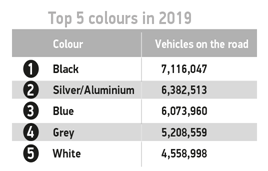
The SMMT’s Motorparc data reveals black as the most commonly seen car colour on the UK’s roads, with more than a fifth (7.1m) clad in the paint.


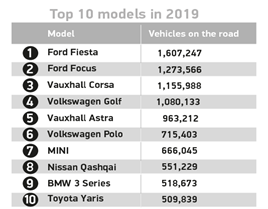
There are more superminis on UK roads than any other category of car, with the Ford Fiesta and Vauxhall Corsa the most common models.


The BMW 3 Series is the only premium badge car to feature in the top 10 list, with more than half a million examples on UK roads.


By Graham Hill thanks to Fleet News

Share My Blogs With Others: These icons link to social bookmarking sites where readers can share and discover new web pages.
  • MisterWong
  • Y!GG
  • Webnews
  • Digg
  • del.icio.us
  • StumbleUpon
  • Reddit
  • Alltagz
  • Ask
  • Bloglines
  • Facebook
  • YahooMyWeb
  • Google Bookmarks
  • LinkedIn
  • MySpace
  • TwitThis
  • Squidoo
  • MyShare
  • YahooBuzz
  • De.lirio.us
  • Wikio UK
  • Print
  • Socializer
  • blogmarks

Michelin Provides Car Care Advice During Lockdown

Saturday, 2. May 2020

Michelin has issued special guidance for vehicles parked up for extended periods during the Coronavirus pandemic.


The company has detailed steps to follow before laying up vehicles, along with advice on periodic inspections and preparing them to re-enter service.


Brian Porteous, Michelin’s technical manager – Car, Van, 4×4 and Government Contracts, said: “Tyres can be damaged if certain precautions are not taken before the weight of a parked car or light commercial is supported for long periods, so it’s important owners follow some basic advice to ensure vehicles can be quickly put back into operation when normal business resumes, and without the need to replace tyres unnecessarily.


This isn’t just advice for big fleets; it’s as important for smaller operators, sole traders and consumers


Preparing vehicles


Before laying up a car or van, the tyres should be checked for damage and any cuts or penetrations that may deteriorate over time should be assessed by an expert. Many tyre dealerships remain open, often with mobile technicians available.


Inflation pressures should be set at the normal levels for the vehicle. Any tyre which is found to be under-inflated by up to 7psi can normally be re-inflated safely if there are no obvious signs of damage. However, if a tyre is under-inflated by more than 7psi, it should be removed and inspected by an expert to make sure that no structural damage has been caused.


Tyres inflated with nitrogen should have their inflation pressure checked in just the same way as those inflated with air. Whatever the inflation medium, ensure that a valve cap with a rubber seal is fitted to every tyre valve.


Make sure that tyres are not parked on stones or objects that might dig in. Also avoid tyres sitting for long periods in pools of water or other liquids, such as oils.  For longer periods, covering tyres to avoid exposure to sunlight will also prolong their life.


Clean tyres with mild detergent only and rinse well with cold water.


During extended parking


Even when not in use, tyre inflation pressures should still be regularly checked and corrected as necessary – ideally on a monthly basis, in line with standard Michelin recommendations. Any pressure loss should be investigated and the cause remedied.


Every four months, if a vehicle has not been moved, the tyres should be rotated a quarter turn.


Re-entry into service


Any tyre and wheel assembly which has been stored for a long period, on or off the vehicle, should be visually inspected for damage and any unusual signs before re-entering service. Pressures should be checked and set to the vehicle manufacturer’s recommendation.


Remember that tyres may reach the end of their service life whilst in storage. Tyres which have been in use for five years or more should continue to be inspected by a specialist at least annually.


Any tyres in service 10 years or more from the date of manufacture, including spare tyres, should be replaced with new tyres as a simple precaution – even if they still appear serviceable and have not reached the legal wear limit.


The date when a tyre was manufactured is located on the sidewall. Consumers should locate the code which begins with the letters DOT. A DOT code ending in “2210” indicates a tyre made in the 22nd week (May) of 2010.


“We appreciate that for most businesses and consumers, the very idea of parking vehicles for extended periods is an unfamiliar process and not something they want to be doing. However, by spending a few minutes inspecting and preparing a vehicle first, you will help to protect the condition of its tyres and ensure it is in the best possible condition for getting back on the road when the time comes,” Porteous added.  By Graham Hill thanks to Fleet News

Share My Blogs With Others: These icons link to social bookmarking sites where readers can share and discover new web pages.
  • MisterWong
  • Y!GG
  • Webnews
  • Digg
  • del.icio.us
  • StumbleUpon
  • Reddit
  • Alltagz
  • Ask
  • Bloglines
  • Facebook
  • YahooMyWeb
  • Google Bookmarks
  • LinkedIn
  • MySpace
  • TwitThis
  • Squidoo
  • MyShare
  • YahooBuzz
  • De.lirio.us
  • Wikio UK
  • Print
  • Socializer
  • blogmarks

Will CoronaVirus Have A Positive Effect On Electric Cars?

Saturday, 2. May 2020

The views of Charley Grimston, co-founder of Altelium and CEO of CNC Asset Ltd


There have been plenty of good news stories coming from the automotive sector since the covid-19 outbreak, including car manufacturers switching their production lines to make ventilators. But, of course, there are concerns about the industry’s economic stability, at the beginning of April 2020 car sales were down 44 per cent.


However, there are three powerful reasons why the electric vehicle market will be supercharged by this dreadful virus and lockdown when it’s over.


Clean refuelling


Firstly, drivers will want electric vehicles because diesel and petrol forecourts will be perceived as unclean.  You have to hold the pump the previous person has used, touch the screen or enter the shop to pay. With electricity you can fuel up at your own home for consumers, or at a centralised depot for fleet owners.


We may all want to get back to normal but some things you can’t unknow, and one of those things is how infection is transmitted.


Preserving environmental gains


Secondly, people will want to do things differently and better. Those who can afford to buy cars will want to play a part in making the world a better, greener place. Already we are seeing how nature is recovery as a result of the lockdown:  “This is the first time I have seen such a dramatic drop-off over such a wide area for a specific event,” said Fei Liu, an air quality researcher at NASA’s Goddard Space Flight Centre describing levels of nitrogen dioxide over China.


The nationwide shutdown has led to a big drop in air pollution across the UK’s major cities.  For nitrogen dioxide pollution, new data shows that this has almost halved in London, Birmingham, Bristol and Cardiff.  Transport contributes 23 per cent of global carbon emissions and driving is by far the largest element of that, contributing 72 per cent of transport carbon emissions.


When the engines of the economy start again, we’ll want to try and preserve these gains. A report just published by the Journal of Nature has proved that electric vehicles produce less carbon dioxide than petrol cars across the vast majority of the globe.  There were lingering doubts in some quarters about the environmental credentials of electric cars, centred around the battery. This report lays those concerns to rest. So, when people start buying again, they will buy with the environment in mind – and that means electric.


Buy once, buy well


And thirdly those investing in new cars, especially fleet owners, will want to buy well. This global lockdown and coronavirus is like nothing we have ever experienced, but what many of us have experienced is recession. At times of recession, or worse, warranties become far more important to both the car owners and manufacturers.


To fleet owners, a long warranty is a sign of quality and reassurance. To the manufacturer it provides a way to demonstrate your belief in your product quality. A warranty allows a product to be sold on quality and therefore protects profit margins. Profitably is also protected further downstream, where a warranty allows the manufacturer to offer range of customer service and support, underwritten by their insurance.


How do we know this is the case?  We have been providing damage and breakdown extended warranty and renewable energy insurance for plant and machinery for over thirty years.  We have seen ourselves and our customers through huge fluctuations in the market, and what has provided consistent protection throughout this time is the warranty.


Developing warranties for EV batteries


Until now it has been difficult to develop warranties on electric vehicles, specifically the battery, because the technology is so new. Traditional lead acid batteries come with a raft of data and industrial standards, developed and refined over many years, which inform investment or warranty decisions.


There was a lack of data around electric batteries which held back investment decisions about the single most important component part – the electric battery. There’s too much risk involved to offer a good, long warranty if you don’t know what affects the product’s performance and longevity.


Now this final issue has been addressed. Intelligent data can now be gathered in real time from electric batteries and then enhanced with AI learning to describe the current, past and likely future performance of the battery at an individual cell level. Systems like Altelium are at the forefront of this. They unlock market potential because armed with this data the battery can be given second life uses.


Intelligent planning


Here again the warranty is the catalyst of change. A comprehensive warranty at individual cell level can include service and breakdown cover for the cell in it its second life situation as part of a static energy storage system. This extends the revenue stream for the manufacturer or the owner of the storage facility.


It also extends significantly any carbon footprint calculations for the car itself because the battery cells will be in operation for so many years.   Unlike Bernard London who suggested that recession could be ended through ‘planned obsolescence’ in 1930s, now the approach must be the total opposite. We must recognise intelligent planning and electric vehicles are the exemplar of how to energise the automotive market.  By Graham Hill thanks to Fleet News

Share My Blogs With Others: These icons link to social bookmarking sites where readers can share and discover new web pages.
  • MisterWong
  • Y!GG
  • Webnews
  • Digg
  • del.icio.us
  • StumbleUpon
  • Reddit
  • Alltagz
  • Ask
  • Bloglines
  • Facebook
  • YahooMyWeb
  • Google Bookmarks
  • LinkedIn
  • MySpace
  • TwitThis
  • Squidoo
  • MyShare
  • YahooBuzz
  • De.lirio.us
  • Wikio UK
  • Print
  • Socializer
  • blogmarks

Thousands Of Drivers Being Caught Speeding During Lockdown.

Friday, 24. April 2020

Drivers are being urged to slow down during the lockdown after Greater Manchester Police said it has caught 6,200 drivers breaking the speed limit since Monday, March 23.


With all non-essential travel currently banned under Government guidance, the majority of people are staying at home and if they need to go out, they are sticking to the speed limits.


Department for Transport (DfT) data shows motor vehicle use in Great Britain has fallen by two thirds over the past month.


However, Greater Manchester Police has seen an 57% increase in vehicles travelling above the speed limit over the past few weeks and other forces have reported similar problems.


One driver was recorded at 115mph on a 40mph road in Greater Manchester, while another was clocked at 134mph in a 40mph limit in London.


Superintendent Julie Ellison from GMP’s Specialist Operations Team said: “Sadly we have seen a huge increase in speeding offences and numerous examples of drivers who are putting their own lives and others at risk.


“My officers are working tirelessly to track down these offenders who are using the quieter roads as their own personal racetrack.”


Scottish police reported a man was recorded travelling at more than 130mph on the A90 between Peterhead and Ellon, Aberdeenshire, on April 12, while a driver was stopped in Sudbury, Suffolk, travelling at 80mph in a 30mph limit with no insurance and no driving licence.


Police in Wales, meanwhile, have seen speeds of 114mph in a 70mph limit on the A55 in Rhuallt Hill, another at 105mph in a 60mph limit on the A5 in Halton, Wrexham, and a third at 104mph in a 70mph limit on the A48 in Pensarn, Carmarthen.


Nick Lloyd, head of road safety at RoSPA, said: “We’re alarmed by the latest reports of speeding across the UK, and the reckless disregard with which some drivers treat the rules of the road just because they are more quiet than usual.


“Excessive speed at any time is dangerous, and you put other people, as well as yourself, at risk of death or serious injury. Please don’t be selfish, and stick to the limit – it’s there for a reason.”


Lloyd says that drivers also need to be extra vigilant given the lockdown.


“There are currently more children, pedestrians and cyclists out and about for their daily exercise, all throughout the day,” he said.


“Additionally, if you cause a crash, you will be putting frontline resources and health professionals under needless strain at a time when they should be dealing with getting the pandemic under control.”  By Graham Hill thanks to Fleet News

Share My Blogs With Others: These icons link to social bookmarking sites where readers can share and discover new web pages.
  • MisterWong
  • Y!GG
  • Webnews
  • Digg
  • del.icio.us
  • StumbleUpon
  • Reddit
  • Alltagz
  • Ask
  • Bloglines
  • Facebook
  • YahooMyWeb
  • Google Bookmarks
  • LinkedIn
  • MySpace
  • TwitThis
  • Squidoo
  • MyShare
  • YahooBuzz
  • De.lirio.us
  • Wikio UK
  • Print
  • Socializer
  • blogmarks

Massive Rise In Vehicle Thefts Over Last 3 Years

Friday, 24. April 2020

The number of vehicles stolen in England and Wales rose by more than one-fifth (21%) between 2016 and 2019, according to a freedom of information request by AX.


Responses obtained from police forces across England and Wales found much of that increase occurred between 2016/2017 and 2017/2018, with a ride of 14.1%.


The report follows research by Verizon Connect earlier this year, which found the average fleet loses around £16,000 per year as a result of vehicle or equipment theft.


Neil Thomas, director of investigative services at the provider of intelligent vehicle protection and management technologies and a former detective inspector, said: “While the lockdown may temporally reduce some types of car theft, criminals are using increasingly intelligent ways to steal vehicles and continue to find success.


“The combination of organised crime getting smarter and ability to make quick returns has drastically increased pressure on police forces to control the theft of motor vehicles.


“Car thieves are opportunists and have no respect for property and will remain determined to carry on illegal activity despite the current restrictions on movement across the UK. I have even seen recent reports of vehicles belonging to key workers being stolen.


“During this period of lockdown, it’s even more important that car owners remain vigilant and do what they can to keep their car safe while they’re using them less frequently, if at all.”


Of the 17 police forces that responded, Nottinghamshire and Staffordshire Police saw the largest increases, with Nottinghamshire Police reporting an overall rise of 60%.


Hertfordshire, Surrey, West Midlands and Essex Police each saw overall surges of more than 40%.


However, some forces have seen a decrease in motor vehicle thefts, including Merseyside Police and Avon and Somerset Constabulary. Humberside Police reported the largest drop, with a decrease of 36%.  By Graham Hill thanks to Fleet News

Share My Blogs With Others: These icons link to social bookmarking sites where readers can share and discover new web pages.
  • MisterWong
  • Y!GG
  • Webnews
  • Digg
  • del.icio.us
  • StumbleUpon
  • Reddit
  • Alltagz
  • Ask
  • Bloglines
  • Facebook
  • YahooMyWeb
  • Google Bookmarks
  • LinkedIn
  • MySpace
  • TwitThis
  • Squidoo
  • MyShare
  • YahooBuzz
  • De.lirio.us
  • Wikio UK
  • Print
  • Socializer
  • blogmarks

Car Manufacturers To Restart Production

Friday, 24. April 2020

Following VW, Audi will restart car production at its plants in Europe during the coming weeks, with ‘normality’ expected by the end of the month.


The company announced the temporary suspension of production at its European sites in mid-March due to supply bottlenecks and a drop in demand due to the Coronavirus pandemic.


Suppliers and service providers will also restart at the same time, in an effort coordinated with the Volkswagen Group.


“We will manage the restart as a joint European act,” said Board of Management member for production Peter Kössler. “This is because supply chains and production and logistics processes are closely interlinked within the Group and with partners at the international level.”


Some Volkswagen plants have already reopened, with factories in Zwickau and Bratislava (Slovakia) the first to return to normality.


Audi is following the guidelines of the Robert Koch Institute and the regulations of the health authorities of the respective country to ensure employee safety.


“The focus is on the employees, because they need a safe working environment. Audi teams of experts have therefore adapted processes with a view to health protection in consultation with the specialist departments and works councils. I would like to thank all Audi employees and our partners around the world for their flexibility and joint efforts in times like these,” Kössler added.


There will be a package of measures in place to ensure that the employees’ health is protected,  including clear rules on distance and hygiene, a modified shift system to avoid contact, and the obligation to use mouth and nose protection in areas where distances of 1.5 metres are not possible.


Vehicle production at the Audi sites will be gradually ramped up from the end of April onwards according to a fixed plan. Engine production in Győr already started gradually ramping up again this week.


PSA Group has also announced a gradual restart of its facilities, including the Ellesmere Port Vauxhall plant.


The European Automobile Manufacturers’ Association (ACEA) says a successful re-launch of the car industry will be vital to the wider economic recovery of the continent. By Graham Hill thanks to Fleet News

Share My Blogs With Others: These icons link to social bookmarking sites where readers can share and discover new web pages.
  • MisterWong
  • Y!GG
  • Webnews
  • Digg
  • del.icio.us
  • StumbleUpon
  • Reddit
  • Alltagz
  • Ask
  • Bloglines
  • Facebook
  • YahooMyWeb
  • Google Bookmarks
  • LinkedIn
  • MySpace
  • TwitThis
  • Squidoo
  • MyShare
  • YahooBuzz
  • De.lirio.us
  • Wikio UK
  • Print
  • Socializer
  • blogmarks