Is New Technology A Potential Breach Of Human Rights?

Tuesday, 16. September 2014

Telematics is a fairly new word that started its life within the terminology used by fleet managers wishing to track drivers of their vans to ensure that drivers were not driving too many hours and using the most economic routes. It normally takes the form of a tracking device that records everything from time spent driving to the routes taken by the driver, fuel consumption and even the driving style of the driver.

Thinking of a change but unsure as to the best way to finance your car? Then you need a copy of my car finance book, Car Finance – A Simple Guide by Graham Hill. Click on the link below to buy the best car finance book on the market, available as a Kindle Book and Paper Back.

The process was intended to improve driver safety, improve efficiency and ensure that the driver was involved in as few accidents as possible. But these days the same technology has moved into the consumer market with insurance companies prepared to give discounts to drivers who fit telematics type systems to their cars providing greater discounts to those who drive least and most carefully.

But this has led to legal questions about what data is provided and how it is used. Basic tracking information used for health and safety or economic reasons may be all well and good but what about the times when the company vehicle is being used for personal use and if information is fed to your insurer when is the data likely to cross over into an infringement of personal privacy?

Marc Dautlich, head of information law and partner in the technology, media and telecoms team at international law firm Pinsent Masons, believes employers using such technology need to tread very carefully. It is also believed that Insurers and those collecting data on their behalf need to be equally cautious. Legal issues stem from data protection and employment law, as well as article 8 of the European Convention on Human Rights, under which an individual has a right to ‘respect for one’s private and family life, home and correspondence.’

Not only could telematics systems leave drivers vulnerable to the miss-use of data but as cars now have access to the likes of Google, Facebook, Emails and your mobile address book how is the information that may be stored in your car protected? I reported quite recently about the case of a celebrity’s wife selling her car and the new owner finding the previous owners phone list still stored in the car’s memory, including the home and mobile numbers of numerous famous people.

There are many advantages to having telematics fitted to your car, especially when proving a driver’s speed just prior to an accident but this could all fall apart if data is found to be miss-used by employers or insurance companies. Anyone using the data collected must make it clear to the driver what information will be collected, how it will be used and how long it will be kept for. By Graham Hill

Share My Blogs With Others: These icons link to social bookmarking sites where readers can share and discover new web pages.
  • MisterWong
  • Y!GG
  • Webnews
  • Digg
  • del.icio.us
  • StumbleUpon
  • Reddit
  • Alltagz
  • Ask
  • Bloglines
  • Facebook
  • YahooMyWeb
  • Google Bookmarks
  • LinkedIn
  • MySpace
  • TwitThis
  • Squidoo
  • MyShare
  • YahooBuzz
  • De.lirio.us
  • Wikio UK
  • Print
  • Socializer
  • blogmarks

Using Mobile Phones Just Got More Dangerous

Monday, 15. September 2014

You may not have heard the name Marina Usaceva but a court ruling, following an accident in which she was involved, could change your attitude to what you do whilst driving.      Marina was considered responsible for a fatal accident in which the other driver involved died. She had been using a mobile phone but not at the time of the accident.

Thinking of a change but unsure as to the best way to finance your car? Then you need a copy of my car finance book, Car Finance – A Simple Guide by Graham Hill. Click on the link below to buy the best car finance book on the market, available as a Kindle Book and Paper Back.

Her barrister explained that there was a 6 minute difference between the time it was shown she was using the phone and when she had the accident. Described as ‘clear water’ and provided as mitigating evidence the plea was still ignored by the judge when he sentenced Marina to 6 years imprisonment.

Evidence showed that she had sent and received texts on two phones during the 20 minutes before the accident. In summing up before sentencing Judge Sean Enright said, ‘If you were not sending texts at the time, then you were fiddling with your phone and that is what caused the collision. Mobile phone use whilst driving is a plague on our society,’

This is a clear warning that the courts will consider the use of a mobile phone whilst driving as a contributing factor to an accident, even if not being used at the time of the accident. Labour Peer Lord Ahmed was jailed for 12 weeks after admitting to texting at the time he was involved in a fatal accident on the M1 in 2009. Since then the law has tightened and sentences greatly increased.

At the time the case was ground breaking because the judge didn’t link the texting directly to the accident but described the texting as ‘prolonged, deliberate, repeated and highly dangerous.’ So the warning, as repeated by Lucy Whitaker of legal firm Rothera Dowson, is that courts are now increasingly willing to consider the use of a mobile phone, prior to an accident, as a contributing factor.

As the law stands at the moment if a driver is found to be using a mobile phone whilst driving he will usually receive a fine of £100 and 3 points on his licence. Using a mobile when involved in an accident causing a serious injury or fatality would be considered to be driving without due care and attention with a maximum penalty of 5 years imprisonment along with disqualification and potential fine.

Beyond that, death by dangerous driving carries a maximum jail sentence of 14 years and a minimum disqualification of 2 years, a discretionary re-test and possible fine. Whilst there is still no suggestion that telephones should be switched off whilst driving, if you have an accident, even whilst using a hands free phone, this could still be considered by a judge to be an ‘unnecessary distraction’ and be treated the same as if you had been using a mobile phone without hands free.

As pointed out by Lucy Whitaker, ‘There is no real ‘safe time’ to use a phone, hand held or otherwise, whilst driving.’ Be warned that it is standard practice for police to confiscate mobile phones from drivers at the scene of very serious accidents as part of the information and evidence gathering process. Casually using mobile phones without consideration of the consequences is irresponsible so stop it now.

Driver in a Mitsubishi Galant using a hand hel...

Driver in a Mitsubishi Galant using a hand held mobile phone violating New York State law. (Photo credit: Wikipedia)

In the first 3 months of this year 380 people lost their lives in accidents attributed to the use of a mobile phone, up 13% over the same period in 2013. Campaigners warn that mobile phone use could become a bigger killer in 2015 than drink driving – a sobering thought! By Graham Hill

Share My Blogs With Others: These icons link to social bookmarking sites where readers can share and discover new web pages.
  • MisterWong
  • Y!GG
  • Webnews
  • Digg
  • del.icio.us
  • StumbleUpon
  • Reddit
  • Alltagz
  • Ask
  • Bloglines
  • Facebook
  • YahooMyWeb
  • Google Bookmarks
  • LinkedIn
  • MySpace
  • TwitThis
  • Squidoo
  • MyShare
  • YahooBuzz
  • De.lirio.us
  • Wikio UK
  • Print
  • Socializer
  • blogmarks

How To Prevent Your Car From Being Broken Into

Tuesday, 5. August 2014

I live just outside Brighton, a newly formed city that I rarely visit during the summer because of the traffic and the inability to park, but I had cause to pop down there last week and ended up parking in Hove Actually and walking back into Brighton. It was a pleasant walk but as I was passing cars parked at the side of the road I started to notice that people had left nickable items on clear display inside the car.

Thinking of a change but unsure as to the best way to finance your car? Then you need a copy of my car finance book, Car Finance – A Simple Guide by Graham Hill. Click on the link below to buy the best car finance book on the market, available as a Kindle Book and Paper Back.

I saw all sorts from laptops to tablets, mobile phones, sat navs, piles of shopping spread across the back seat and several bags of all sizes, from handbags to sports bags, left on display on the front passenger’s seat or on the back seat. It made me think because I had only just read a report by Mike Waters of Arval who, in my opinion, stated the bloody obvious when he explained what people should do to prevent car thefts.

He was commenting on the number of prestige cars that were being stolen on a regular basis and what measures you should take in order to avoid your car being stolen. Having witnessed what I saw I thought that maybe I should share this nugget as some readers (not you of course) could be dopey enough not to understand the basic rules of protecting your car.

The first rule is of course to leave nothing on display. Anything of value should be left at home and if that isn’t practical lock it in the boot. You may not be too concerned about the loose change left in the centre console for use in car parks but that £2 contributes towards a can of Special Brew to some.

They are 2 quid better off and you are £75 worth of glass insurance excess the worse off.  Mr Waters says, ‘Always lock your vehicle and close the windows and sunroof. I have to say this seems obvious but how often do you or people you see leave their car on a garage forecourt whilst they pay for their fuel with windows open and the car unlocked?

There are thieves who target garage forecourts to either steal cars or their contents. Keep car keys out of sight, never put them down and even at home make sure they cannot be seen from the outside through a window or letter box. It is easier to break into a house and steal the keys than break into the car and have to hotwire it to get it started. Secure your number plates with tamperproof or clutch head screws.

Not sure about that one. False plates with a bit of double sided on the back can be stuck to the old number plate in seconds. Another suggestion that I don’t necessarily agree with, lock your car in a garage and lock both the car and the garage. I have found, and reported in the past, that if you show that your car is parked in a garage overnight when applying for insurance it can be more expensive than parked in the street. It can be easier to steal a car if the thief can carry out the theft whilst the car is in a garage rather than out in the street.

When away from home, try to park in a well lit, open location, or a police approved ‘ParkMark’ car park. I would add – in sight of a CCTV camera. Finally fit a tracking device to your vehicle and have the car registration number etched on all windows. By Graham Hill

Share My Blogs With Others: These icons link to social bookmarking sites where readers can share and discover new web pages.
  • MisterWong
  • Y!GG
  • Webnews
  • Digg
  • del.icio.us
  • StumbleUpon
  • Reddit
  • Alltagz
  • Ask
  • Bloglines
  • Facebook
  • YahooMyWeb
  • Google Bookmarks
  • LinkedIn
  • MySpace
  • TwitThis
  • Squidoo
  • MyShare
  • YahooBuzz
  • De.lirio.us
  • Wikio UK
  • Print
  • Socializer
  • blogmarks

Incorrect Economy Ratings Mean Cheaper Tyres Could Be Better Value

Tuesday, 5. August 2014

Emission Analytics have found that the economy ratings on tyres can be misleading and inaccurate. The way that the economy ratings are shown at the moment may not give the full story if their findings are to be believed.

Thinking of a change but unsure as to the best way to finance your car? Then you need a copy of my car finance book, Car Finance – A Simple Guide by Graham Hill. Click on the link below to buy the best car finance book on the market, available as a Kindle Book and Paper Back.

The company specialises in emission data and carried out a series of tests on tyres with various efficiency ratings only to find that those with a lower efficiency rating can perform just as well as those with a high efficiency rating. The test compared F- and B- rated tyres and found that between 40 – 55 mph the more expensive B- rated tyre only saved about 4% in fuel.

The gap between the two only widened when the speed increased to 70mph when the economy tyre returned a 13% saving. The company found that at mid-range speeds, F rated tyres can perform as well as B rated tyres.

Nick Molden, founder of the company, expressed concern that buyers and fleets were paying extra for tyres that weren’t providing the return they were expecting if the journeys are confined to urban routes. He went on to say, ‘Tyre-efficiency labels don’t provide enough information for buyers to make an informed choice.’ He is calling for action to better inform tyre buyers who could be making decisions based on fiction. By Graham Hill

Share My Blogs With Others: These icons link to social bookmarking sites where readers can share and discover new web pages.
  • MisterWong
  • Y!GG
  • Webnews
  • Digg
  • del.icio.us
  • StumbleUpon
  • Reddit
  • Alltagz
  • Ask
  • Bloglines
  • Facebook
  • YahooMyWeb
  • Google Bookmarks
  • LinkedIn
  • MySpace
  • TwitThis
  • Squidoo
  • MyShare
  • YahooBuzz
  • De.lirio.us
  • Wikio UK
  • Print
  • Socializer
  • blogmarks

Frightening Road Rage Statistics Serve As A Warning To Drivers

Wednesday, 30. July 2014

Road rage is on the increase and is having more of an effect than simply a momentary explosion of anger. A road rage incident can affect both parties to the point of casting a black cloud over their day and negatively affect their mood. It can also, in more extreme cases, lead to more serious verbal or physical violence resulting in injury or worse.

Thinking of a change but unsure as to the best way to finance your car? Then you need a copy of my car finance book, Car Finance – A Simple Guide by Graham Hill. Click on the link below to buy the best car finance book on the market, available as a Kindle Book and Paper Back.

On TV we tend to only see the results of severe road rage when someone is killed but every day road rage occurs on our roads leaving both parties seriously stressed. Black Box Insurer, Ingenie, carried out a survey in which 70% of respondents said they had been involved in road rage over the last 12 months.

65% said that they were not the ones that instigated the road rage although 85% admitted to showing the signs of road rage on occasions. Dr Lisa Dorn of Cranford University is a Driver Behaviour Expert and believes that more should be done in this area. When psychologist, Dr Dorn, started studying this area there were 6,000 – 7,000 deaths each year but whilst this has now dropped to 1,700 this is still too high.

Road safety has greatly improved with the development of technology, both inside and outside cars, road signage has improved and roads are better engineered, all of which has improved the accident and death rate. According to Dr Dorn ‘The way in which you need to continue to improve road safety is by educating drivers.’ According to the good doctor drivers take risks that have nothing to do with their skills or knowledge, they take them because of their emotional condition, the situation they are in.

There are the sensation seekers who are looking for a ‘buzz’. They can often find it through driving. For this character an open country road with lots of bends and hills on a sunny day would be a great temptation which would lead to some very erratic and dangerous driving. These conditions would act as a trigger for those seeking an exciting experience that could often lead to road rage in them if they are stopped during this experience by a tractor or slow driver in their way.

The other type of person most likely to become embroiled in road rage is the angry person. Being angry, for non driving reasons, can result in aggressive behaviour behind the wheel. Dr Dorn says, ‘Put that into a traffic situation and you have a driver who frequently experiences frustration and may intimidate other road users. The focus is not on the road but tunnelled towards letting off steam.’

If accidents are to be avoided and bad feelings resulting from road rage to be eliminated drivers’ attitudes must be changed but there is no ‘silver bullet’ that will resolve this psychological problem. Having said that Dr Dorn points out that, ‘There is a psychology tradition to behavioural change and dealing with different personalities and a methodology that is fairly well researched.’

She points out that there is a need for drivers to develop the ability to self reflect on their personal driving style. Pass your test and you never have to do anything ever again, you are a safe and competent driver. But there are many times during your lifetime of driving when something happens to heighten the risk to your driving performance. For example, being pregnant, being sleep deprived, stress at work, divorce, loss of a loved one, financial worries, all could have a major effect on your alertness and driving.

There are laws and regulations that govern the roadworthy condition of the car but what about the condition of the driver? It might seem crazy (and it does to me) but she is suggesting that just as you unlock the car, put your seatbelt on and start the engine without thinking you should also ask yourself, ‘How is my driving going to be affected today?’

A moment of focus on your driving rather than your need for a buzz or the problem that is pre-occupying your mind may help with your attitude towards your driving. Other suggestions are, be aware of anyone trying to pass by tailgating you, keep an eye in the rear view mirror and find a safe place to move over and let them pass. Focus on the present moment and your driving, not your destination. Hold your hand up by way of an apology to a fellow motorist if you make an error whilst driving, it’s surprising how that small gesture can take the immediate heat out of a potential road rage situation.

Avoid making eye contact with an aggressive driver in a confrontational situation. Dr Dorn also suggests that everyone should take responsibility for their driving and consider their mental condition to be as important to their safety as putting on a seatbelt. My opinion is make sure you buy a car with air conditioning and make sure that it is working, staying physically cool whilst driving is as important as staying mentally cool. By Graham Hill

Share My Blogs With Others: These icons link to social bookmarking sites where readers can share and discover new web pages.
  • MisterWong
  • Y!GG
  • Webnews
  • Digg
  • del.icio.us
  • StumbleUpon
  • Reddit
  • Alltagz
  • Ask
  • Bloglines
  • Facebook
  • YahooMyWeb
  • Google Bookmarks
  • LinkedIn
  • MySpace
  • TwitThis
  • Squidoo
  • MyShare
  • YahooBuzz
  • De.lirio.us
  • Wikio UK
  • Print
  • Socializer
  • blogmarks

Buyer’s Rights Questioned When Buying Ex Demonstrator

Saturday, 26. July 2014

For those that think that the days of scams in the motor industry are a thing of the past – think on! In the piece sent out last Friday I explained that I would happily buy an ex lease or ex daily rental car but avoid an ex demonstrator like the plague!

Thinking of a change but unsure as to the best way to finance your car? Then you need a copy of my car finance book, Car Finance – A Simple Guide by Graham Hill. Click on the link below to buy the best car finance book on the market, available as a Kindle Book and Paper Back.

Someone who probably agrees with me is John Quinn who bought an ex demonstrator Range Rover Vogue. As most of the Range Rovers dropping off the end of the production line at Land Rover are destined for the Middle East, China or Russia there was a long waiting list so as John couldn’t wait he paid the full retail price of a new car for a demonstrator.

The car was 6 months old with 3,000 miles on the clock when he bought it. The Range Rover was then sold on to a private buyer who complained to John that the heated and electric seats weren’t working. The car was returned by John to the supplying main dealer for them to fix the problem under the warranty.

However, they found that the seats had been swapped by the dealer with those fitted in a Vogue SE to satisfy a customer. They then found that the wiring of the seats in the SE was not compatible with a Vogue so the electrics would never work and as the seats were changed it invalidated the warranty on the seats.

The dealer refused to pay for the repair and Land Rover passed it straight back to the dealer – and rightly so. A big thing was made over the price that John had paid and he wouldn’t have paid full price if he had known that the seats would no longer function. First of all the price is totally irrelevant other than to maybe add a little weight to John’s argument but it isn’t material.

What is material is what he bought. Did he buy the car he was told he was buying? The change of seats was explained to John but it wasn’t mentioned that they weren’t working and never would. When buying a used car you buy it as seen so whilst a car may have an LX badge on the boot and say that it is an LX in the registration document it doesn’t have to conform to LX spec. as I’ve mentioned in the past.

This would change of course if the dealer selling you the car confirmed that the car matched the original manufacturers spec of the car. If the dealer knew the seats weren’t working they had an obligation to tell the buyer so he has a chance here as they ‘withheld material information about the car that could influence the buying decision’.

However, they have argued that they weren’t aware that the electrics weren’t working and common sense tells you if you know that the seats have been changed you would check that the electrics work OK – if it was likely to affect your buying decision. The argument continues between himself, the dealer and the manufacturer but yet again it raises some interesting questions, which, in this case, looks as though will only be resolved in court.

But the bottom line is that when you buy an ex demonstrator it could have been driven harder than a hire car and you are buying a used car that could hide all sorts of scary things that you should be, but often aren’t, made aware of. Buy or lease a new car from a reputable dealer or broker and you remove much of the risk.

Don’t go for the cheapest because you may be subject to a scam, the ex demonstrator that has been clocked by the dealer supplying a lease car via a dodgy broker (bucket shop). The new car that was intended for the daily rental market in ‘sub spec’ condition sold to a leasing company as a full spec brand new car. You know the rest as I bang on about it enough. By Graham Hill

Share My Blogs With Others: These icons link to social bookmarking sites where readers can share and discover new web pages.
  • MisterWong
  • Y!GG
  • Webnews
  • Digg
  • del.icio.us
  • StumbleUpon
  • Reddit
  • Alltagz
  • Ask
  • Bloglines
  • Facebook
  • YahooMyWeb
  • Google Bookmarks
  • LinkedIn
  • MySpace
  • TwitThis
  • Squidoo
  • MyShare
  • YahooBuzz
  • De.lirio.us
  • Wikio UK
  • Print
  • Socializer
  • blogmarks

Excuses Given For Illegally Stopping On Hard Shoulders

Thursday, 24. July 2014

Years ago, a well-known comedian, Jasper Carrott, had a routine that included a part where he read out reasons given to an insurance company by drivers trying to explain the cause of their car accident. They all sounded ridiculous but apparently quite genuine and very funny.

Thinking of a change but unsure as to the best way to finance your car? Then you need a copy of my car finance book, Car Finance – A Simple Guide by Graham Hill. Click on the link below to buy the best car finance book on the market, available as a Kindle Book and Paper Back.

I was reminded of this routine whilst reading the causes given to the Highways Agency why people had stopped on the hard shoulder of a motorway. I should point out that it is illegal to stop on a hard shoulder unless there is an emergency. It is also illegal to drive down the lane of a motorway if a red X is displayed above it, something that is appearing more frequently as the Highways Agency open up hard shoulders for drivers to drive along at various times of the day.

Between July and September last year there were 2,062 instances of drivers braking the law by stopping on hard shoulders for reasons other than an actual emergencies. According to the Highways Agency, drivers that ignore the law could face a fine and points on their licence if they break either law.

The Central Motorway Police Group sent out over 700 letters to motorists misusing hard shoulders between September 2013 and April 2014 resulting in just 20% repeat offences. They seemed to be quite happy with that! Why aren’t they banning the drivers for 5 years for a repeat offence, ridiculous?

HA1-000949

HA1-000949 (Photo credit: Highways Agency)

Anyway, here are the ten most dopey reasons given by drivers as to why they stopped on the hard shoulder:

  • One motorist pulled over because they saw fire” on their dashboard display, it later turned out it was the name of the Adele track they were listening to.
  • One motorist parked up and fell asleep on the M6.
  • People stopping to read a map or check their sat-navs.
  • Traffic officers stopped with two cars on the hard shoulder – the owners were half way through the selling and buying process for one of the cars.
  • One driver realised their car insurance policy was up for renewal – they were ringing around for quotes to renew.
  • A group of motorcyclists parked on the hard shoulder on the M1 to review their route and have a drink.
  • Taxi drivers waiting on the hard shoulder around Heathrow airport for their client’s flights to arrive.
  • A mobile phone operator, stopping at regular intervals in their private car carrying out signal tests on the hard shoulder.
  • A driver who stopped to pick flowers.
  • Have you broken down Sir? No, came the reply, we are taking pictures of our new born grandchild (in their open top sports car) as it is a lovely day.

Sadly not in the same league as Jasper Carrott, who is making a comeback by the way, but all pretty dopey and potentially dangerous! By Graham Hill

Share My Blogs With Others: These icons link to social bookmarking sites where readers can share and discover new web pages.
  • MisterWong
  • Y!GG
  • Webnews
  • Digg
  • del.icio.us
  • StumbleUpon
  • Reddit
  • Alltagz
  • Ask
  • Bloglines
  • Facebook
  • YahooMyWeb
  • Google Bookmarks
  • LinkedIn
  • MySpace
  • TwitThis
  • Squidoo
  • MyShare
  • YahooBuzz
  • De.lirio.us
  • Wikio UK
  • Print
  • Socializer
  • blogmarks

UK Drivers To Pay To Drive On German Roads

Wednesday, 23. July 2014

I’ve just found another little snippet of information. If you are planning a trip to Germany in the future you may have to pay a toll to use their roads from 2016 if proposals announced by the German Government go ahead. Foreign drivers would have to purchase a permit costing 10 euros (£7.90) for 10 days or 100 euros for a year long permit, depending on your car’s emissions.

Thinking of a change but unsure as to the best way to finance your car? Then you need a copy of my car finance book, Car Finance – A Simple Guide by Graham Hill. Click on the link below to buy the best car finance book on the market, available as a Kindle Book and Paper Back.

Germany’s transport minister said Germans would also have to pay but would be offset by a tax cut elsewhere. They estimate that the toll will raise 2.5 billion euros over 4 years. Germany is one of the few European mainland countries that doesn’t charge cars.

Next door neighbours France and Austria have tolls but don’t distinguish between nationals and foreigners. According to the report I read it is still unsure whether Germany will be allowed to carry out its plan because of its discrimination against foreigners.

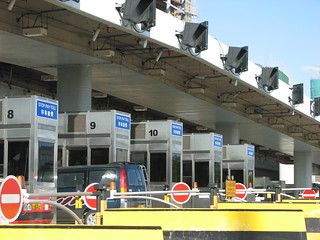
Toll Booths, Hong Kong

Toll Booths, Hong Kong (Photo credit: Ian Muttoo)

But re-reading the report it says that they will also be charging German drivers but giving tax cuts elsewhere to offset the cost. Maybe I misunderstood! Is it me? Anyway, watch this space. By Graham Hill

Share My Blogs With Others: These icons link to social bookmarking sites where readers can share and discover new web pages.
  • MisterWong
  • Y!GG
  • Webnews
  • Digg
  • del.icio.us
  • StumbleUpon
  • Reddit
  • Alltagz
  • Ask
  • Bloglines
  • Facebook
  • YahooMyWeb
  • Google Bookmarks
  • LinkedIn
  • MySpace
  • TwitThis
  • Squidoo
  • MyShare
  • YahooBuzz
  • De.lirio.us
  • Wikio UK
  • Print
  • Socializer
  • blogmarks

Hidden Cost Of Holiday Car Hire

Wednesday, 23. July 2014

It would seem that more and more Brits are hiring cars whilst on holiday. So as we come up to the serious holiday season it is quite timely for me to give you a bit of advice that could save you a lot of money if you are one of them. In a survey carried out by the Post Office it revealed that more than half of British holidaymakers hiring cars in Europe could face a huge hidden rental bill.

Thinking of a change but unsure as to the best way to finance your car? Then you need a copy of my car finance book, Car Finance – A Simple Guide by Graham Hill. Click on the link below to buy the best car finance book on the market, available as a Kindle Book and Paper Back.

The survey revealed that 56% of UK holidaymakers aren’t protecting themselves from accidents or theft with excess waiver insurance (EWI). Three quarters don’t bother with cover for glass, tyre or undercarriage damage. On average this extra insurance, payable on arrival, is about 12% of the cost of the excess but drivers are either not aware or ignore this insurance and run the risk of being hundreds of pounds out of pocket.

And don’t think the excess is the same as your domestic car insurance policy if you have an accident whilst in say Spain or Portugal of say £250, oooh no! The average accidental excess in Spain is £839 and in Portugal is £903 but the EWI and tyre and glass cover is just £99.10 and £87.55 respectively for 7 days cover.

Oh, and if you venture off the main roads in Greece, Spain or many other holiday countries you could hit a pothole that makes our potholes look like dimples causing all manner of expensive damage to wheels, suspension, brakes, undercarriage etc. Andrew Brown of Post Office Travel Money said, ‘It’s a false economy to cut costs by sticking to the basic cost when booking car rental online.

English: An old AVIS Car Rental advert on a si...

English: An old AVIS Car Rental advert on a side of a building. (Photo credit: Wikipedia)

What’s more don’t leave it till you get to your holiday destination to find out what the hire car will really cost. Calculate all the costs by doing your homework in advance to find out the realistic price of car rental and holiday motoring.’ Good advice there from Mr Brown. Happy holiday! By Graham Hill

Share My Blogs With Others: These icons link to social bookmarking sites where readers can share and discover new web pages.
  • MisterWong
  • Y!GG
  • Webnews
  • Digg
  • del.icio.us
  • StumbleUpon
  • Reddit
  • Alltagz
  • Ask
  • Bloglines
  • Facebook
  • YahooMyWeb
  • Google Bookmarks
  • LinkedIn
  • MySpace
  • TwitThis
  • Squidoo
  • MyShare
  • YahooBuzz
  • De.lirio.us
  • Wikio UK
  • Print
  • Socializer
  • blogmarks

New Braking System Will Save Many Lives

Monday, 16. June 2014

Many years ago, when my namesake was racing cars I watched a demonstration by one of the F1 drivers showing how to avoid a skid by rapidly tapping the brake pedal. The driver applied and released the brakes in quick succession which gave greater control as the tyres moved round increasing the grip and avoiding a skid.

Thinking of a change but unsure as to the best way to finance your car? Then you need a copy of my car finance book, Car Finance – A Simple Guide by Graham Hill. Click on the link below to buy the best car finance book on the market, available as a Kindle Book and Paper Back.

It is the principal that developed into what has now been used for many years called ABS. Thousands of lives have been saved as a result of the fitting of ABS to all cars but now Thatcham have called for the latest brake development to be added to ABS and ESP as standard requirements on all new cars.

The new system known as Autonomous Electronic Braking (AEB) is already available or fitted to 23% of all new cars but Thatcham feels that more should be done by the Government to encourage the fitting of this technology by offering a £500 incentive to drivers that have it fitted.

Thatcham claims that the device would save 1,220 lives over 10 years and reduce casualties by 136,000. So what is AEB? It detects vehicles in front and applies the brakes in an emergency in time to prevent a front to end accident. In the more sophisticated systems the ‘radar’ can detect pedestrians and cyclists as well as solid vehicles.

At the moment if the system is fitted to a company car this will increase the driver’s benefit in kind tax and class 1A National Insurance Contributions, this is wrong according to Thatcham as the device is as much for the benefit of those outside the vehicle as inside.

Thatcham have shown that with AEB third party injury claims drop by 18%, whilst studies in the USA have put the reduction at 26%. Amazingly in Switzerland and Sweden front to rear crashes would drop by 31% and 48% respectively.

Whilst I have seen various claims relating to the benefits of AEB it is clear that this technology, if fitted, could save lives so I’m behind Thatcham and hope that they can convince the Government to do something to encourage the fitting of this life saving technology.

It might also help to prevent some of the crash for cash insurance claims so maybe the insurance companies should contribute something. Just a thought!

Share My Blogs With Others: These icons link to social bookmarking sites where readers can share and discover new web pages.
  • MisterWong
  • Y!GG
  • Webnews
  • Digg
  • del.icio.us
  • StumbleUpon
  • Reddit
  • Alltagz
  • Ask
  • Bloglines
  • Facebook
  • YahooMyWeb
  • Google Bookmarks
  • LinkedIn
  • MySpace
  • TwitThis
  • Squidoo
  • MyShare
  • YahooBuzz
  • De.lirio.us
  • Wikio UK
  • Print
  • Socializer
  • blogmarks