Yet Another Emissions Investigation Gets Under-Way!

Thursday, 13. August 2020

Fiat Chrysler Automobiles is being investigated for potential emissions cheating by authorities.

The car maker’s offices, including those of truck maker CNH, in Germany, Switzerland and Italy were raided following claims that some of the company’s engines produced illegal levels of emissions.

Potentially illegal software was allegedly detected in Multijet diesel engines used in Alfa Romeo, Jeep and Fiat cars, plus Iveco and Fiat commercial vehicles.

Prosecuters claim that more than 200,000 vehicles could be affected in Germany alone.

Affected engines include Euro 5 and 6 variants of the 1.3-litre, 1.6-litre and 2.0-litre Multijet diesel engine.

A statement from Eurojust, a European Union agency for criminal cooperation across member states, said: “Defeat devices are illegal according to the European Union regulations in place. Vehicles with defeat devices are not approved for road usage in the EU and consumers with such devices installed in their cars face possible driving bans.”

The probe is said to be looking into a “number of people” who may have been involved in allegedly allowing use of the devices.

An FCA spokesman confirmed that a number of the company’s offices in Europe were visited by investigators in the context of a request for assistance by magistrates in Germany. The spokesman said the business is cooperating fully with authorities.

FCA and CNH Industrial are both controlled by Exor, the holding company of Italy’s Agnelli family.

Renault and Nissan were recently accused of emissions cheating following allegations made against Mercedes-Benz.  By Graham Hill thanks to Fleet News

Share My Blogs With Others: These icons link to social bookmarking sites where readers can share and discover new web pages.
  • MisterWong
  • Y!GG
  • Webnews
  • Digg
  • del.icio.us
  • StumbleUpon
  • Reddit
  • Alltagz
  • Ask
  • Bloglines
  • Facebook
  • YahooMyWeb
  • Google Bookmarks
  • LinkedIn
  • MySpace
  • TwitThis
  • Squidoo
  • MyShare
  • YahooBuzz
  • De.lirio.us
  • Wikio UK
  • Print
  • Socializer
  • blogmarks

Working From Home & Using A Private Car Will Have Serious Consequences.

Friday, 10. July 2020

Long-term changes to the way people work could result in more employees becoming grey fleet drivers.

As the lockdown is slowly lifted, employers are wrestling with what the ‘new normal’ might entail, including where staff will work in the future.

Millions of employees have been working from home during the pandemic and many expect that, with technologies like Miscrosoft Office Teams and Zoom allowing people to connect virtually, it’s a trend that will continue.

A Fleet News survey showed an overwhelming majority of fleet decision-makers – close to three-quarters (73.4%) – were working from home; one in 10 were dividing their working day between the office and home, and just 15.4% were still in the office full-time.

The latest picture will be revealed in the June digital edition of Fleet News, which will be published next week.

Meanwhile, a separate Fleet News poll suggested that for many, some two-thirds (68.1%) of respondents, working from home will become their ‘new normal’.

Paul Hollick, co-chair of the Association of Fleet Professionals (AFP), warns this could have significant consequences for fleets, with more employees joining the ranks of those that drive their car for work, the so-called grey fleet.

Employers have a legal obligation to ensure that grey fleet vehicles are reasonably safe to use, are fit for purpose and are lawfully on the road.

Companies also typically pay Approved Mileage Allowance Payments (AMAPs) to reimburse fuel used in the course of a work trip at 45p per mile.

“Grey fleet could become a bit of a battleground, because of Covid-19,” warned Hollick. “Employees won’t be office-based (in the future), they’ll be home-based, which means their contract of employment might be changed.

“If the employee is classed as home-based rather than office-based a journey from home to the office will then become a business trip.”

Furthermore, Hollick says that, with people wary of public transport, employees are turning to used vehicles in the sub-£3,000 bracket to stay mobile, which could end up being driven for work purposes. 

New figures from the Department for Transport (DfT) show how hard public transport has been hit. Journeys by national rail are 8% of typical levels and London tube use stands at just 14%.

During the first full day of lockdown (Tuesday, March 24), car use fell to less than half (44%) of the expected level. Light commercial vehicle (LCV) use stood at 55%, HGV use at 84%.

Three months later and the day after retail outlets were allowed to open for the first time on Monday, June 15, car use had risen, but was still only at 70%. Van use and HGV use had grown to 84% and 92%, respectively.

In line with Government advice to avoid public transport, cycling use has doubled during some weekdays and trebled at the weekend.  By Graham Hill thanks to Fleet News

Share My Blogs With Others: These icons link to social bookmarking sites where readers can share and discover new web pages.
  • MisterWong
  • Y!GG
  • Webnews
  • Digg
  • del.icio.us
  • StumbleUpon
  • Reddit
  • Alltagz
  • Ask
  • Bloglines
  • Facebook
  • YahooMyWeb
  • Google Bookmarks
  • LinkedIn
  • MySpace
  • TwitThis
  • Squidoo
  • MyShare
  • YahooBuzz
  • De.lirio.us
  • Wikio UK
  • Print
  • Socializer
  • blogmarks

Drivers Taking Huge Risks When Driving CarsWith Dangerous Defects

Friday, 10. July 2020

One in 10 cars on the road could be classified as having ‘dangerous defects’, according to analysis of the latest Driver and Vehicle Standards Agency (DVSA) data by BookMyGarage.

Department for Transport (DfT) figures show that defective tyres were a contributing factor in 17 fatal accidents in 2018 and caused a total of 459 accidents in the year.

Faulty brakes were also to blame for more than 500 accidents and 15 fatalities.

Karen Rothberg, managing director at BookMyGarage, said: “It was a sensible policy during lockdown, when vehicle use was limited, but the whole point of the MOT is to make sure dangerous vehicles are not on our roads for the sake of the driver, passengers and other road users.

“The Government is taking a serious safety risk now though and we urge motorists to take a common-sense view.”

Following the DVSA announcement that it is ending the MOT exemption on August 1, BookMyGarage said, “millions on could still be driving without a valid certificate until end of January 2021”.

Vehicles were granted the six-month exemption from MOT testing in March, to help slow the spread of the virus.

However, as the lockdown is gradually lifted, all cars, motorcycles or vans due a MOT test from August 1, will now be required to get a test certificate.

The RAC has warned that hundreds of thousands of vehicles due to be tested this summer could end up causing a backlog if drivers take advantage of the six-month extension.

BookMyGarage expects the average failure rate during 2020 to increase as a result of the exemption.

Testers classify failures as minor, major and dangerous defects, with one in three vehicles failing their MOT every day in normal conditions.

The most dangerous defect recorded by more than 65,000 MOT testers across the UK between July and September 2019 were tyres, which made up 58.1% of all dangerous defects recorded, followed by brakes (29.3%), suspension (5.5%), chassis (2.4%) and lights (2.0%).

Two-in five (40%) fleets have postponed non-essential service, maintenance and repair (SMR) work, during the coronavirus crisis, according to a Fleet News survey.

Five million fewer MOT tests carried out in April and May 2020 than in the same months last year, according to DVSA figures.

BookMyGarage is advising motorists not to risk ‘maxing out’ on the August 1 exemption if they can, and get their vehicles tested as soon as possible.  By Graham Hill thanks to Fleet News

Share My Blogs With Others: These icons link to social bookmarking sites where readers can share and discover new web pages.
  • MisterWong
  • Y!GG
  • Webnews
  • Digg
  • del.icio.us
  • StumbleUpon
  • Reddit
  • Alltagz
  • Ask
  • Bloglines
  • Facebook
  • YahooMyWeb
  • Google Bookmarks
  • LinkedIn
  • MySpace
  • TwitThis
  • Squidoo
  • MyShare
  • YahooBuzz
  • De.lirio.us
  • Wikio UK
  • Print
  • Socializer
  • blogmarks

Vehicle Thefts Increase By Over 50%

Friday, 10. July 2020

Vehicle thefts have risen to highest level in four years, as more than 150,000 cars, vans and motorcycles were reported as stolen in 2018-19.

It’s an increase of 10,000 vehicles when compared to the year before and a 56% (54,932) increase compared to four years earlier, according to data analysed by RAC Insurance.

All but three of the police forces that responded to a Freedom of Information request recorded an increase in the numbers of vehicles stolen in their force areas from 2014-15 and 2018-19.

The largest increases were recorded by Kent Police (up 12,550 to 40,726 thefts in 2018-19, a 45% increase), Metropolitan Police (up 9,635 to 30,773 thefts, a 46% increase) and West Midlands Police (up 5,677 to 10,372 thefts, a 121% increase).

Six forces recorded a more than doubling in the number of vehicles stolen between 2014-15 and 2018-19, with the biggest jumps in Suffolk (up 172% from 347 to 945 thefts), Surrey (up 133% from 661 to 1,543 thefts) and the West Midlands.

Only Lincolnshire, the City of London and Police Scotland recorded a reduction in thefts during this period, with reductions of 28, 29 and 473 thefts respectively.

Most police forces (32) also recorded a rise in vehicle thefts year-on-year, between 2017-18 and 2018-19. Kent, again, saw the largest rise, as well as the largest number of overall vehicles stolen in 2018-19 (up 2,575 to 40,726 thefts, 7% more than in 2017-18), followed by Essex (up 1,056 to 5,409 thefts, 24% more than in 2017-18) and the West Midlands (up 836 to 10,372 thefts, 9% more than 2017-18).

When looking at the biggest percentage increases over this 12 month period, Suffolk witnessed the highest jump with 44% more thefts (945 in 2018-19 compared to 655 a year earlier), followed by Bedfordshire (37% increase, from 1,056 to 1,445 thefts) and North Wales (32% increase, from 464 to 612 thefts).

RAC Insurance spokesperson Simon Williams said: “These figures paint a rather disturbing picture – vehicle thefts are on the rise almost everywhere, and in some parts of the country numbers are rocketing.

“It’s also not the case that the rises in crime are confined to a few larger urban areas, with many police forces covering more rural areas also seeing big increases.

“While vehicle crime is at far lower levels today than it was in the early 1990s, thanks to improvements in vehicle security, and the number of vehicles licensed to be driven on the UK’s roads is higher than at any point in the past, it’s still concerning that so many more vehicles are being stolen than just a few years ago.”

The average fleet loses around £16,000 per year as a result of vehicle or equipment theft, according to Verizon Connect.

Its research found that businesses have at least one vehicle stolen each year.

The average loss increases to nearly £50,000 for those businesses that have between 101-250 vehicles, as the number of vehicles stolen rises to three for businesses of this size.

Some of the increases in recent years can be put down to a rise in thefts of vehicles that are easier to steal, such as motorbikes and mopeds that are less likely to have immobilisers. Government data also shows that thieves generally use keys to access vehicles in around half of crimes, which suggests that drivers need to do more to keep their keys safe.

Tracker data suggests that nine out of 10 van thefts were performed using the keys.

In a fifth of cases (18% in 2018), thieves were able to access vehicles because they weren’t locked in the first place.

Company car drivers and fleets are being warned by Tracker to be wary of opportunistic criminals looking to steal cars to fill a replacement parts gap caused by COVID-19.

The stolen vehicle recovery company says that police across the country are already fighting an increase in ‘chop shops’ – where stolen vehicles are stripped down and expensive parts sold on. But, it argues, the lack of legitimate parts could increase their popularity and profitability still further. By Graham Hill thanks to Fleet News

Share My Blogs With Others: These icons link to social bookmarking sites where readers can share and discover new web pages.
  • MisterWong
  • Y!GG
  • Webnews
  • Digg
  • del.icio.us
  • StumbleUpon
  • Reddit
  • Alltagz
  • Ask
  • Bloglines
  • Facebook
  • YahooMyWeb
  • Google Bookmarks
  • LinkedIn
  • MySpace
  • TwitThis
  • Squidoo
  • MyShare
  • YahooBuzz
  • De.lirio.us
  • Wikio UK
  • Print
  • Socializer
  • blogmarks

More Drivers Are Avoiding Various Motor Fines

Saturday, 20. June 2020

The volume of motoring fines and penalties incurred by company car and van drivers increased by 3% in 2019, new figures from Lex Autolease show.


This compares to a 60% year-on-year cumulative increase over the past three years, suggesting a slower rate of increase than in previous years.


This was also reflected in the value of fines incurred by drivers, which did not grow for the first-time last year, bucking the trend of yearly increases from £10.7 million in 2016 to £17.1m 2019.


The percentage of drivers caught by bus lane cameras fell for the first time by 17% year-on-year, with fines issued for congestion charges and council parking also falling by 6% and 4% respectively.


Mersey Flow and Dartford Crossing fines also saw a year-on-year decrease with the total number of penalty notices issued falling by more than two fifths (44%) from 54,618 in 2018 to 30,391 in 2019.


However, the picture is not entirely positive, says the country’s largest vehicle leasing company.


The percentage of motorists penalised in private car parks rose by 6% year-on-year to £6.2m, and illegal junction-box stops and red-route driving fines increased by almost a fifth (19%) to £6.3m during the same period.


Lex Autolease analysed data from more than 361,000 company cars and vans to identify trends in behaviour and driver safety.


Kim Morris, motor operations director at Lex Autolease, said: “Company car drivers are often more likely to incur fines and penalties on the roads when compared to ordinary motorists, as the pressure to hit deadlines and attend meetings on time can sometimes lead to poor driver behaviour.


“The majority of fines can be easily avoided and if not closely monitored can quickly add up to expensive outgoings for employers – especially those with larger fleets.”


She believes that the emphasis fleet managers have placed upon driver health and safety in recent years is starting to pay off, with a considerable slowing in the rise of the number of fines incurred and a decrease in the number of fines for commonplace offences, including bus lane driving and congestion charges.


However, she said: “Our analysis shows that there’s still more businesses can do to educate their employees to bring these numbers down further.


“Continuing to invest further in driver education can help to modify employees’ driving habits and in turn save businesses unnecessary outgoings each month.”


She concluded: “As the new tax changes for alternatively-fuelled vehicles gather momentum, driver education will become even more important for fleets to make sure avoidable fines and penalties do not offset the cost saving benefits of low or zero emission vehicles.”  By Graham Hill thanks to Fleet News


Share My Blogs With Others:
These icons link to social bookmarking sites where readers can share and discover new web pages.

  • MisterWong
  • Y!GG
  • Webnews
  • Digg
  • del.icio.us
  • StumbleUpon
  • Reddit
  • Alltagz
  • Ask
  • Bloglines
  • Facebook
  • YahooMyWeb
  • Google Bookmarks
  • LinkedIn
  • MySpace
  • TwitThis
  • Squidoo
  • MyShare
  • YahooBuzz
  • De.lirio.us
  • Wikio UK
  • Print
  • Socializer
  • blogmarks

DVLA Issues A Scam Alert To Motorists

Wednesday, 13. May 2020

  • DVLA has recorded a 20% rise in the number of scams reported
  • These are all cons linked to DVLA services, such as vehicle taxation
  • Some 1,538 fraud cases were raised to the agency in the final 3 months of 2019
  • It provided examples of common scams that have been used in recent months


Motorists are being targeted by fraudsters using a range of different scam tactics in a bid to trick them into handing over money.


That’s according to a fresh warning by the DVLA last February, which has provided examples of scams it has been alerted to and traced in recent months.


There has been a 20 per cent rise in fraud attempts handed to the DVLA, with 1,538 reports made to agency in the last three months of 2019, new figures show.


Car owners have alerted the DVLA to a number of different con tactics being employed by scam artists.


Motorists have said they have been swindled out of money and targeted by fraudsters using fake DVLA websites, emails, texts and social media messages.


It has warned drivers that these are becoming more prominent, having received 1,275 scam reports in the final three months of 2018 – some 263 fewer than in the final quarter of last year.


To raise awareness of the types of fraudulent communication motorists might receive, the DVLA has released images of recent scams it has been alerted to.


It hopes this will help motorists be aware of what to look out for and issue a clear warning that if something offered online or by text message appears too good to be true, then it almost certainly is.


Scammers are targeting unsuspecting customers with links to services that don’t exist and messages of tax refunds, all of which are fake.


The reports also show that driver and vehicle documents are for sale on the internet.


The agency says anyone who is concerned about any calls, texts, emails or suspicious activity online, to always report these to the police via Action Fraud immediately.


DVLA chief information security officer David Pope said: ‘We’ve released examples of real life scams to help motorists understand when a scam is at work.


‘These websites and messages are designed to trick people into believing they can access services that simply don’t exist such as removing penalty points from driving licences.


‘All our tax refunds are generated automatically after a motorist has told us they have sold, scrapped or transferred their vehicle to someone else so we don’t ask for anyone to get in touch with us to claim their refund.


‘We want to protect the public and if something seems too good to be true, then it almost certainly is. The only trusted source of DVLA information is GOV.UK.


‘It is also important to remember never to share images on social media that contain personal information, such as your driving licence and vehicle documents.’


A spokesperson for Action Fraud added: ‘This can be a stressful time of year, sorting out finances for the year ahead. Fraudsters are aware of this and are using different ways to trick people.


‘Taking a couple of minutes to familiarise yourself with a few simple online safety tips can be significant in protecting yourself from becoming a victim of online fraud.


‘You should always be cautious when sharing personal information online and avoid being scammed by only using GOV.UK for government services online, such as the DVLA.


‘If you believe you have been a victim of fraud, please report it to us.’


Note: If you want to see the sample emails being sent out go to the original article by clicking here:


https://www.thisismoney.co.uk/money/cars/article-8037209/DVLA-says-cons-used-fraudsters-trick-motorists-handing-money.html


By Graham Hill thanks to This Is Money


Share My Blogs With Others:
These icons link to social bookmarking sites where readers can share and discover new web pages.

  • MisterWong
  • Y!GG
  • Webnews
  • Digg
  • del.icio.us
  • StumbleUpon
  • Reddit
  • Alltagz
  • Ask
  • Bloglines
  • Facebook
  • YahooMyWeb
  • Google Bookmarks
  • LinkedIn
  • MySpace
  • TwitThis
  • Squidoo
  • MyShare
  • YahooBuzz
  • De.lirio.us
  • Wikio UK
  • Print
  • Socializer
  • blogmarks

Warning To Take Care Of Your Battery During Lockdown.

Wednesday, 13. May 2020

The number of drivers visiting Kwik Fit over the past four weeks needing a new battery has been double the usual rate for the time of year.


Battery failures traditionally spike in the winter months due to the greater demands placed on them in starting cold engines.


The impact of the lockdown has seen battery failures over the past month increase to levels similar to the average for January over the past five years.


While this has mainly affected older vehicles, motorists with newer cars have also found their batteries struggling, says Kwik Fit.


The number of fleet vehicles, such as company cars, requiring new batteries has risen by around 10% compared to the same period last year. This is a significant indicator of the extent of the problem as not only are fleet owned vehicles newer than the average, they are more likely to have advanced batteries, to support ‘start-stop’ technology.


Roger Griggs, communications director at Kwik Fit, said: “Most of us associate battery failure with the winter months and having to call out a breakdown service to get us started after Christmas holidays.


“The lock down has had a dramatic effect on motoring and has been positive in helping control the spread of the virus, but this is one area which is storing up potential problems for motorists.


“We certainly don’t encourage anyone to use their car unnecessarily, but we hope that our advice will help some people avoid a nasty surprise when they next need their car.”


Kwik Fit’s battery experts advise motorists to take the following steps to help avoid encountering battery problems:


  • If you are not using your car at all, start the car once or twice a week and let the engine run for at least 15 minutes (stay in your car when you are doing this and the car must be outside).
  • Bear in mind that a colder engine takes more out of the battery to start, so if possible start your car during the warmer part of the day rather than first thing in the morning.
  • Check under the bonnet and inspect the battery terminals for signs of corrosion. Clean any corrosion and residue away from the terminals to allow a good clean connection with the battery.
  • If your car is parked on a driveway or garage, consider buying a trickle charger which can be plugged into the mains and keep your battery charge topped up – always follow the guidance in your vehicle’s owners handbook prior to connecting a trickle charger.
  • Check your battery’s age – most batteries are stamped with date codes and a battery more than five years old may be at risk of failure, especially if the car is only making short or infrequent trips.


By Graham Hill thanks to Fleet News


Share My Blogs With Others:
These icons link to social bookmarking sites where readers can share and discover new web pages.

  • MisterWong
  • Y!GG
  • Webnews
  • Digg
  • del.icio.us
  • StumbleUpon
  • Reddit
  • Alltagz
  • Ask
  • Bloglines
  • Facebook
  • YahooMyWeb
  • Google Bookmarks
  • LinkedIn
  • MySpace
  • TwitThis
  • Squidoo
  • MyShare
  • YahooBuzz
  • De.lirio.us
  • Wikio UK
  • Print
  • Socializer
  • blogmarks

Survey Reveals That Electric Cars Are Driven Further Than Petrol Cars

Wednesday, 13. May 2020

Electric cars are driven for 26% more miles in their first three years on the road than petrol models, research from the RAC Foundation has found.


The analysis, which pre-dates the steep fall in road traffic seen since the start of the coronavirus pandemic, is based on the MOT data for 516,936 vehicles.


It found battery electric cars cover an average of 9,435 miles per year over their first three years, compared to a petrol car’s 7,490.


Diesel cars are driven the most, and cover an average of 12,496 miles in each of their first three years.


Steve Gooding, director of the RAC Foundation, said: “Unsurprisingly people with diesels have been doing most mileage, probably seeking better long-distance fuel economy, but this study is also evidence that battery-electric powered cars are not just trophy vehicles signalling their owners’ green credentials but prior to the lockdown were racking up the miles as everyday transport.


“Tens of millions of people still drive petrol and diesel-powered cars, but this data suggests that owners of electric cars have found them to be a practical proposition, running up the sort of big annual mileages that many of us need to do, challenging preconceptions about their range and the ease of re-charging.


“The next big question is what will happen when the Covid-19 lockdown ends?


“Some say our travel behaviour might change quite dramatically as we’ve mastered on-line meetings in place of the office routine, but any ongoing desire for social-distancing might yet draw us back to our own cars for the trips we make once the travel restrictions are lifted.”


The research found a Mitsubishi Outlander plug-in hybrid – the most common PHEV on the road – averages 12,500 miles a year.


RAC Foundation reports the battery electric Tesla Model S covered an average annual mileage of 12,392, the Nissan Leaf 8,241 and the Renault Zoe 5,736.


The analysis also found there was a big difference between petrol and diesel versions of the same model. By Graham Hill thanks to Fleet News


Share My Blogs With Others:
These icons link to social bookmarking sites where readers can share and discover new web pages.

  • MisterWong
  • Y!GG
  • Webnews
  • Digg
  • del.icio.us
  • StumbleUpon
  • Reddit
  • Alltagz
  • Ask
  • Bloglines
  • Facebook
  • YahooMyWeb
  • Google Bookmarks
  • LinkedIn
  • MySpace
  • TwitThis
  • Squidoo
  • MyShare
  • YahooBuzz
  • De.lirio.us
  • Wikio UK
  • Print
  • Socializer
  • blogmarks

Number Of Vehicles On UK Roads Exceeds 40 Million For The First Time Ever

Saturday, 2. May 2020

The number of vehicles registered for use on UK roads has exceeded 40 million for the first time, according to data from the Society of Motor Manufacturers and Traders (SMMT).


Analysis shows that more than 35 million cars and five million commercial vehicles were in use in the UK in 2019, an increase of 1% on the previous year.


The total includes more than 750,000 low, ultra-low and zero emission vehicles. The number of these cars grew by 26% last year, with 11,832 hybrids, 144,335 plug-in hybrids and 92,913 battery electric vehicles now in use.


Birmingham has the second highest number of battery electric and plug-in hybrid vehicles after Greater London, with some 24,000 zero and ultra-low emission cars on the city’s roads.


Light commercial vehicles grew by  2.7% on the previous year to 4.5m units, surging by 28% in the last decade. Passenger cars, meanwhile, increased 0.8% in the same period. The number of heavy goods vehicles grew by 0.4% to 608,000 – the largest number delivering for Britain since 1990.


Many of these vehicles are helping to provide transport for essential workers, deliveries and emergency services. Some 25,000 ambulance and fire service vehicles, together with more than 20,000 supermarket delivery trucks and lorries are keeping the nation safe, supermarket shelves stocked, and the flow of food, medicine and care to vulnerable people going during the coronavirus crisis.


Mike Hawes, SMMT Chief Executive, said, “As the UK continues to battle the coronavirus pandemic, keeping food, medical supplies and the people serving on the front line moving has never been so important – and these figures show the essential role Britain’s vehicle fleet plays for society. They also provide evidence that industry’s ongoing investment into ever cleaner, safer and more reliable vehicle technology is paying off, even as demand for mobility grows. To ensure this trend continues, we must get the right support for businesses and their workers in place now so that when this crisis is over, the sector can help get the whole country and our economy back on the move.”


Most popular cars


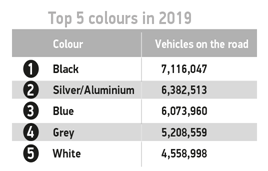
The SMMT’s Motorparc data reveals black as the most commonly seen car colour on the UK’s roads, with more than a fifth (7.1m) clad in the paint.


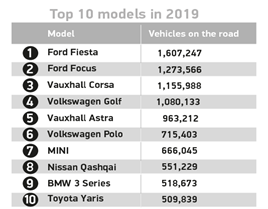
There are more superminis on UK roads than any other category of car, with the Ford Fiesta and Vauxhall Corsa the most common models.


The BMW 3 Series is the only premium badge car to feature in the top 10 list, with more than half a million examples on UK roads.


By Graham Hill thanks to Fleet News


Share My Blogs With Others:
These icons link to social bookmarking sites where readers can share and discover new web pages.

  • MisterWong
  • Y!GG
  • Webnews
  • Digg
  • del.icio.us
  • StumbleUpon
  • Reddit
  • Alltagz
  • Ask
  • Bloglines
  • Facebook
  • YahooMyWeb
  • Google Bookmarks
  • LinkedIn
  • MySpace
  • TwitThis
  • Squidoo
  • MyShare
  • YahooBuzz
  • De.lirio.us
  • Wikio UK
  • Print
  • Socializer
  • blogmarks

Latest News On VW Group Production Re-starts

Friday, 1. May 2020

Volkswagen car plants were planned to restart production this week, with factories in Zwickau and Bratislava (Slovakia) the first to open.


The other plants in Germany and in Portugal, Spain, Russia and the USA were also to restart production this week.


Subsequently, in the course of May, production will be resumed successively in South Africa, Argentina, Brazil and Mexico.


Volkswagen Commercial Vehicles (VWCV) plants in Hannover and in Poland at Poznań and Września are also gradually starting production at reduced capacity levels.


Ralf Brandstätter, chief operating officer of Volkswagen, said: “With the decisions by the federal and state governments in Germany and the loosening of restrictions in other European states, conditions have been established for the gradual resumption of production.


“Volkswagen has prepared intensively for these steps over the past three weeks. In addition to developing a comprehensive catalogue of measures for the protection of our employees’ health, we have also forged ahead with the re-establishment of our supply chains.”


On this basis, short-time working is to continue at the Volkswagen plants in Germany. However, the number of employees affected by short time working will be successively reduced in line with the resumption of production.


Production will be resumed in line with the current availability of parts, Government requirements in Germany and Europe, the development of sales markets and the resulting modes of operation of the plants, it said.


Irrespective of these developments, compliance with the stringent health protection measures for employees will always be the top priority.


Andreas Tostmann, Volkswagen board member responsible for production and logistics, said: “We are resuming production and logistics with a staged approach in a well-organised way.


“The health of our employees has the highest priority. We are providing safe workplaces and the maximum possible level of health protection with a 100-point plan.


“In full awareness of our responsibility, we are ensuring that the economy regains momentum and cars once again leave the plants and reach our dealers and customers.”


Volkswagen Group Components had already started to resume production step-by-step at its plants in Brunswick and Kassel from April 6, followed by the Components plants in Salzgitter, Chemnitz and Hanover, as well as the Polish plants, starting production from April 14, to safeguard component supplies for vehicle production in China.


Thomas Schmall, CEO of Volkswagen Group components, said: “The step-by-step reopening of our plants was important in order to safeguard supplies to overseas locations. Now we need to restart the entire production network while taking comprehensive protective measures and to supply all the vehicle plants of the various brands with components. The same high requirements for the health protection of our employees apply to all our plants.”


In the resumption of production, the company can also call upon the experience gained with the production ramp-up at its plants in China, where a large number of consistent health protection measures have been successfully implemented.


Overall, 32 of the 33 plants in China have now returned to production. No cases of coronavirus have been reported among the employees there.


Volkswagen says it continues to closely monitor the global situation arising as a result of the coronavirus pandemic. Further action will be based to a large extent on dialogue and procedures within the Volkswagen Group and recommendations including those of the Robert Koch Institute.  By Graham Hill thanks to Fleet News


Share My Blogs With Others:
These icons link to social bookmarking sites where readers can share and discover new web pages.

  • MisterWong
  • Y!GG
  • Webnews
  • Digg
  • del.icio.us
  • StumbleUpon
  • Reddit
  • Alltagz
  • Ask
  • Bloglines
  • Facebook
  • YahooMyWeb
  • Google Bookmarks
  • LinkedIn
  • MySpace
  • TwitThis
  • Squidoo
  • MyShare
  • YahooBuzz
  • De.lirio.us
  • Wikio UK
  • Print
  • Socializer
  • blogmarks